



Hemmerle
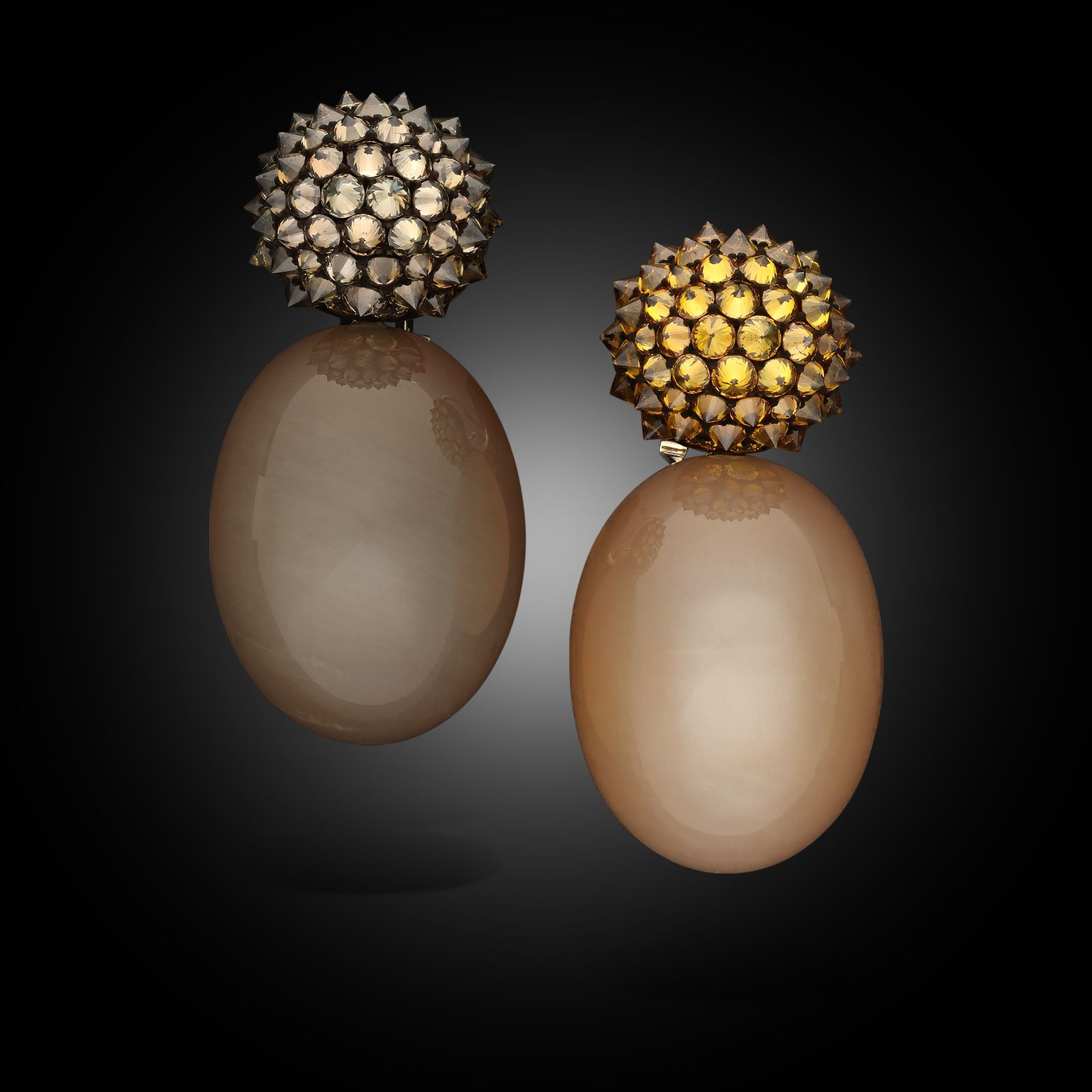
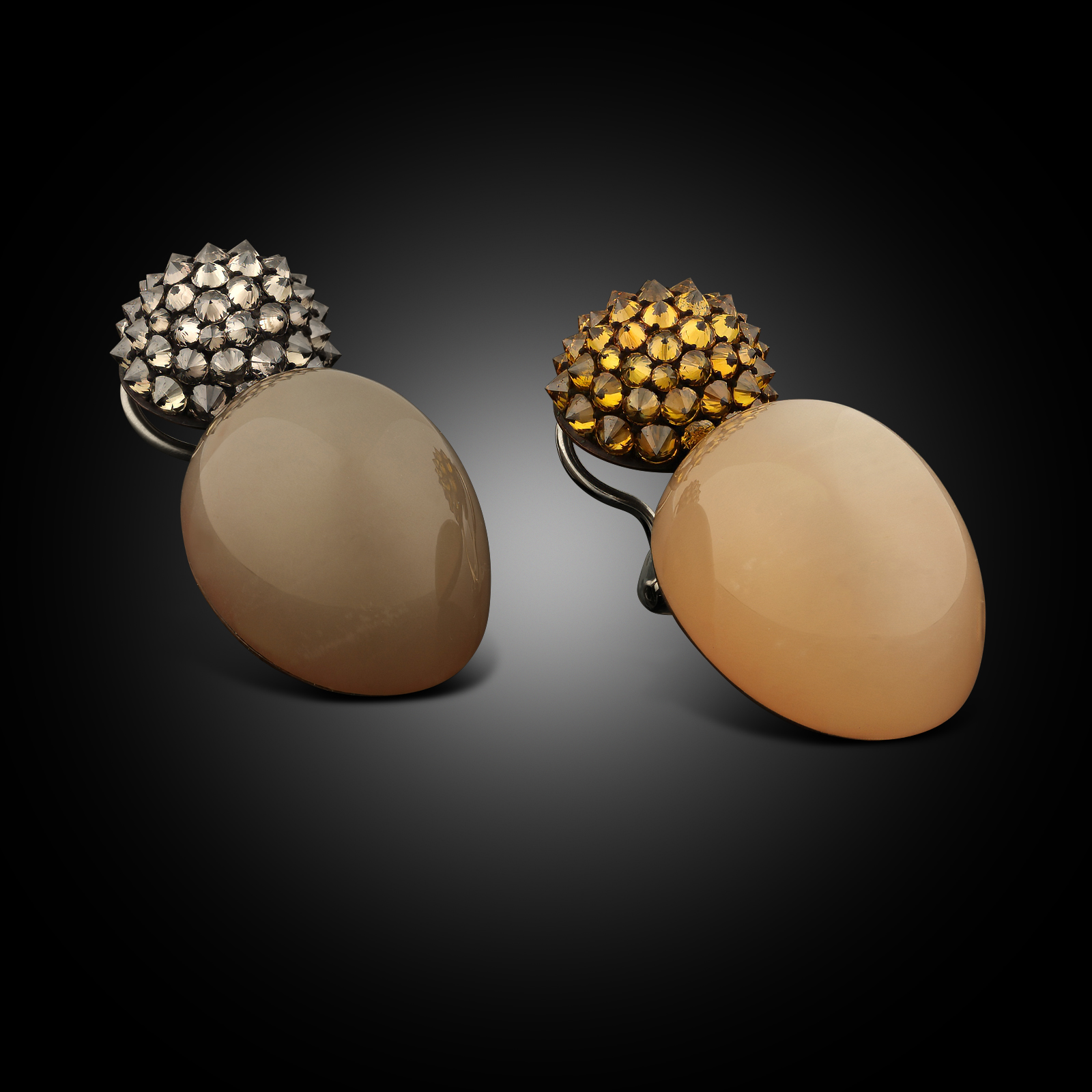
109.18ct Moonstone & Coloured Diamond Drop Earrings
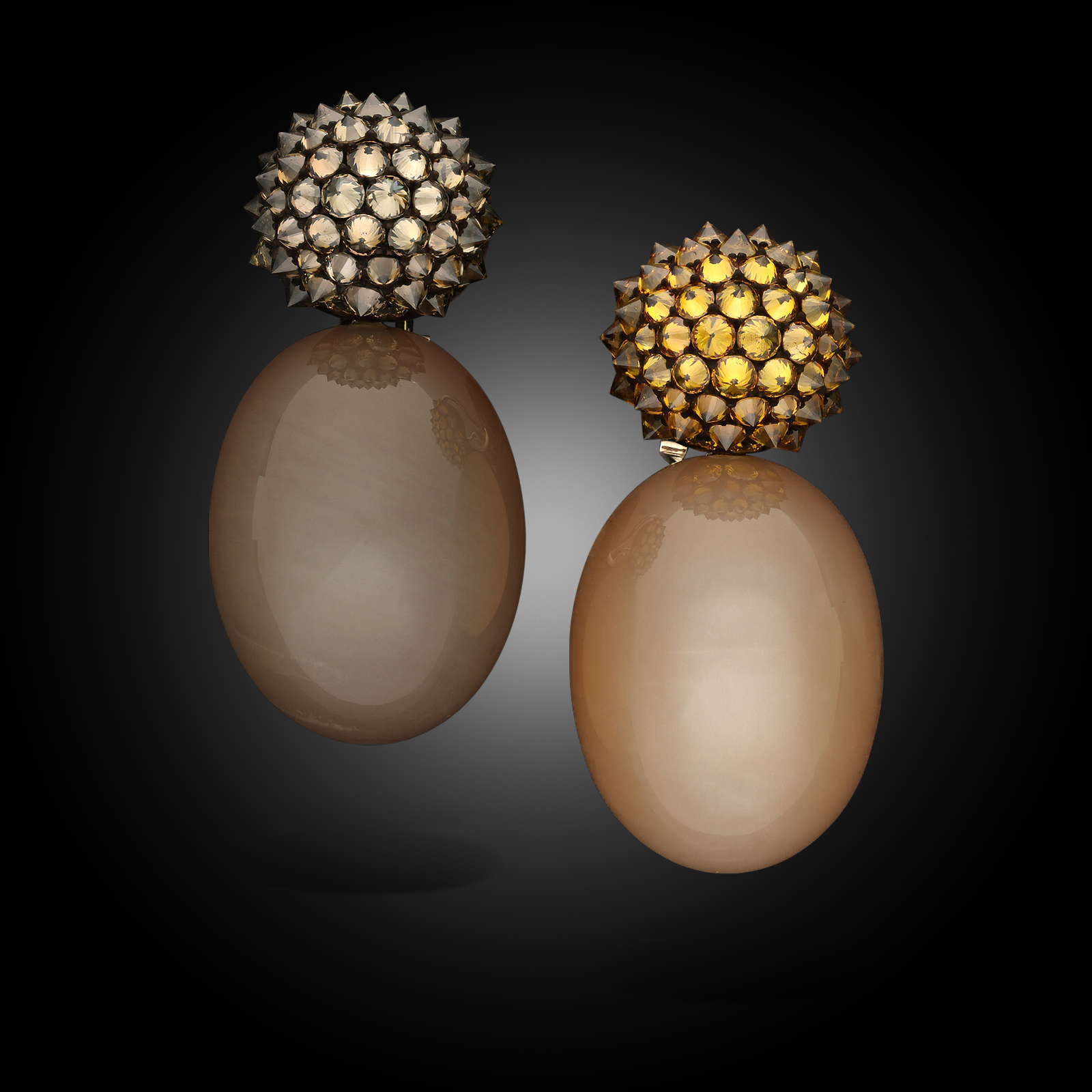
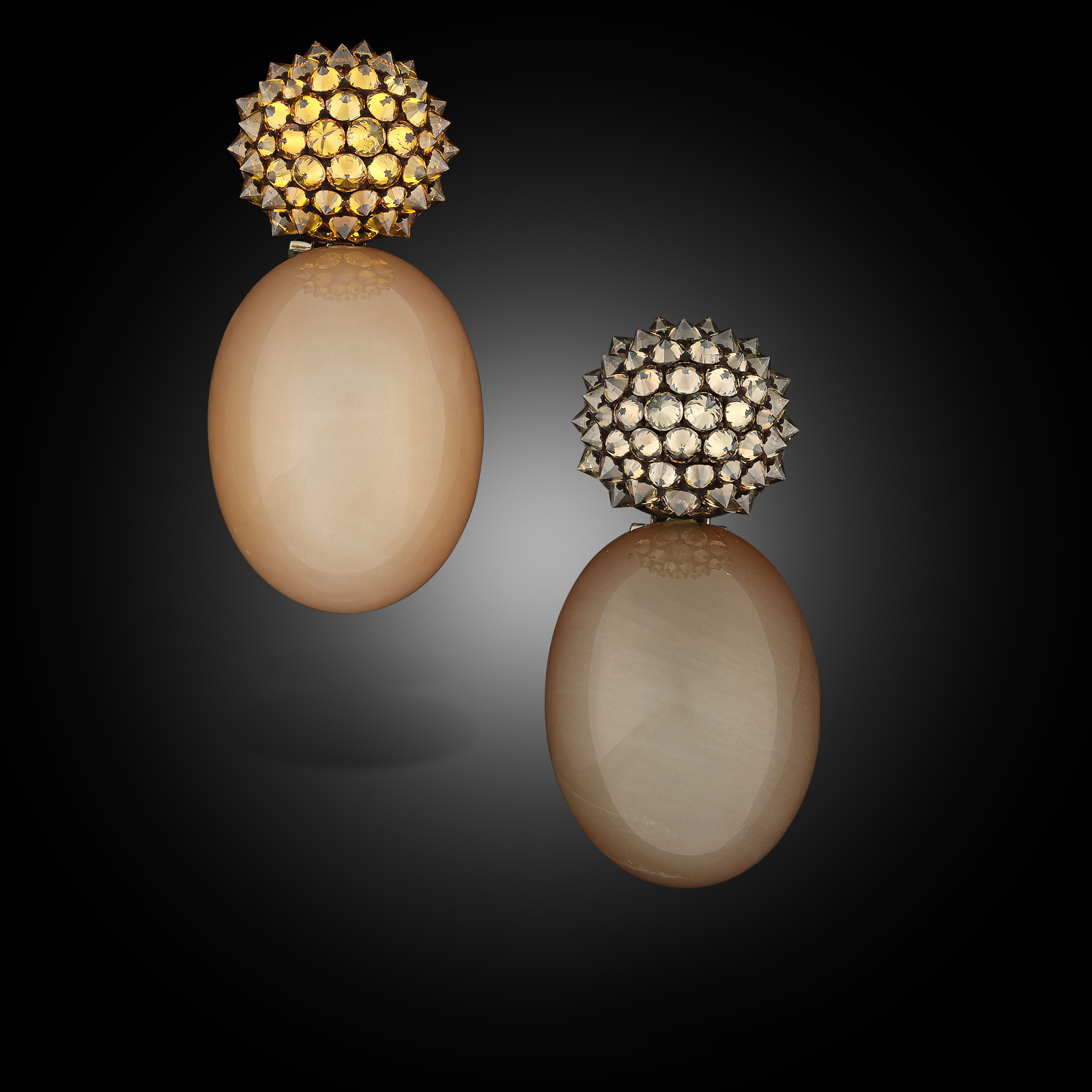
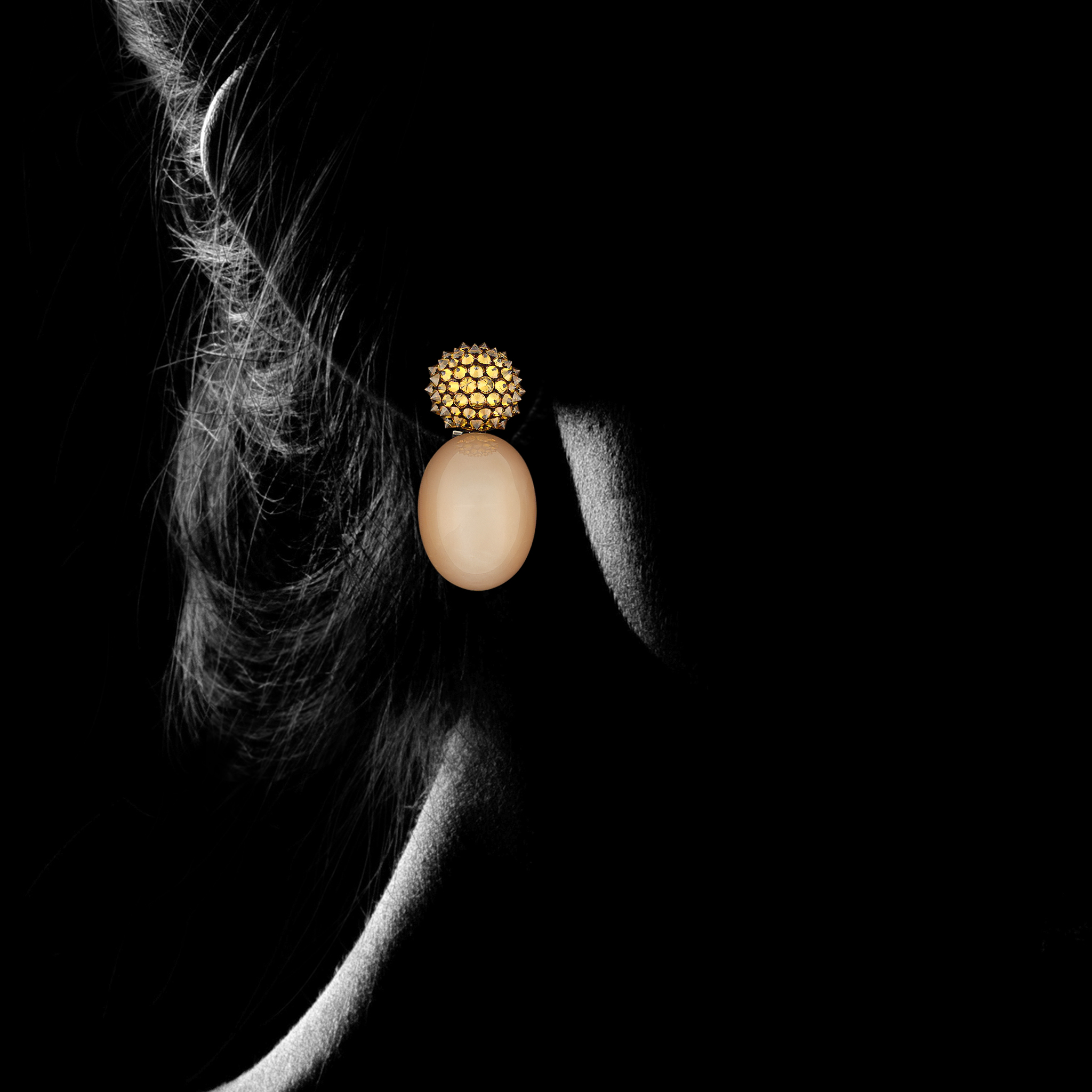
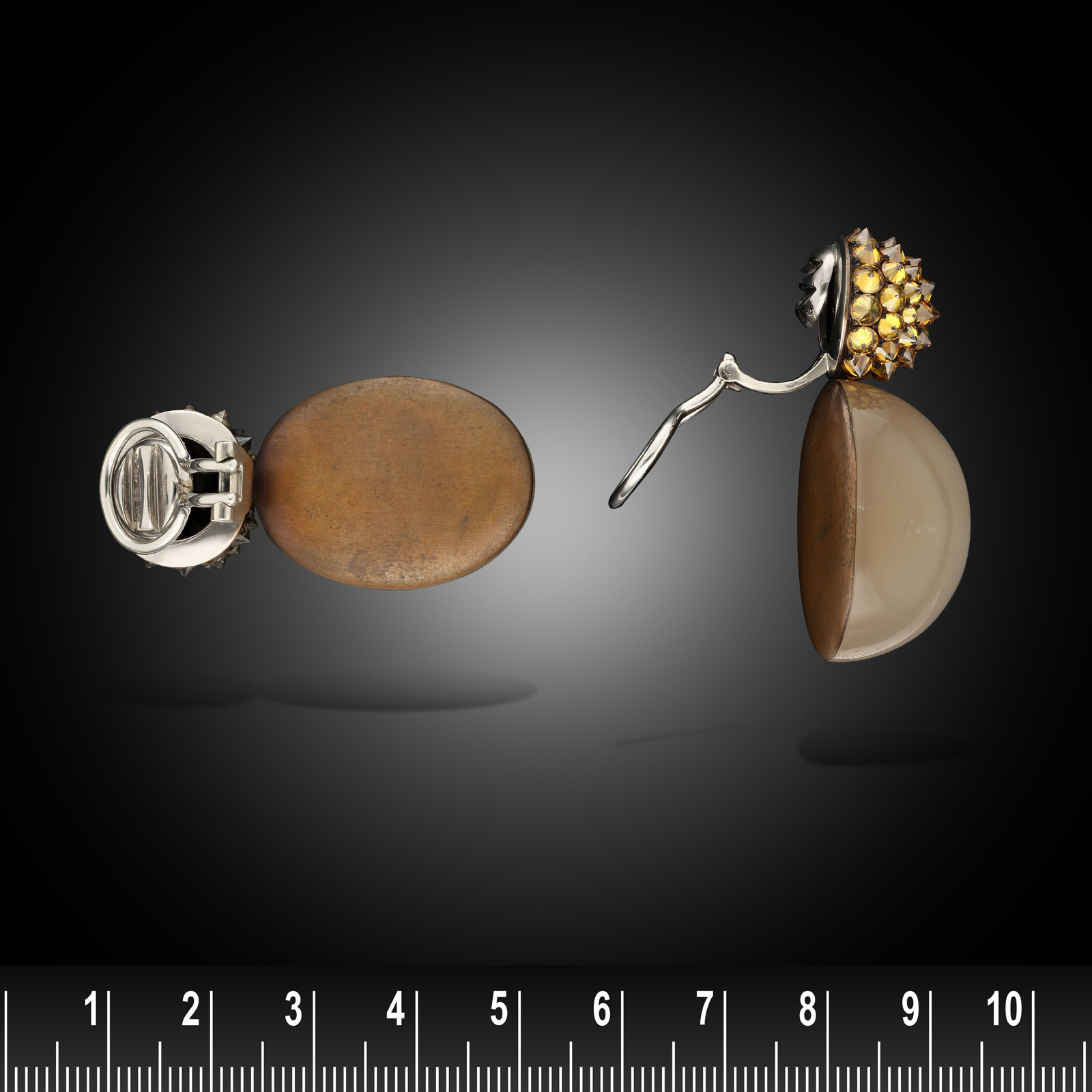
A pair of moonstone and coloured diamond drop earrings by Hemmerle, 2013. Each earclip is set with a oval cabochon moonstone, one taupe and one light pink colour, upon a mount of brown patinated copper, each one suspended from 18ct white gold domed tops of inverted brilliant cut diamonds, one with dark gold colour diamonds and the other with olive-brown colour diamonds, together weighing a total of 9.83ct. They secure with omega clip fittings and are suitable for both pierced and unpierced ears.
£87,500.00

Information
Maker
Hemmerle
Origin
Germany
Period
1980-2015
Period
2013
Gemstone
2 x cabochon cut moonstones, total weight 109.18ct
82 x dark golden brilliant cut diamonds, total weight 4.91ct
82 x olive-brown brilliant cut diamonds, total weight 4.92ct
Setting
18ct white gold and brown patinated copper, signed Hemmerle and with German assay marks
Dimensions
Length: 4.0cm/1.5"
Width: 2.0cm/0.7"
Weight Description
42.1 grams
REF
131120
Discover this Jewel
Diamonds
Golconda & Type IIa Diamonds

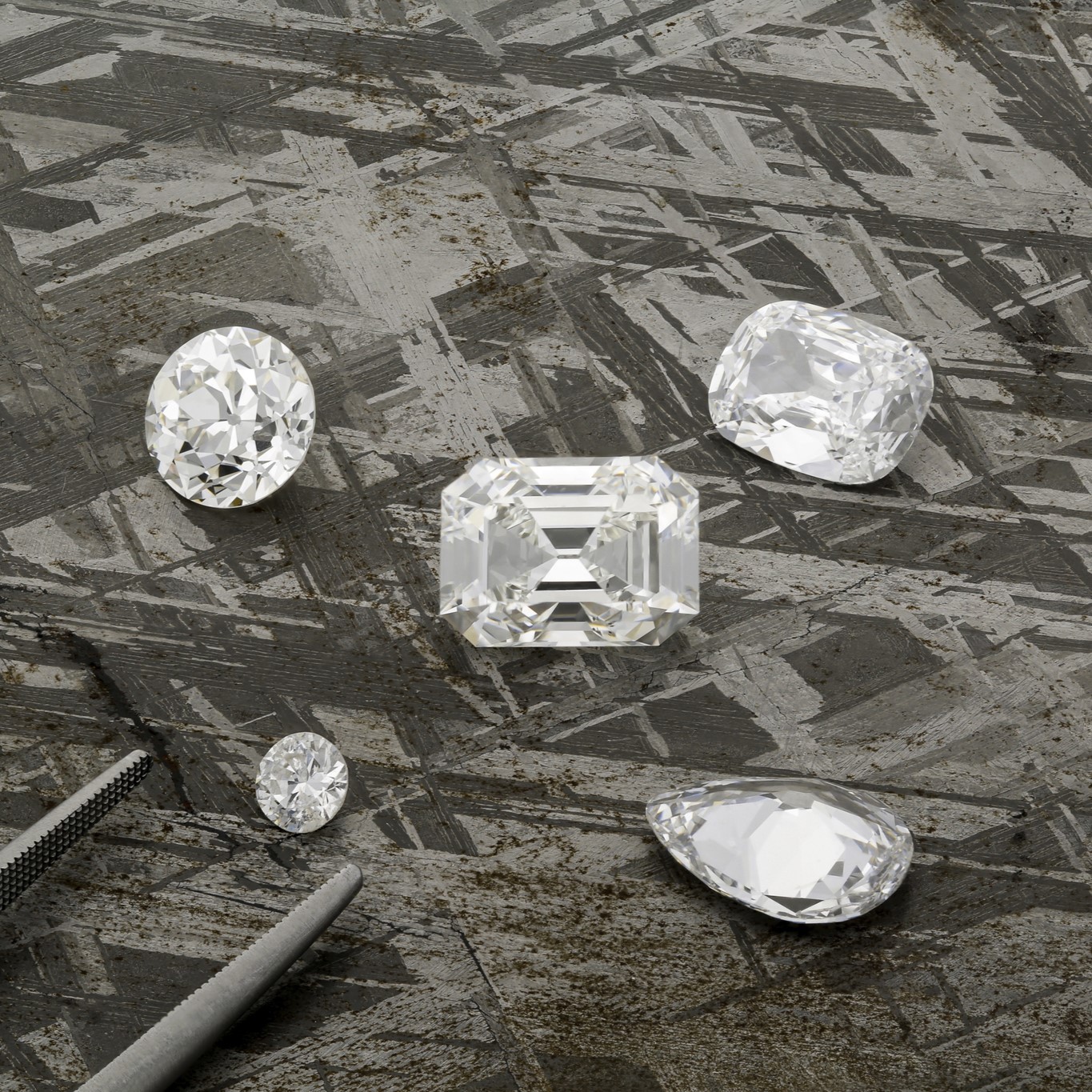
All diamonds can be classified into two main categories which are referred to as ‘types’, depending on the trace elements that are naturally present within the carbon crystal structure of the diamond.
Type I diamonds contain small amounts of nitrogen whereas Type II diamonds do not. Each of these types is then subdivided further and the term Type IIA is used to denote the very purest diamonds. This means there are no measurable impurities in the diamond of any kind which makes these stones exceptionally rare, they make up less than 2% of all gem quality diamonds found worldwide. Not only can these stones be perfectly colourless but they also possess an exceptional level of transparency which enhances their beauty and allows the brilliance and fire of the diamond to be appreciated to the fullest. Famous examples of Type IIA diamonds include the Koh-i-Noor and the Cullinan, which are part of the Crown Jewels, as well as the Krupp diamond which Richard Burton bought for Elizabeth Taylor and was later renamed the Elizabeth Taylor Diamond.
The design of the French cut had developed from the addition of extra facets to old table cut diamonds thereby altering them into much more lively stones.This style of cut has changed very little to this day and its evolution marks one of the earliest milestones in the development of the brilliant cut diamonds we know today.
Coloured Diamonds

Coloured diamonds or Fancy diamonds as they are also known, have become increasingly popular over recent years and are available in a beautiful range of colours from yellow and pink to blue and green.
Colour in diamonds can be caused either by a structural anomaly or by elements such as nitrogen or boron replacing carbon atoms within the crystal structure of the diamonds. In yellow diamonds it is nitrogen which is responsible and the strength of colour depends on how much of it there is, and also what form it has taken. When a coloured diamond is graded for certification by the GIA, the saturation of colour will be judged and one of the following grades will be assigned: Faint, Very Light, Light, Fancy Light, Fancy, Fancy Intense, Fancy Vivid, Fancy Dark and Fancy Deep.
White diamonds (graded from D colourless through to Z pale yellow, known as Cape diamonds) decrease in cost the more colour they display because they are valued for their lack of colour, i.e. their whiteness. However, the reverse is true for Fancy diamonds which will increase in cost the stronger and more vibrant the colour they display. We curate our coloured diamonds very carefully and always choose the most attractive of hues whether it is a Fancy diamond or Cape diamond.

0.5CT
0.5 carat

1.0CT
1 carat

1.5CT
1.5 carat

2.0CT
2 carat

3.0CT
3 carat

4.0CT
4 carat

5.0CT
5 carat

6.0CT
6 carat
(Diagrams not to precise scale)
Today, this C is often the first thing someone asks about but it is worth remembering that not all diamonds that weigh the same will look the same size to the eye because it will depend on the cut of the stone and particularly its depth. With regards to the impact of weight on price then the price per carat will obviously rise as the carat weight increase. However, it must be noted that as larger diamonds are rarer than smaller ones the price does not rise evenly, for example a 2ct diamond is not simply double the price of a 1ct diamond.

D
Exceptional White +

E
Exceptional White

F
Rare White +
Colourless

G
Rare White

H
White

I
Slightly Tinted

J
Slightly Tinted White
Near Colourless
(Diagrams not to precise scale)
In terms of how this affects price, essentially, the whiter the diamond and higher the colour grade the greater the value of the diamond. However, it is important to remember that a lower colour grade does not equate to a lower quality, the grade is a measure of rarity, the whiter stones are simply rarer and therefore command higher prices.
The chart below shows the colour grading scale used by the GIA, the Gemmological Institute of America.

FL
Flawless
No inclusions or blemishes of any sort are visable to a skilled diamond grader using 10x magnification.

IF
Internally Flawless
No inclusions and only blemishes are visable to a skilled diamond grader using 10x magnification.

VVS
Very Very Slightly Included
Inclusions are difficult for a skilled diamond grader to see using 10x magnification.

VS
Very Slightly Included
Inclusions are noticeable to a skilled diamond grader to see using 10x magnification.

SI
Slightly Included
Slight inclusions are noticeable to a skilled grader using 10x magnification.
(Diagrams not to precise scale)
All these factors are taken into account and a judgement is made as to how detrimental they are to the overall appearance of the diamond. It is worth remembering that, unlike colour grading, clarity grading is done under 10x magnification with a microscope so any inclusion in a diamond will be far less noticeable to the naked eye than it is to the diamond grader. Ultimately the cleaner the diamond, the fewer the inclusions and less impact they have – the better the clarity grade will be. The table below shows the grading system used by the GIA.


(Diagrams not to precise scale)
1. Brilliance: This refers to the reflection of white light from both the surface and the inside of a diamond.
2. Fire: This is the term we give to the coloured flashes you see in a diamond resulting from the splitting up of white light into its spectral colours.
3. Scintillation: This is the sparkle a diamond displays, the pattern of light and dark flashes caused by reflections of light as a diamond is moved. Other considerations include symmetry and the quality of the polish which impacts how well the light reflects off the surface of the diamond.


