



Bulgari
Vintage Monete Coin Necklace In 18ct Yellow Gold
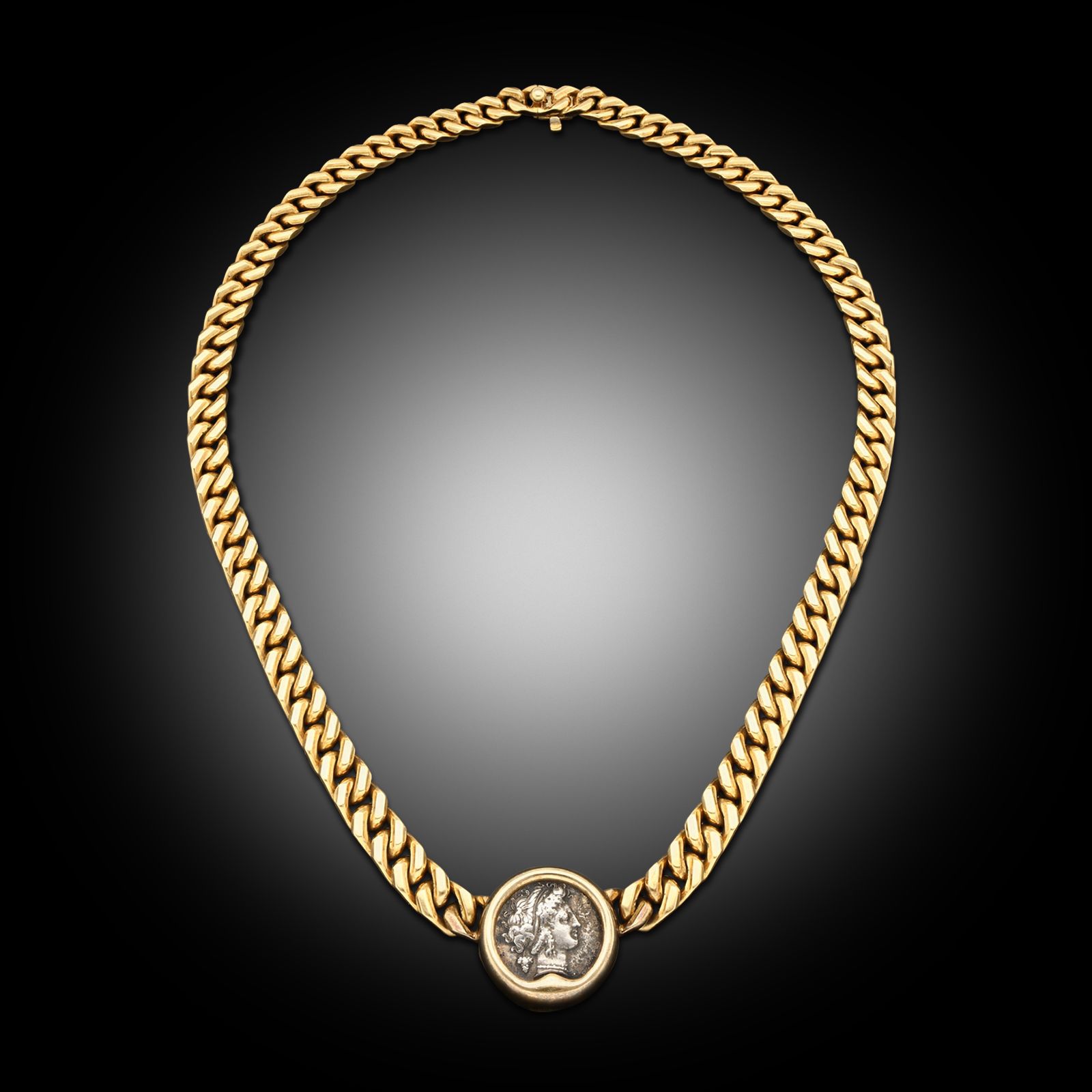
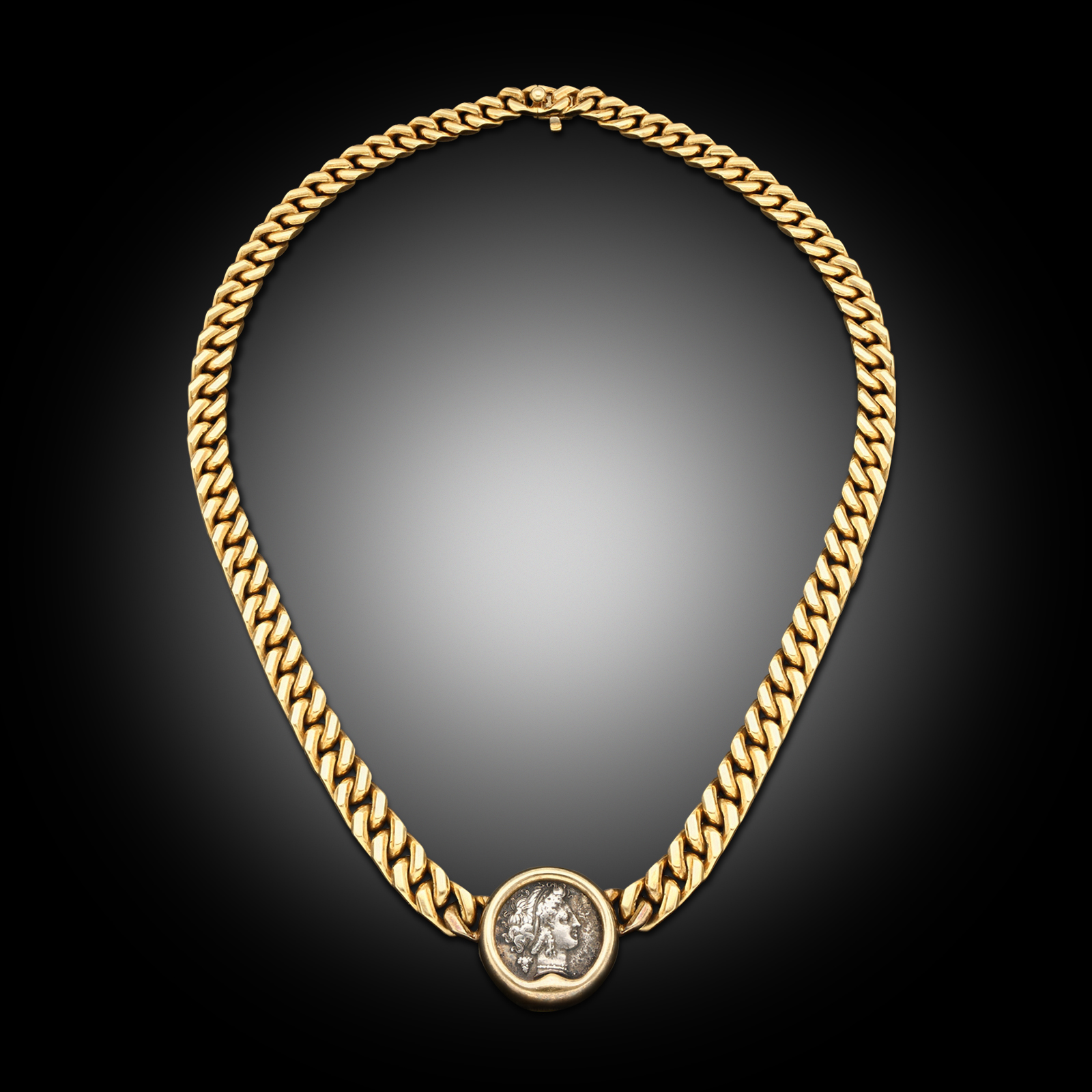
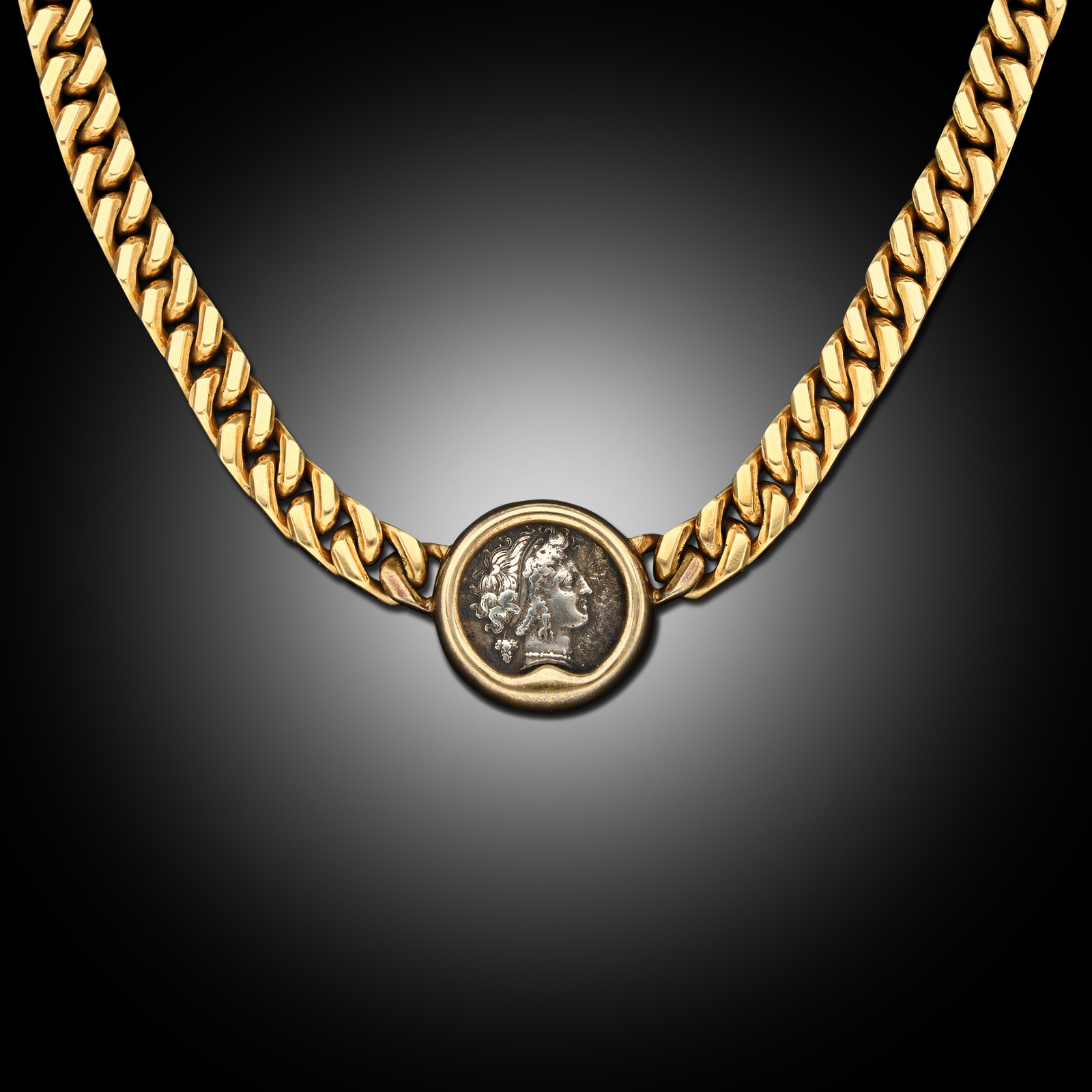
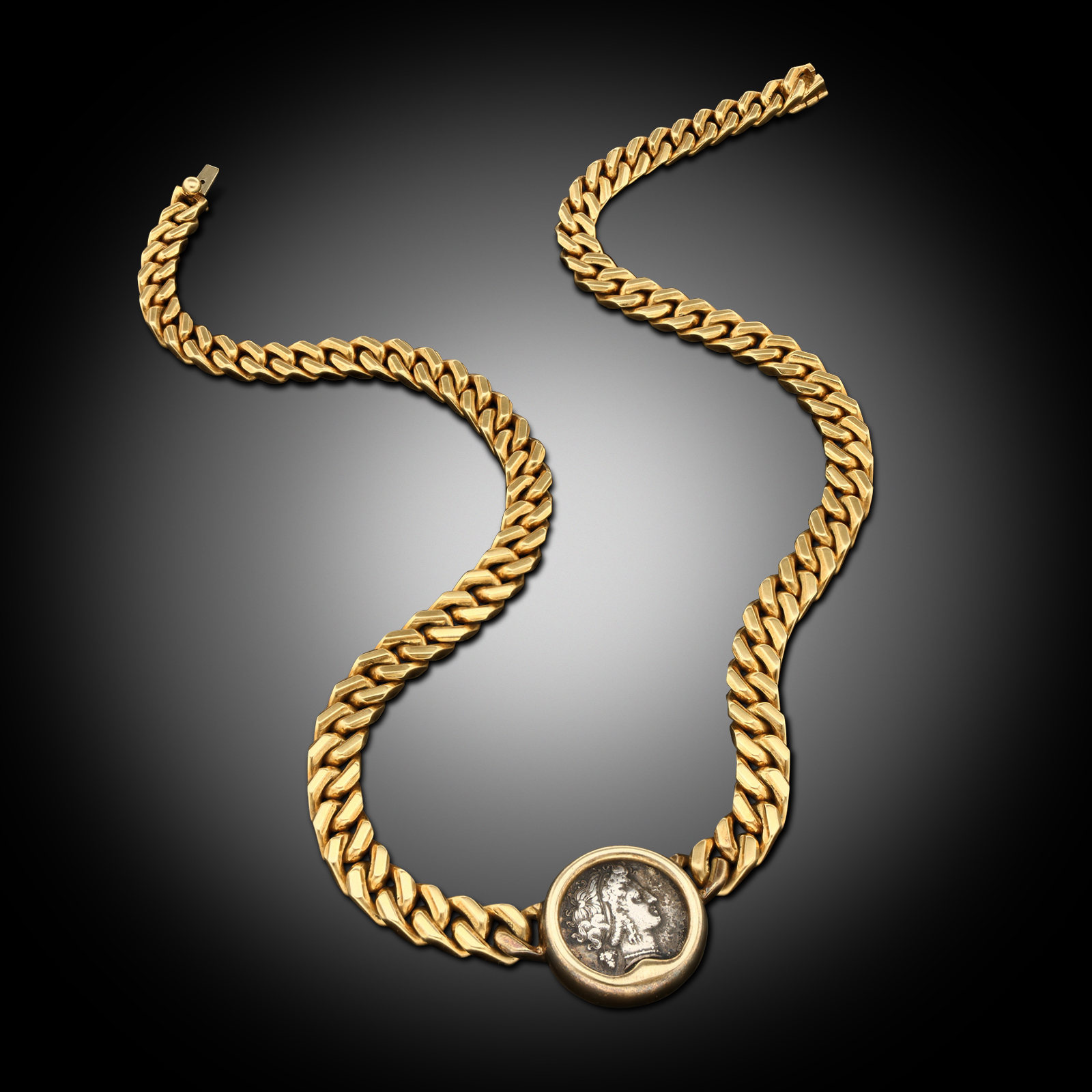
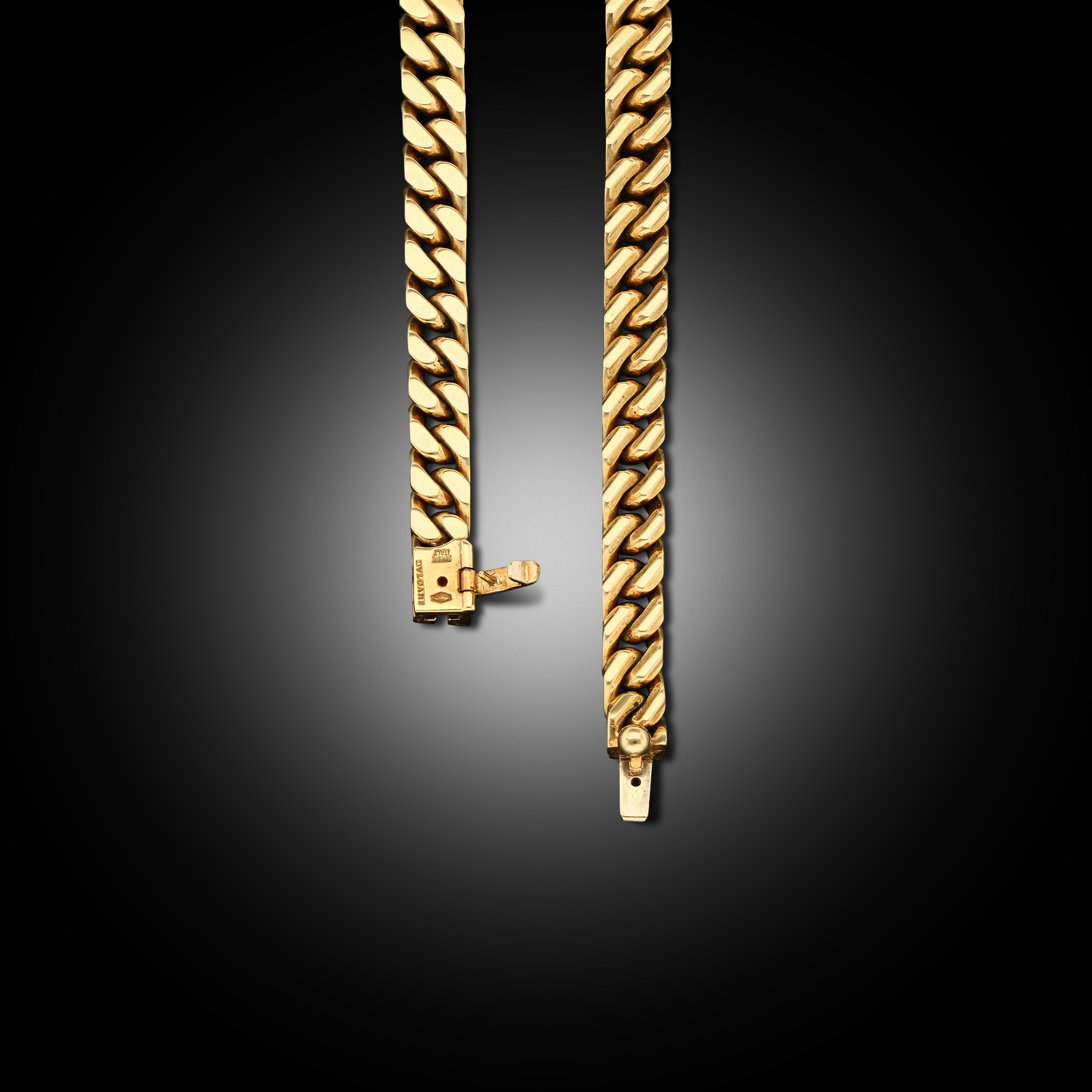
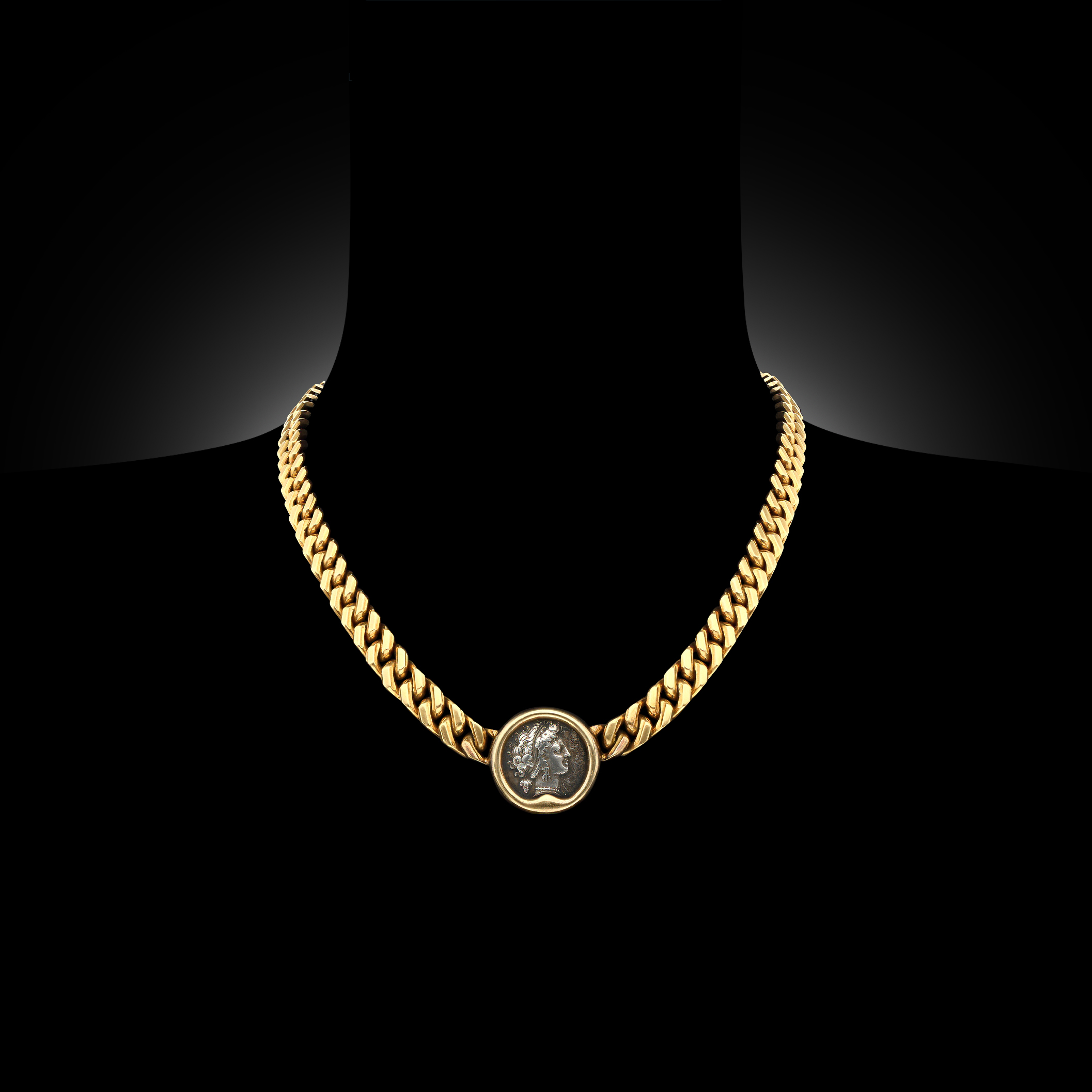
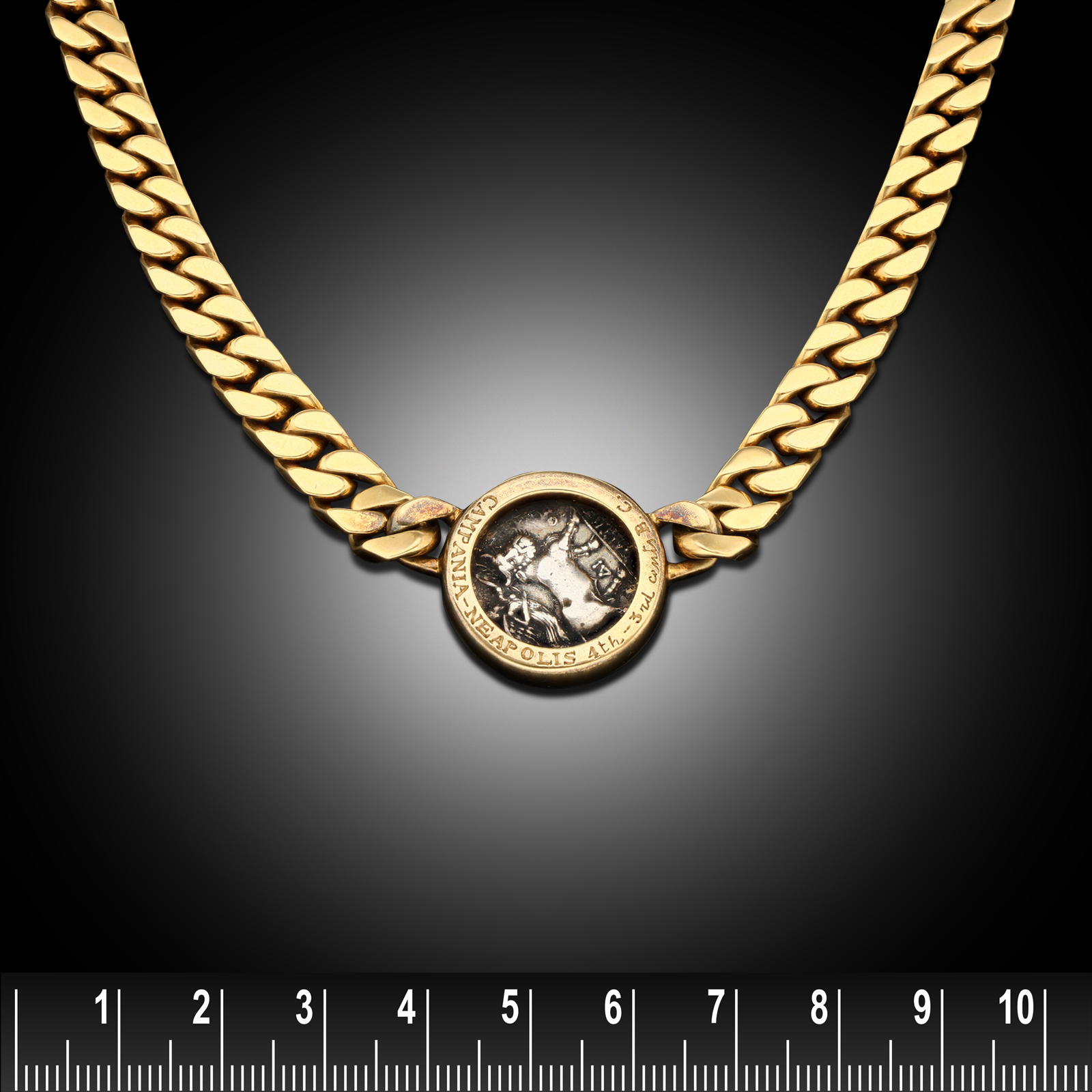
A vintage Monete coin necklace in 18ct yellow gold by Bulgari, circa 1980s. The necklace is centred on an ancient silver Greek coin depicting the head of a nymph in profile. The reverse depicts a man-headed bull, with Nike, the goddess of victory, in flight above and crowning him. The coin is set within an 18ct yellow gold frame engraved ‘CAMPANIA – NEAPOLIS 4th–3rd cent. B.C.’ and is suspended from a solid 18ct yellow gold curb link chain. It secures at the back with a concealed tongue and box clasp.
£45,000.00

Information
Maker
Bulgari
Origin
Italy
Period
1940-1980, 1980-2015
Period
circa 1980s
Gemstone
'Gemme Nummarie' (Coin gems)
Ancient Greek silver coin 'CAMPANIA - NEAPOLIS 4th - 3rd cents B.C.'
Setting
18ct yellow gold, signed Bvlgari with Italian assay marks
Dimensions
Length: 43.0cm/16.9"
Chain width: 0.6cm/0.2"
Coin diameter: 2.5cm/1.0"
Weight Description
110 grams
REF
131034
Director’s Notes
The iconic Bulgari Monete collection was launched in the mid-1960s under the direction of Nicola Bulgari, himself a passionate coin collector. The pieces were immediately well received, and the collection quickly expanded, where they remain an enduring part of Bulgari’s design language to this day. While the practice of setting coins into jewellery dates back as far as the Roman Empire, it experienced a revival in popularity during the late 19th century. Bulgari’s interpretation is distinguished by a deep respect for the historic and cultural significance of the ancient coins used in their jewels. Referred to by the maison as Gemme Nummarie (coin gems), each coin is set with exceptional care to ensure their preservation. In every Monete jewel, the historical details of the coin are engraved into the mount, ensuring their provenance and significance are never lost. Deeply proud of its Roman heritage, Bulgari honours its cultural origins through the use of these ancient and classical coins. The Monete collection is therefore more than jewellery; each piece is a jewelled historical artefact.


