




Hancocks
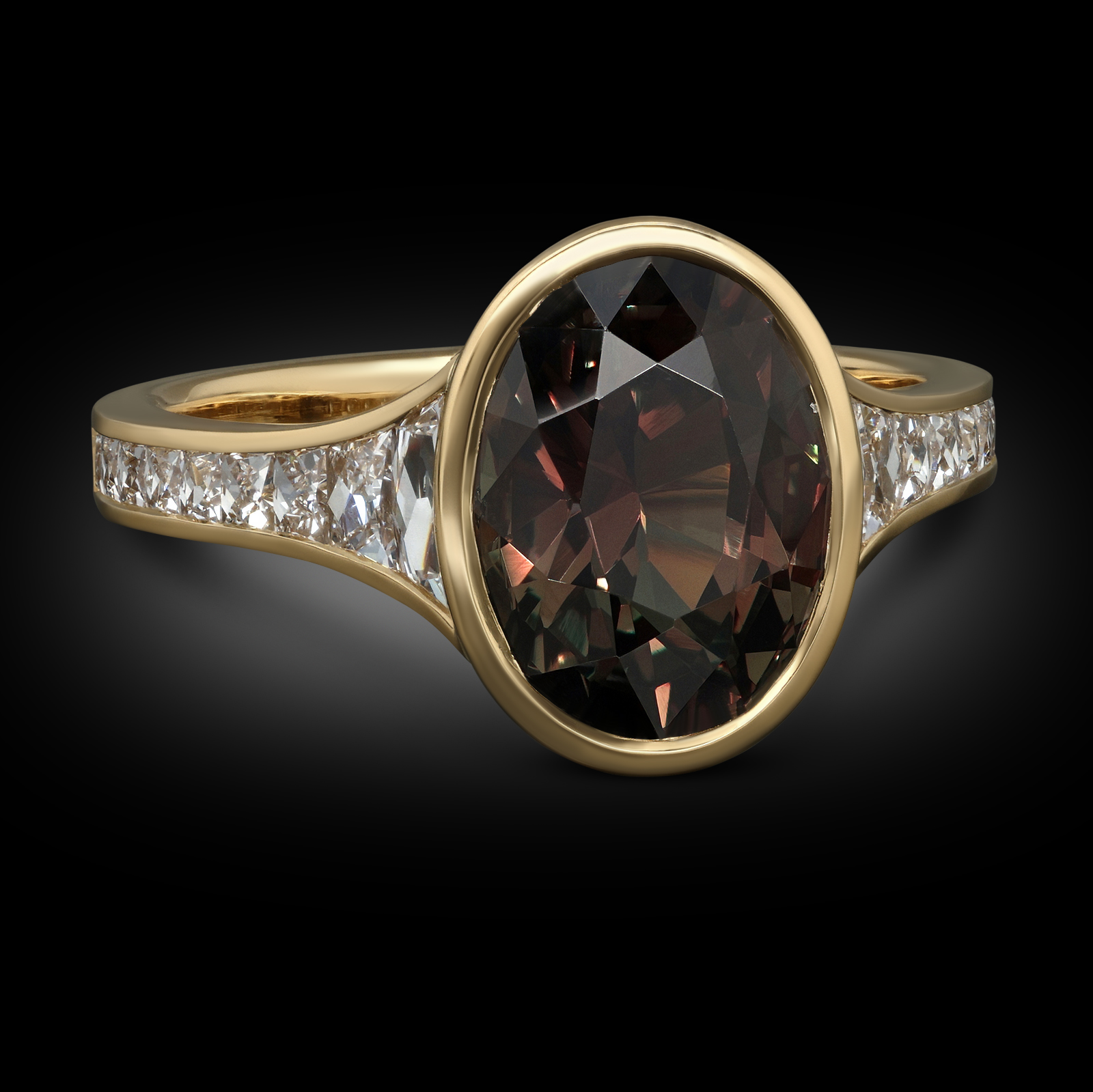
4.26ct Colour Change Alexandrite & Diamond Ring
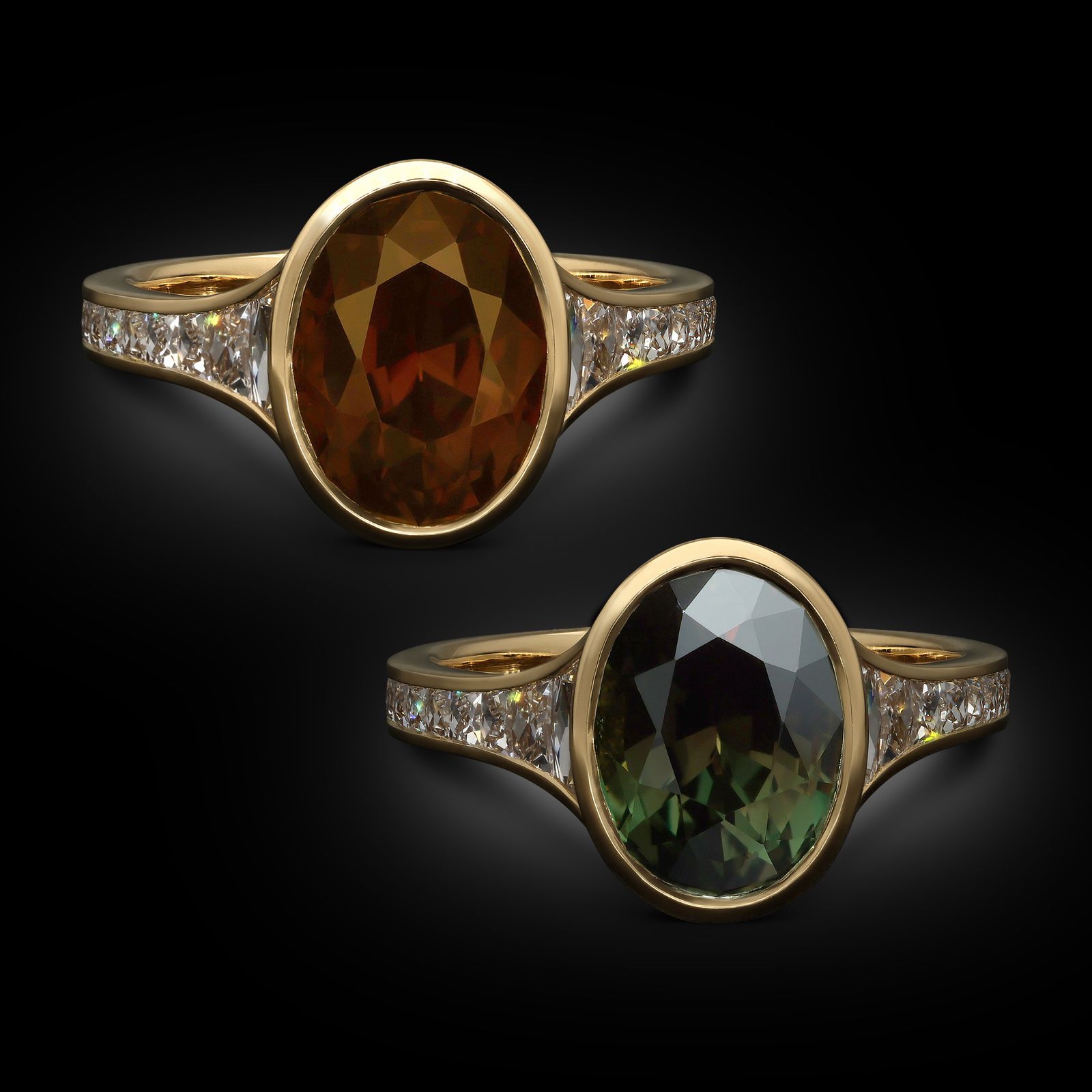
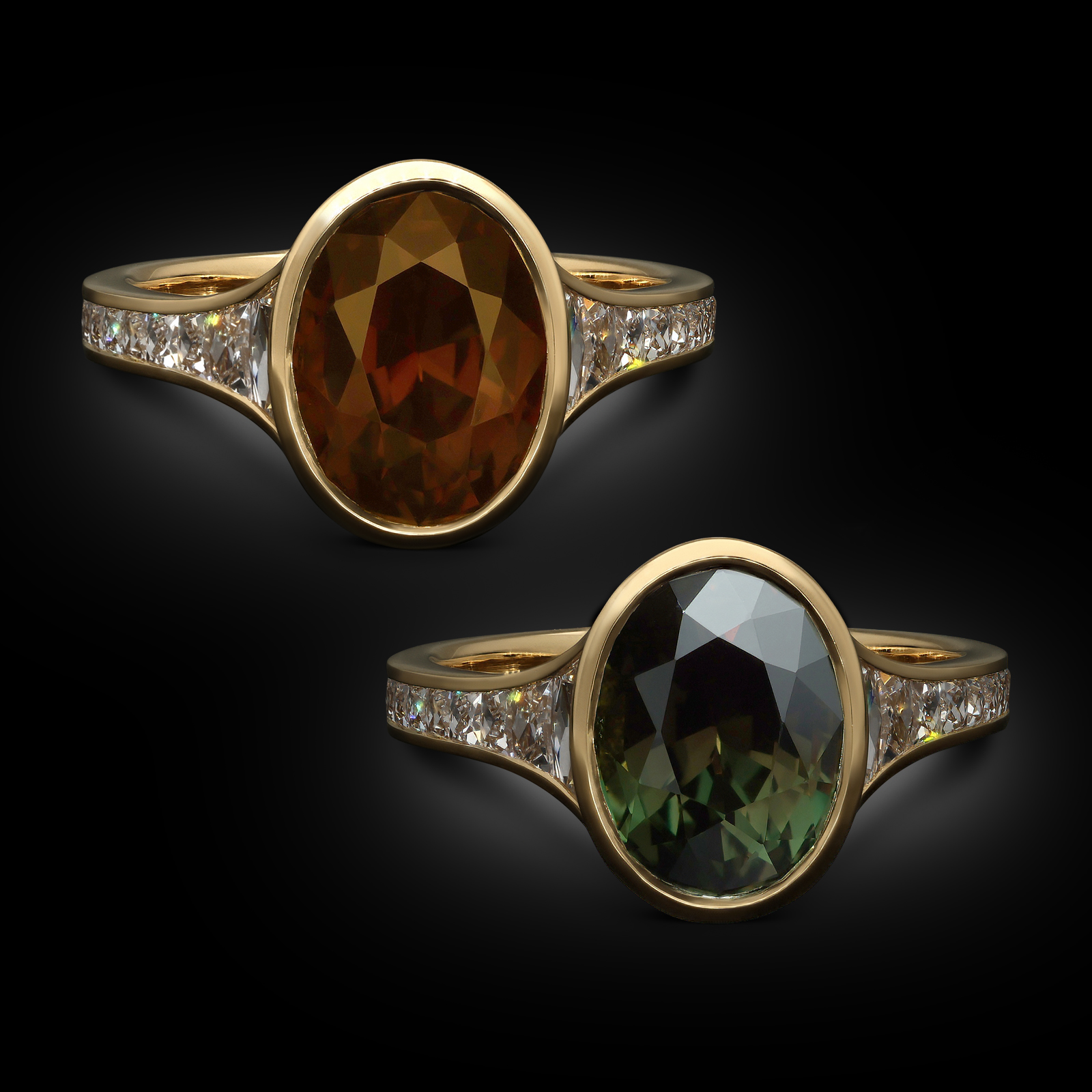
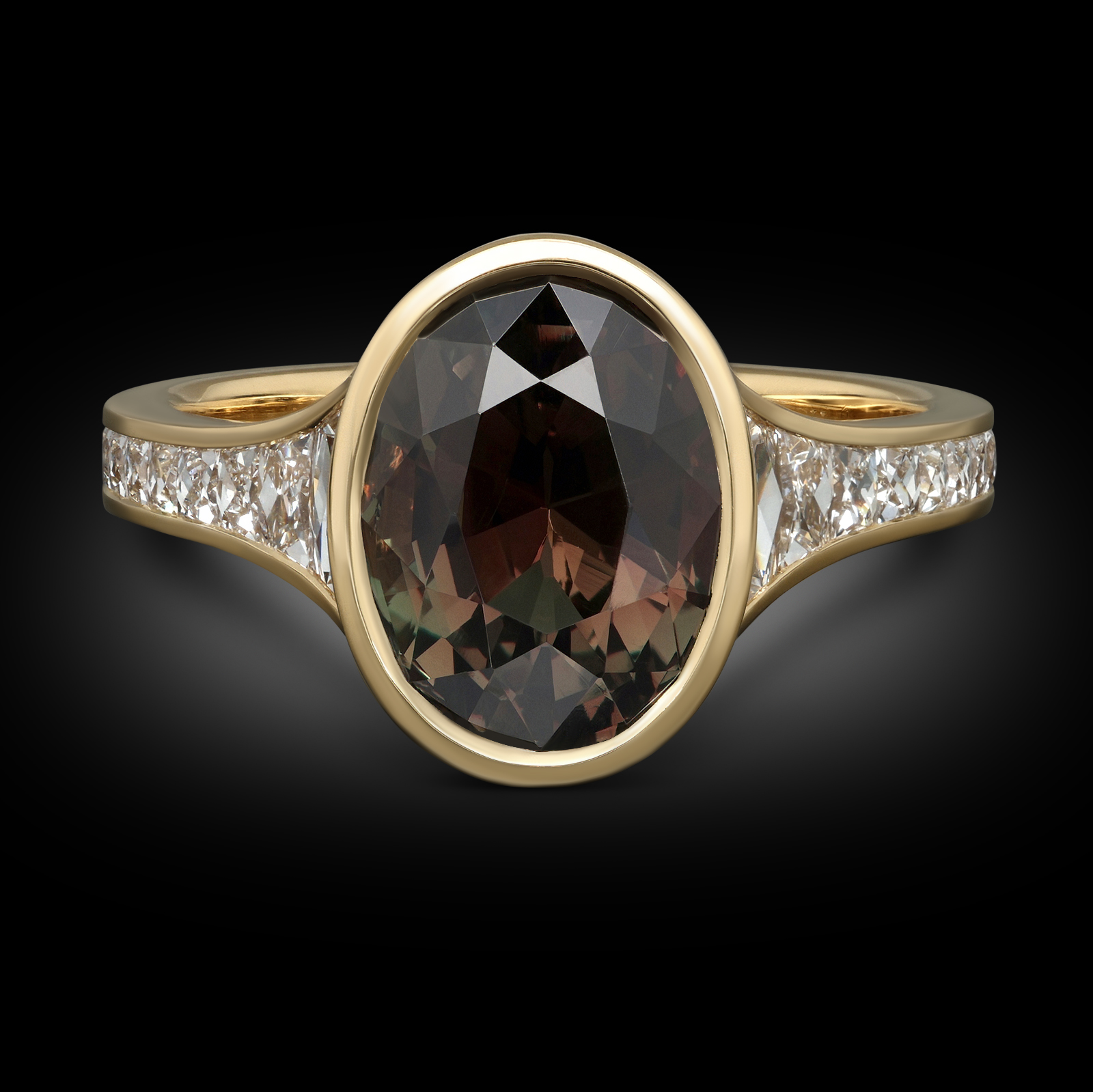
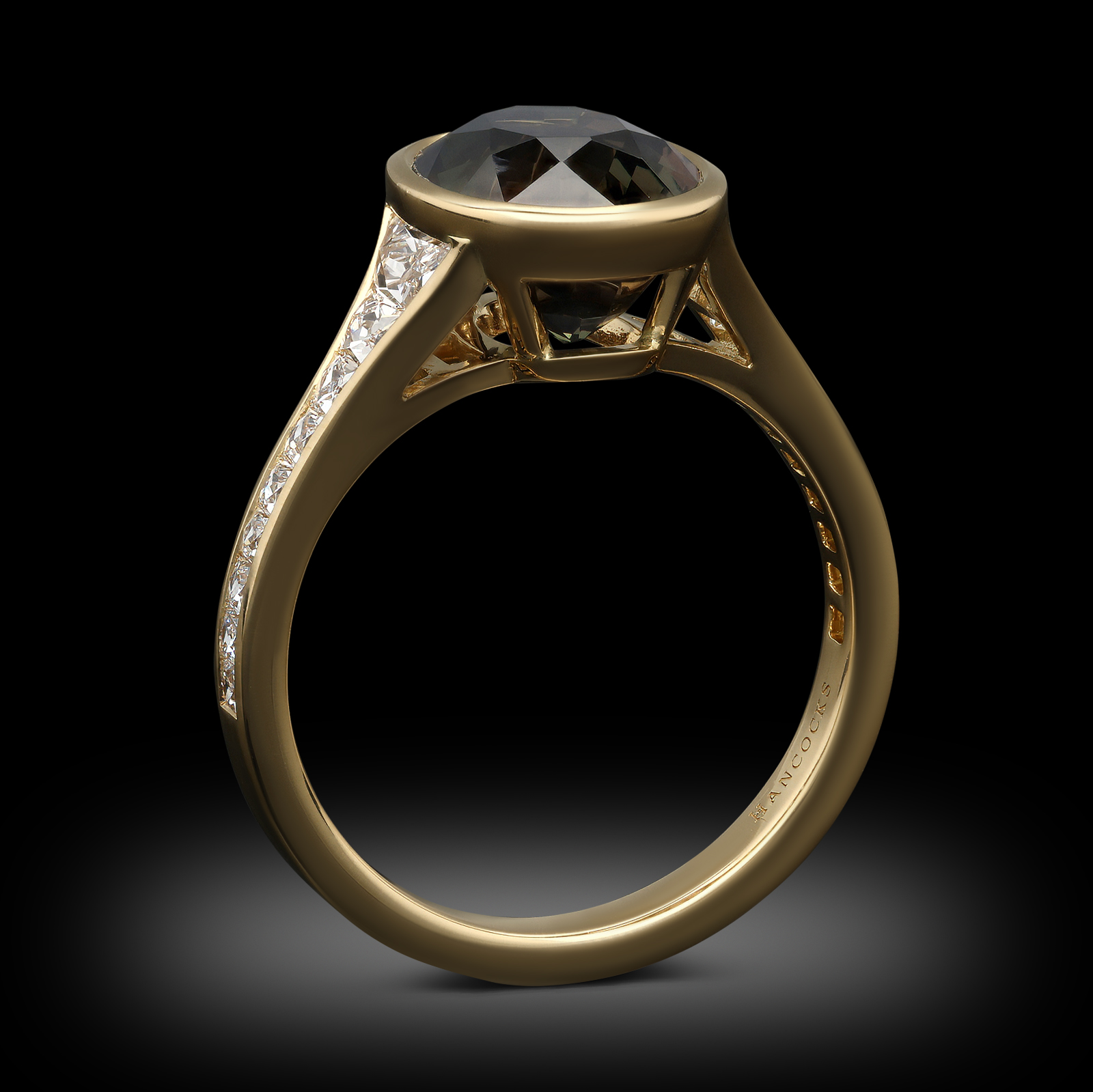
A colour change Alexandrite and diamond ring by Hancocks. The handcrafted ring is set to the centre with a 4.26ct oval cut Alexandrite displaying a strong colour change, bezel set in 18ct yellow gold and between tapering shoulders channel set with calibré French cut diamonds, to a polished 18ct yellow gold band.
£58,500.00

Information
Maker
Hancocks
Origin
London
Period
Contemporary
Gemstone
4.26ct oval cut Ceylon Alexandrite - with AGL certificate
18 x French cut diamonds, total weight 0.80ct
Setting
18ct yellow gold
Dimensions
UK finger size N, US size 6.75 (Can be made to fit any size)
Head: 12.0mm x 9.5mm
Band width at centre back: 2.5mm
Weight Description
5.2 grams
REF
130587
Director’s Notes
Alexandrite is a member of the Chrysoberyl family of gemstones, renowned for its fascinating colour change effect from raspberry red to deep green. First discovered in 1834 by the mineralogist Nordenskiöld in the Ural Mountains of Russia, it was initially mistaken for emerald, having been found very close to an emerald mine. However, further examination of the gemstone and the discovery of its extraordinary ability to change colour by candlelight resulted in it being declared a new and exciting variety of gem altogether. Legend has it that the first Alexandrite was discovered on the very day the young heir to the Russian throne, Tsar Alexander II, turned 16. It was therefore only fitting that this remarkable new gemstone be named in his honour. Not only was Alexandrite purportedly discovered on this auspicious day, but its colours also mirrored those of Imperial Russia’s military, and it was not long before it was heralded as the official gemstone of the Tsars. Further discoveries of Alexandrite were made soon after in Ceylon (now Sri Lanka), and for many years these two locations were the only known sources of this exceptional gemstone. Alexandrite is rarely found in large sizes and, when this characteristic is coupled with good clarity and a strong, attractive colour change, the stone must be considered exceptionally rare and valuable. The colour change effect is caused by the element chromium and the very specific way in which Alexandrite absorbs light from the visible spectrum. When viewed in daylight, which is rich in green-blue light, the stone appears green; however, when viewed under incandescent light, such as candlelight, which is richer in red wavelengths, it appears red. Today, Alexandrite is recognised as one of the birthstones for June.


