



Art Deco
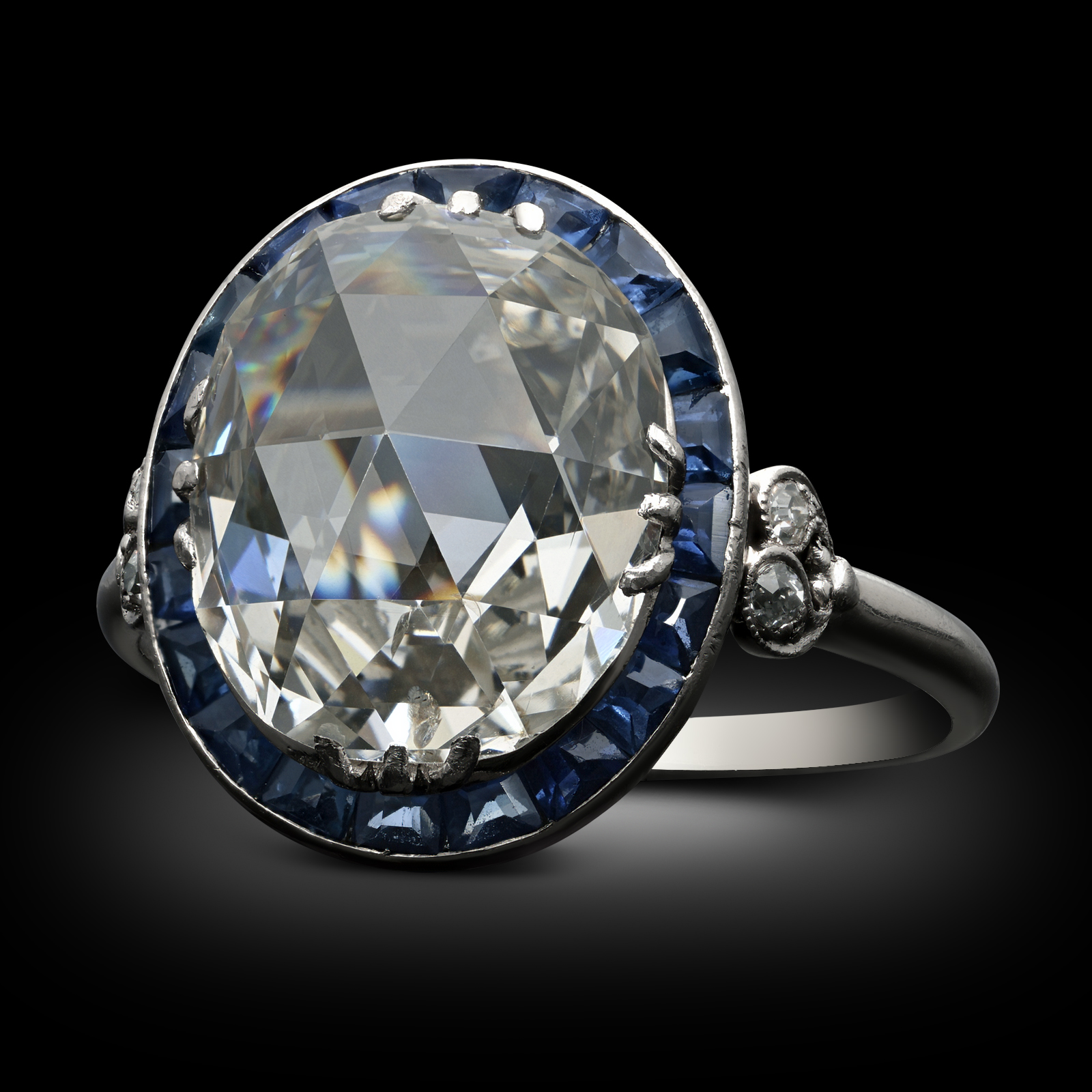
3.34ct Antique Oval Rose Cut Diamond Ring
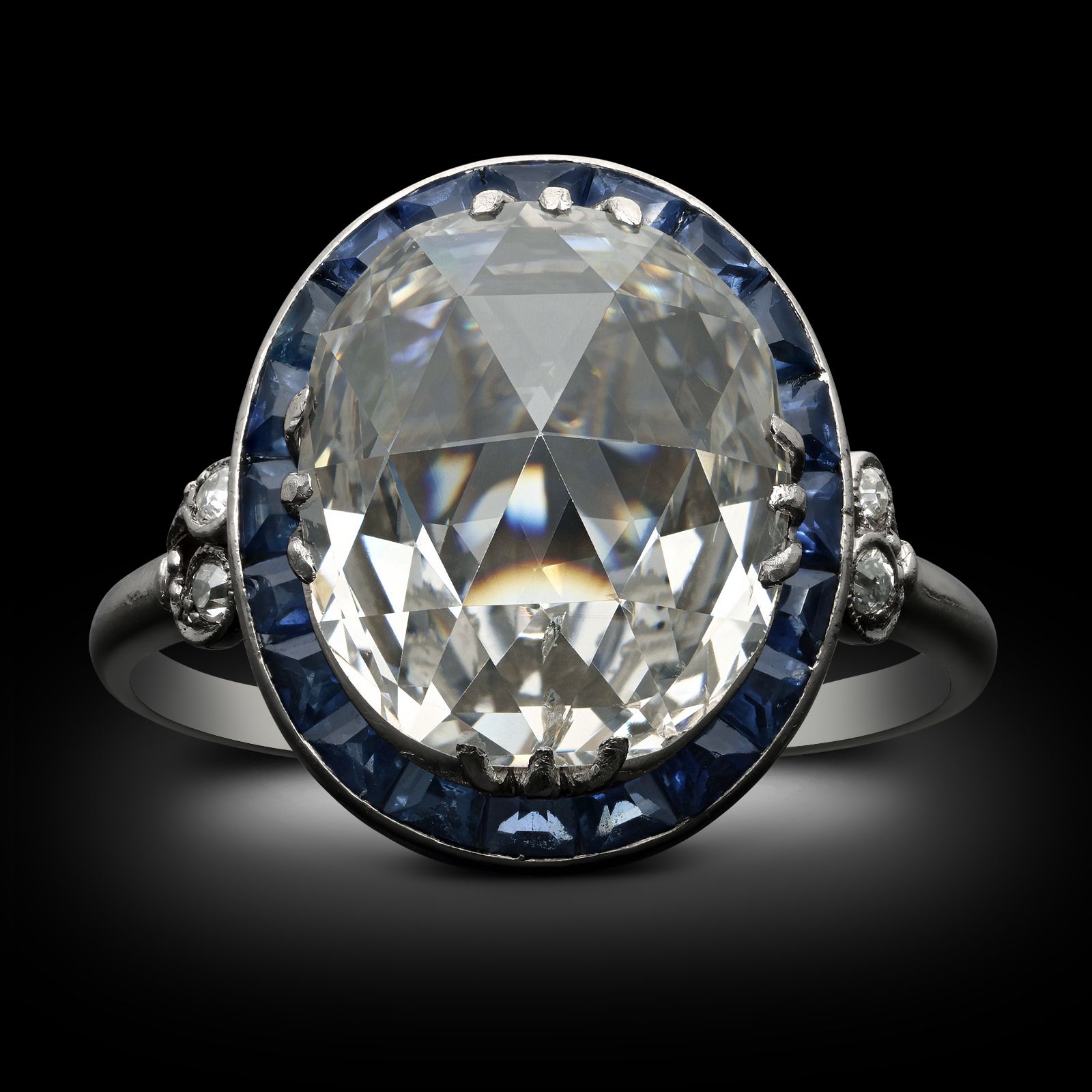
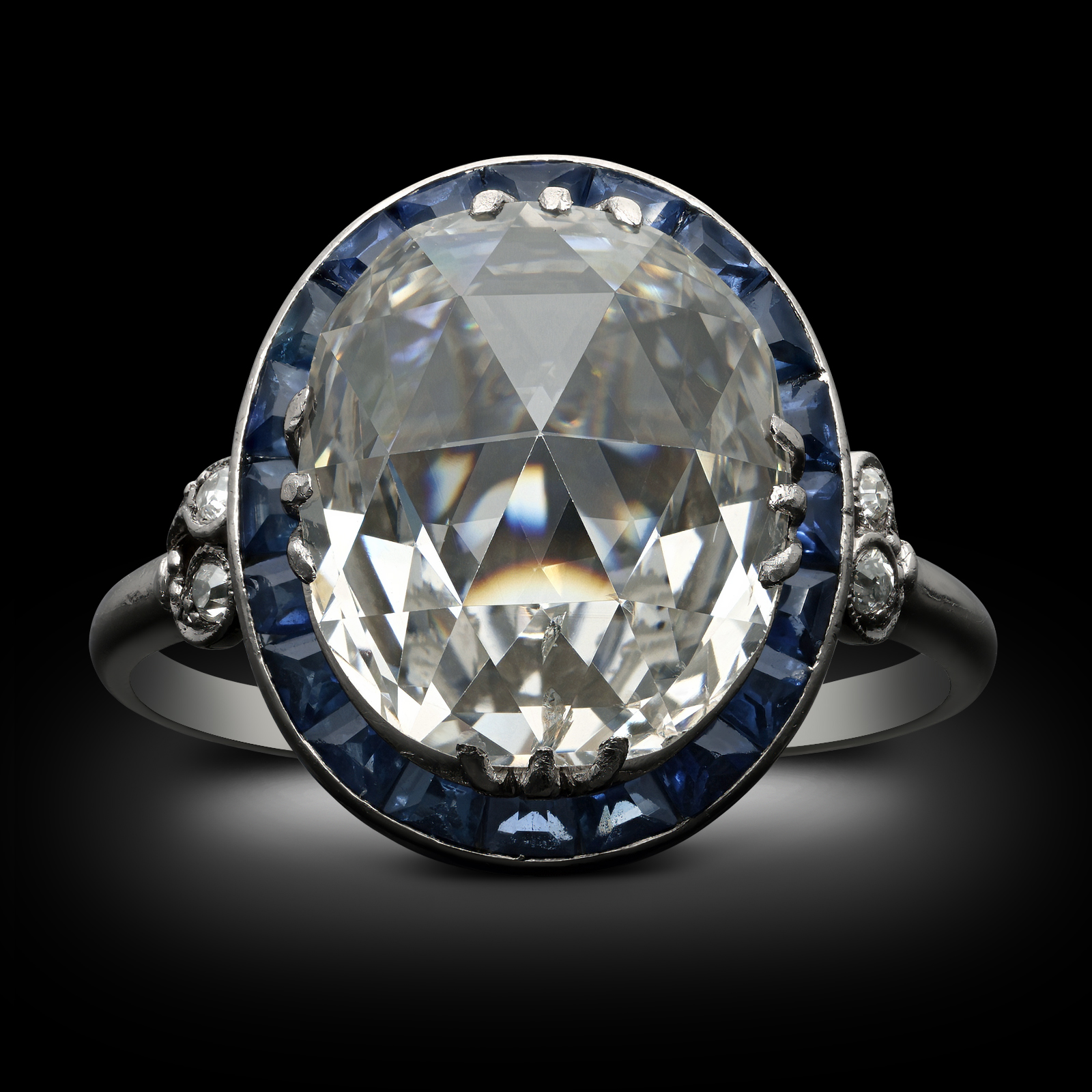
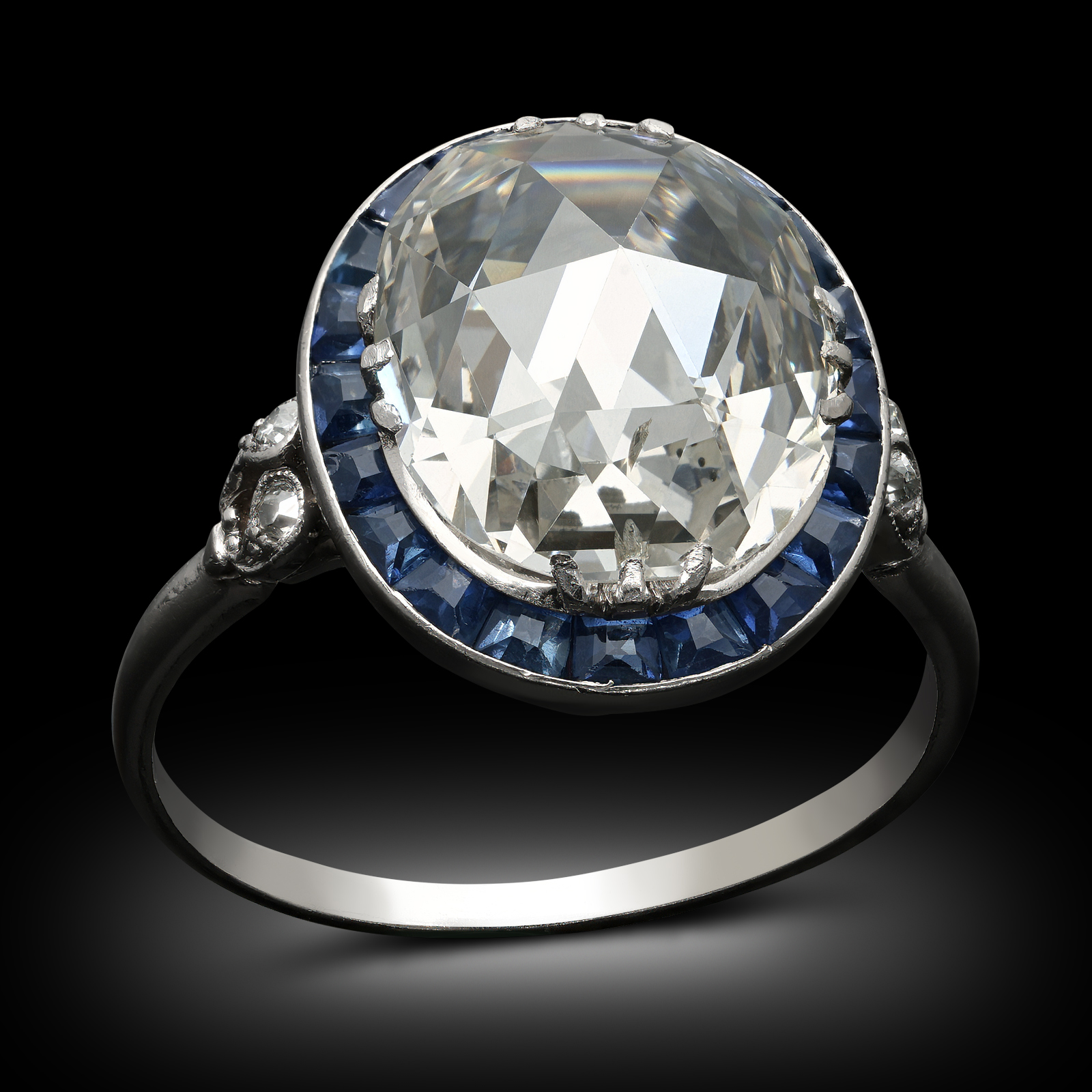
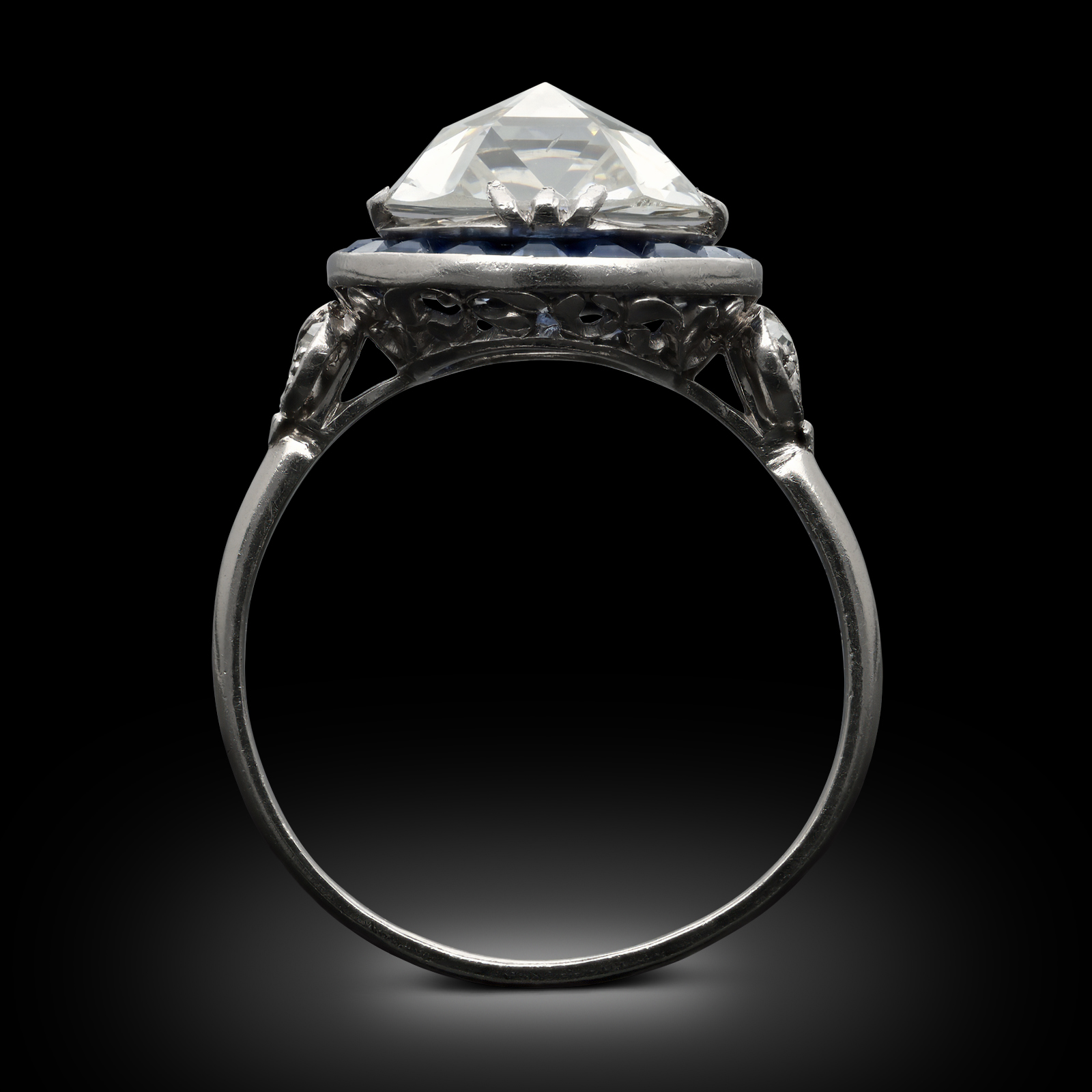
An antique rose cut diamond and sapphire ring, circa 1920. The antique 3.30ct oval rose cut diamond is claw set in platinum and bordered by a halo of calibré cut sapphires, to an openwork platinum gallery with scrolled shoulders set with single-cut diamonds, and a plain platinum band.
£59,500.00

Information
Subtitle
Art Deco
Origin
France
Period
1900-1940
Period
circa 1920
Gemstone
3.30ct I SI2 antique oval rose cut diamond - with GIA certificate
4 x single cut diamonds, estimated total weight 0.04ct
20 x calibré sapphires, estimated total weight 0.40ct
Setting
Platinum, with French assay marks
Dimensions
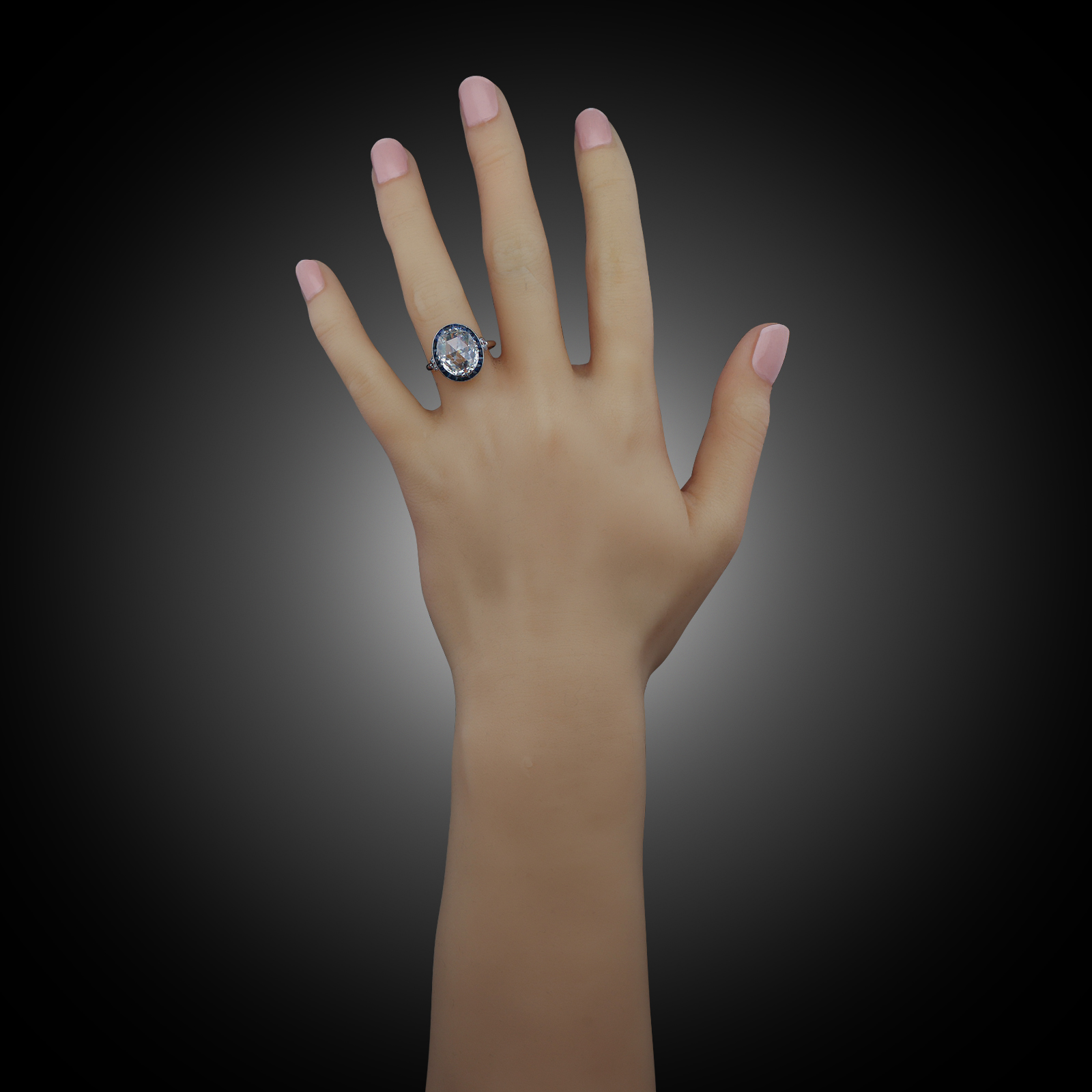
UK finger size P 1/2, US 7.75 (can be adjusted)
Head: 15.5mm x 13.2mm
Weight Description
5.2 grams
REF
131106
Director’s Notes
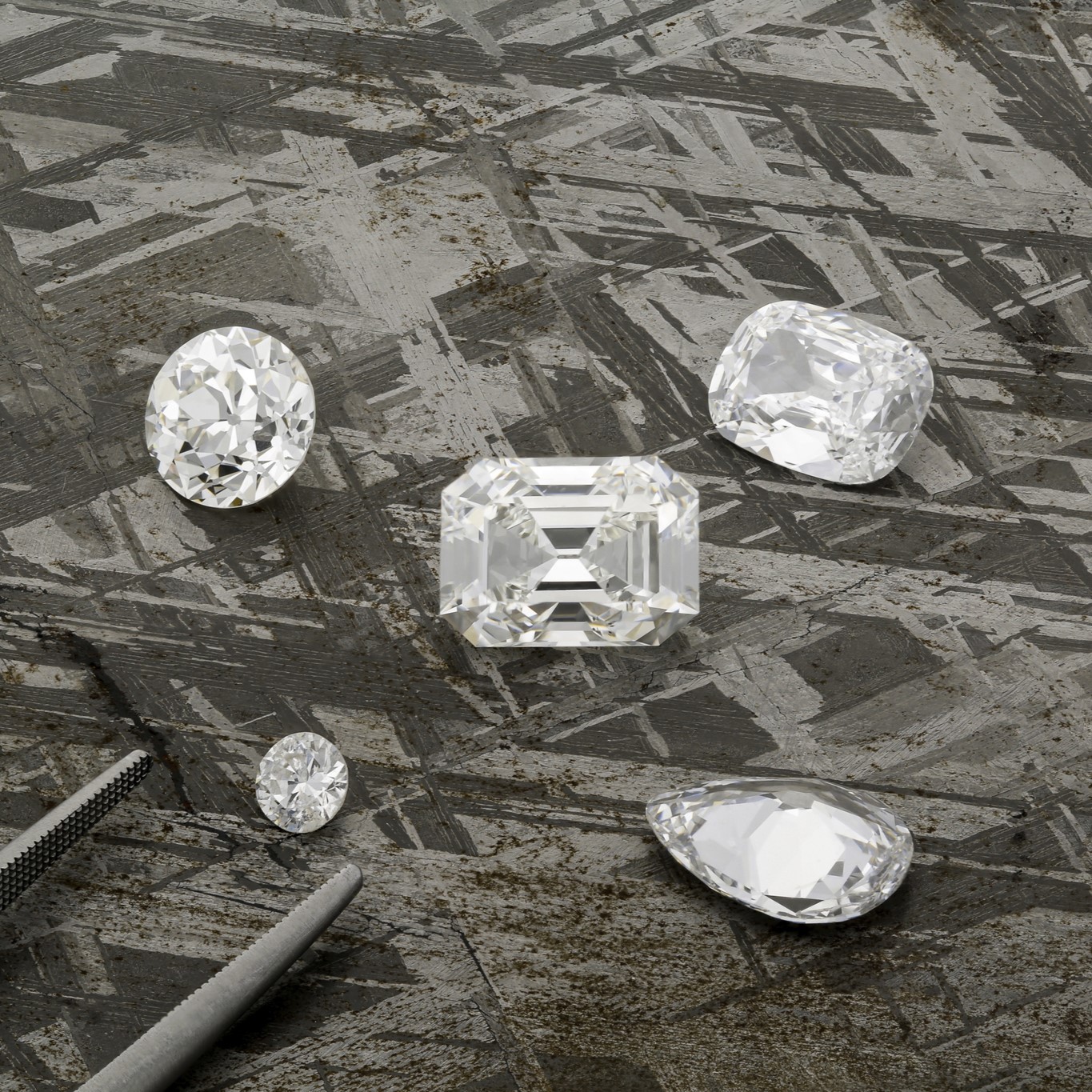
The rose cut is one of the earliest diamond cuts, with origins dating back to the 15th century. Prior to its development, most diamonds were simply polished with the addition of a table facet, meaning the cutting and shaping of rough crystals remained minimal. Whilst the earliest rose cuts were often irregular in outline, they became more refined over time and are characterised by their flat backs and fully faceted domed tops covered in triangular facets. These were the first diamonds to be fully cut and faceted, rather than merely polished, and were first introduced in Antwerp. The rose cut also made efficient use of flatter pieces of rough, allowing them to be utilised alongside better formed crystals. Originally, rose cut diamonds featured as few as three or six facets on the crown, though this gradually increased to as many as twenty-four. The term ‘double rose’ refers to a rose cut diamond domed at both the top and bottom, with each side fully faceted with small triangular facets. With the discovery of diamond deposits in Brazil and the advancement of cutting techniques in Europe, diamonds became more widely available and cutters began to experiment with faceting. At the same time, they sought ways to alter the natural outline of rough crystals, creating stones that were rounder and more uniform in shape. Writing in 1568, Benvenuto Cellini described the process now known as ‘bruting’, whereby one diamond was turned against another in order to round its outline. This marked the first time diamonds were intentionally shaped rather than simply following the form of the original rough crystal. Part of the appeal of rose cut diamonds, both historically and today, lies in their shallow proportions, which allow them to appear larger than brilliant cut diamonds of the same carat weight, creating a showier appearance for a comparable cost. Rose cut diamonds remained popular until the late 19th century, when they gradually fell from favour as brilliant cuts became dominant. Today, however, they are experiencing a resurgence in popularity.


