



Hancocks
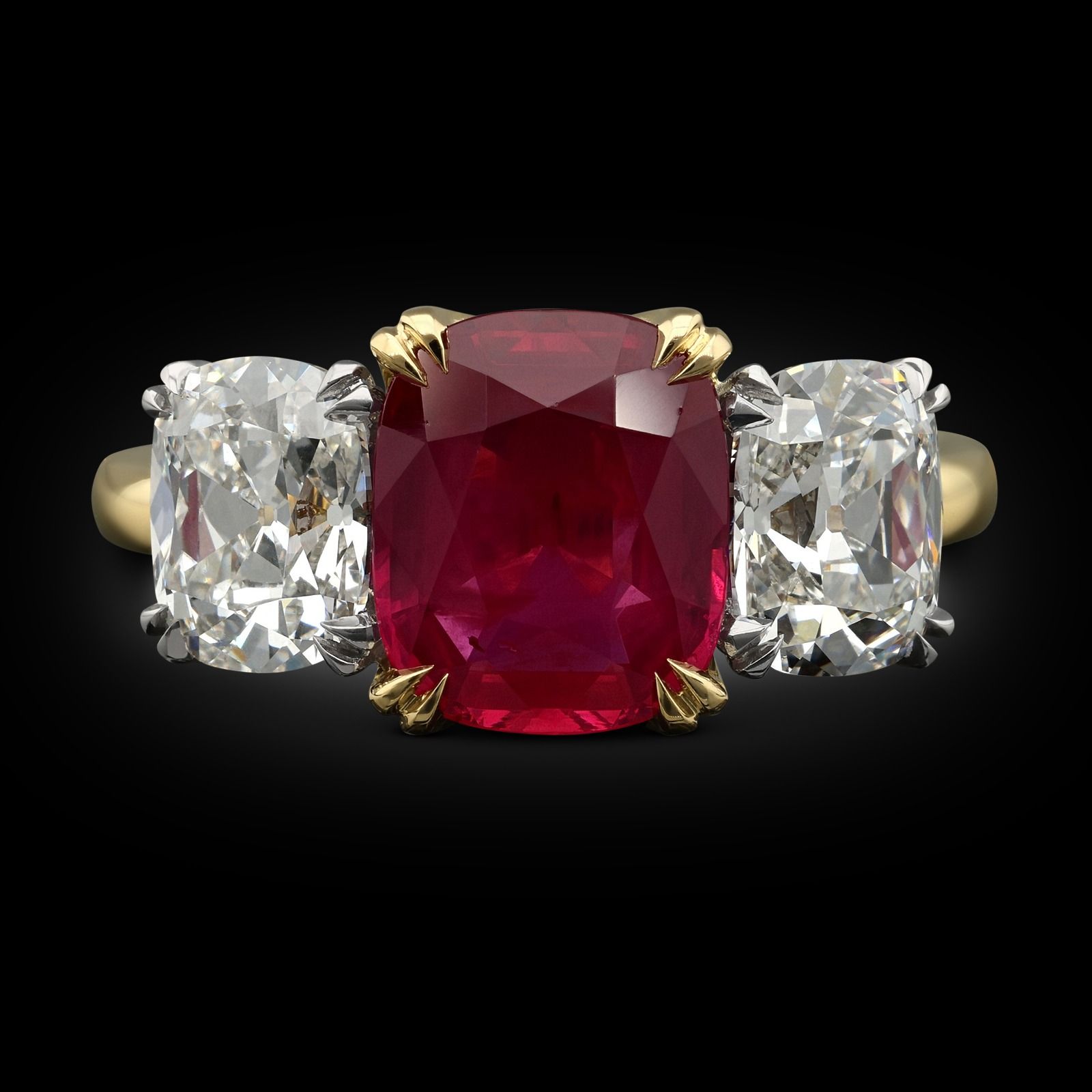
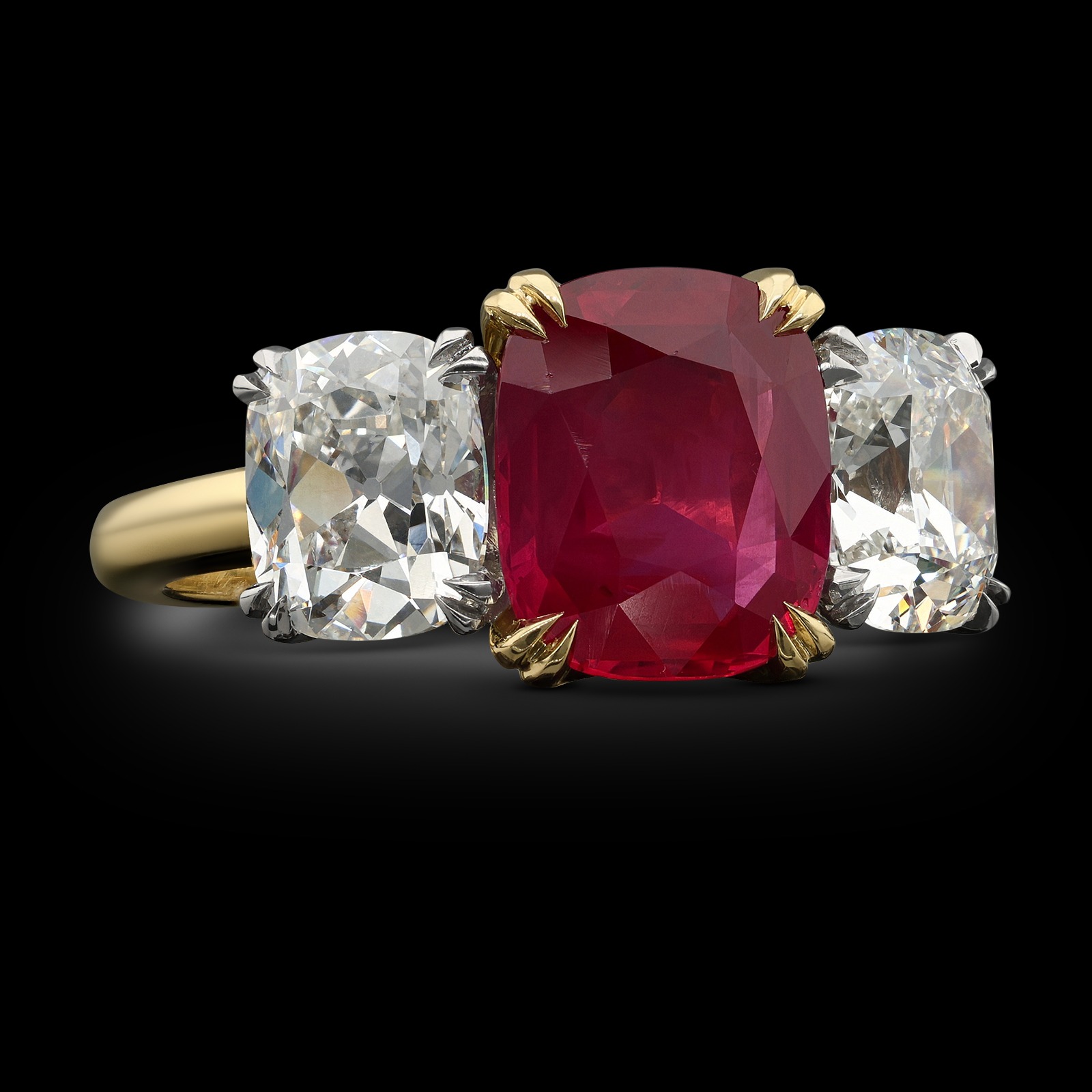
2.55ct Burmese Ruby & 2.04ct Old Mine Cut Diamond Three Stone Ring
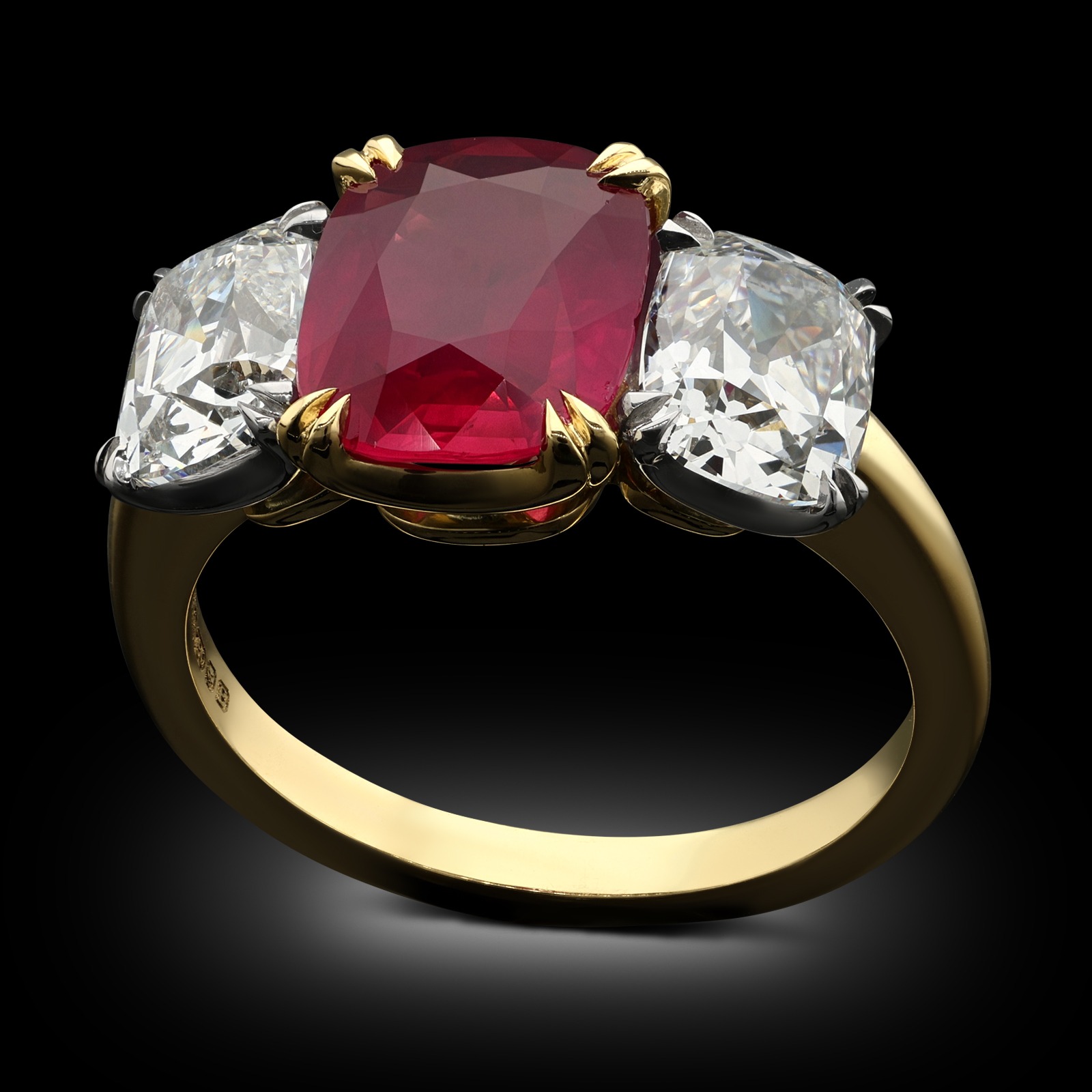
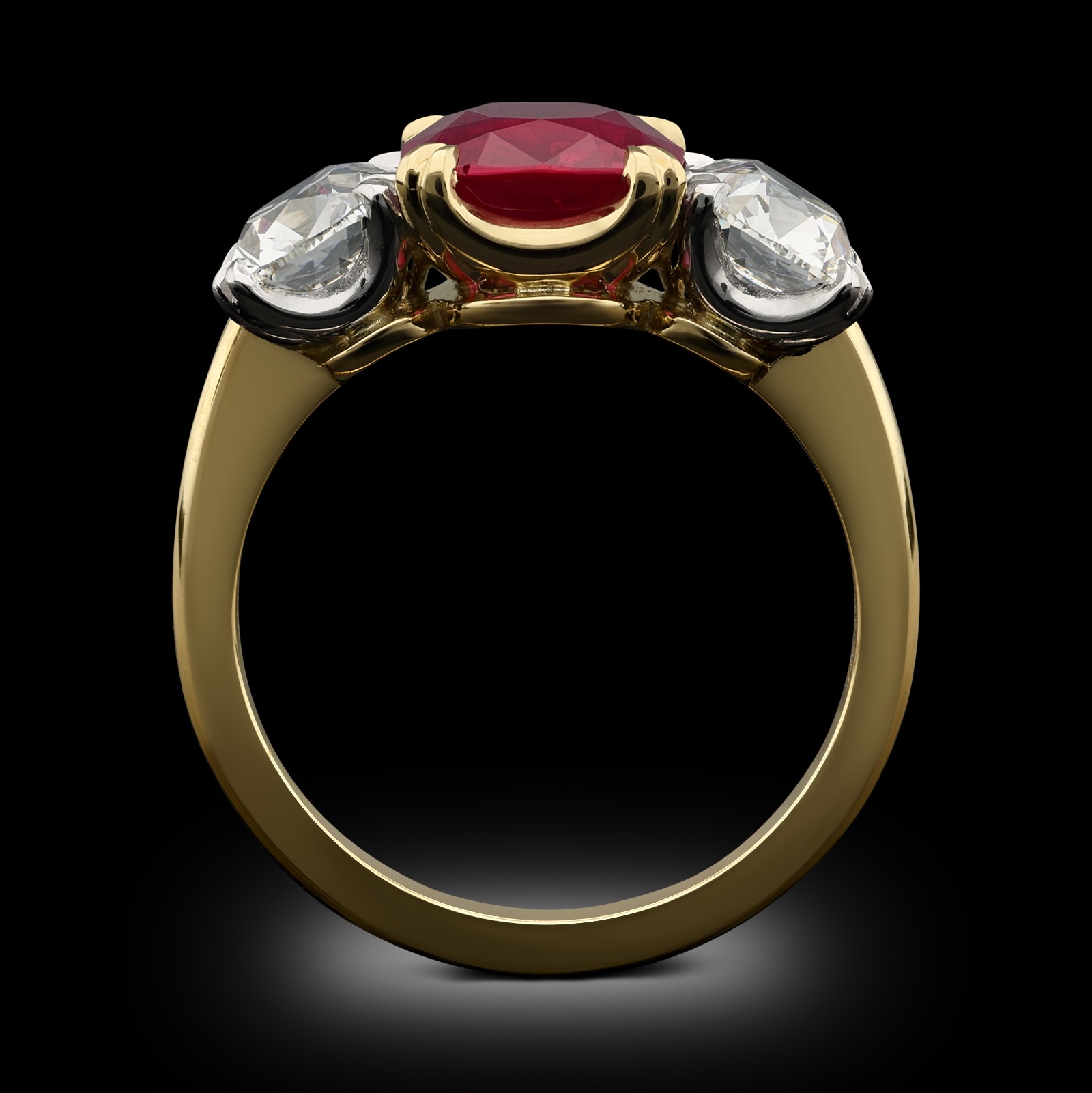
A Burmese ruby and old cut diamond three stone ring by Hancocks. The handcrafted ring is centred on an antique cushion cut Burmese ruby weighing 2.55ct, claw set in 18ct yellow gold, between two old mine cushion cut diamonds weighing 1.03ct and 1.01ct, both claw set in platinum, all to a scalloped gallery and 18ct yellow gold band.
£75,000.00

Information
Maker
Hancocks
Origin
London
Period
Contemporary
Gemstone
2.55ct antique cushion cut unheated Burmese ruby - with SSEF certificate
1.03ct F VS2 old mine brilliant cut diamond - with GIA certificate
1.01ct G SI1 old mine brilliant cut diamond - with GIA certificate
Setting
18ct yellow gold and platinum
Dimensions
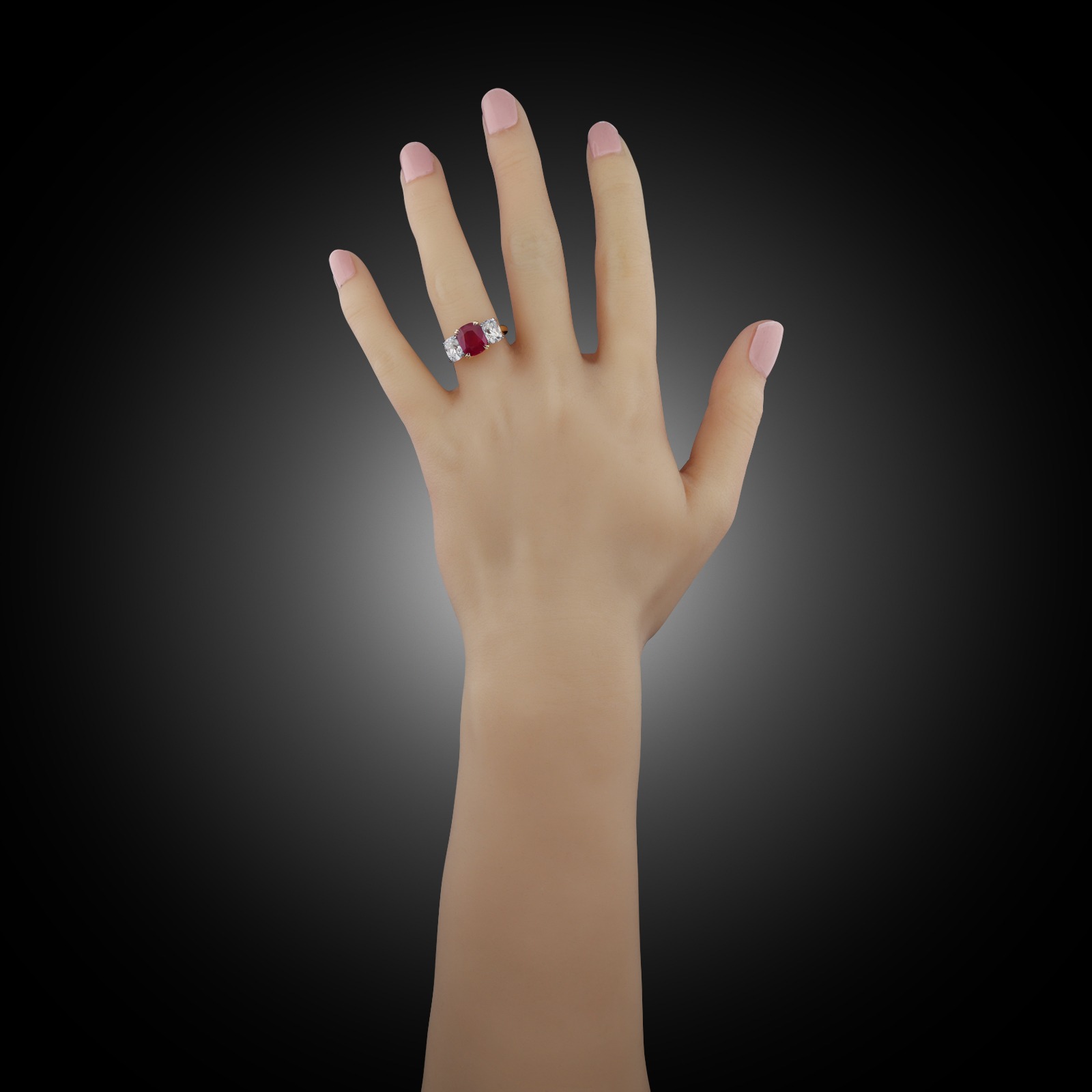
UK finger size L, US size 5.75 (can be adjusted to fit any size)
Head: 9.0mm x 17.0mm
Band width: 2mm
Weight Description
6 grams
REF
131390
Director’s Notes
Rubies mined in Burma have long been held as the absolute ideal in terms of colour for a ruby, displaying an exceptionally beautiful rich deep red with neither too much brown nor pink in them. The term ‘pigeon’s blood’ has historically been used in an attempt to define this colour that is found in the best examples produced by this region. The Mogok Valley in Upper Burma (now known as Myanmar) has been the world’s primary ruby source for centuries and the origins of the mines are swathed in mystery and legend. What is certain is that references to these gems have been found dating back to the Shan Dynasty in the 6th Century. The mines were taken over by the King of Burma in 1597 and all rubies over a certain size had to be given to him on discovery rather than sold. Today there are many different mines in the area both privately owned and government run. New deposits were found in the Mong Hsu area of the country in the 1990’s and more recently a new source has been discovered in the northern region of Namya.


