



Hancocks
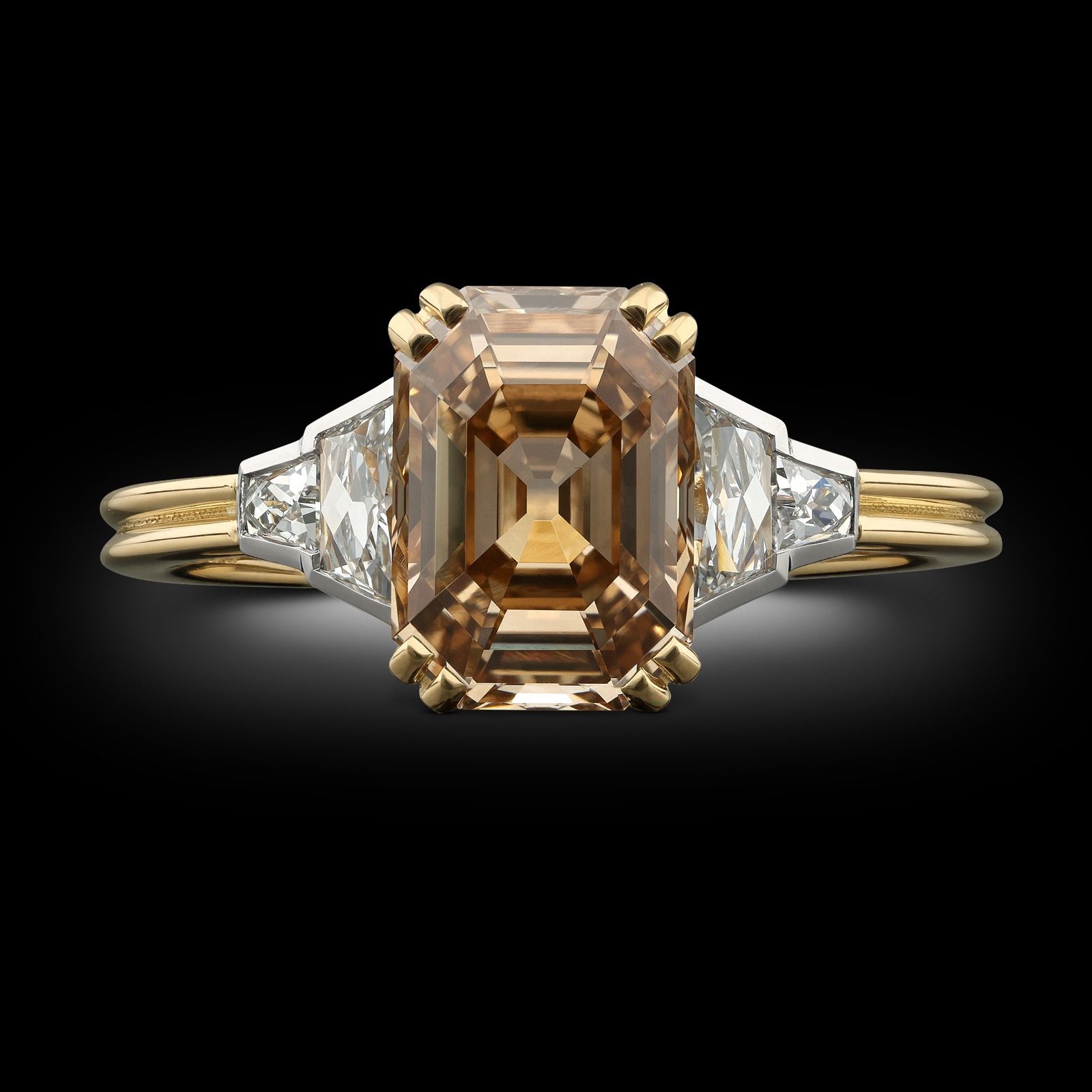
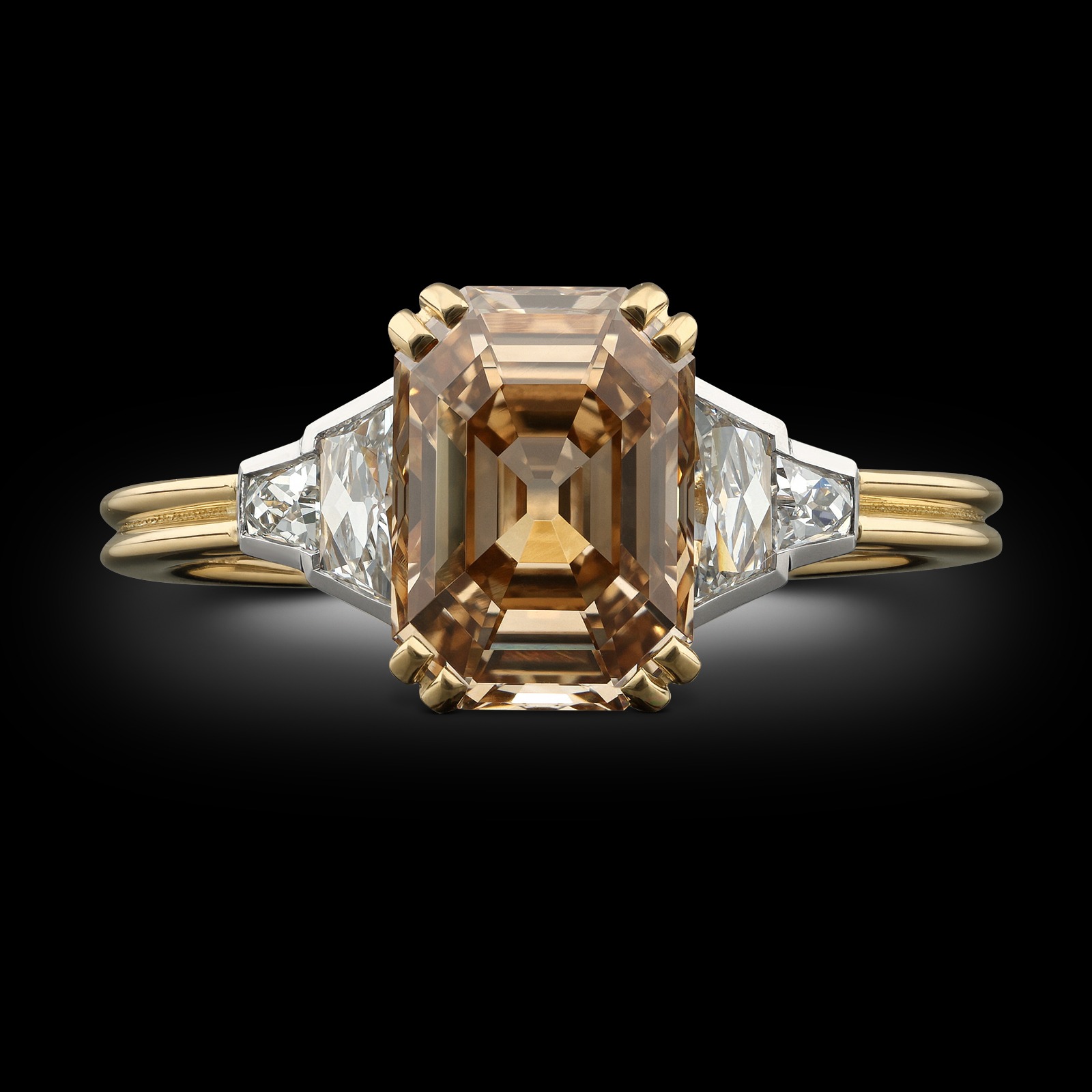
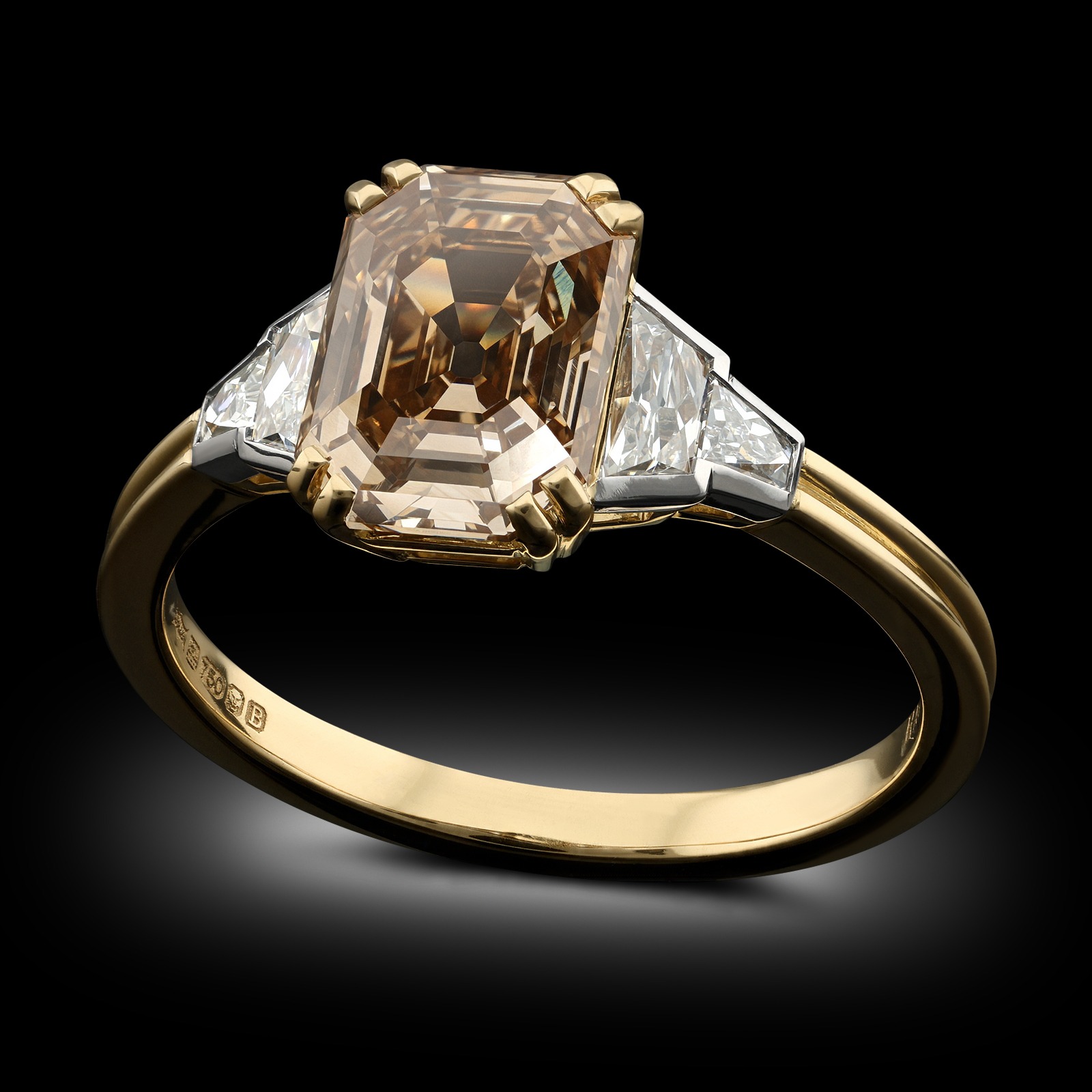
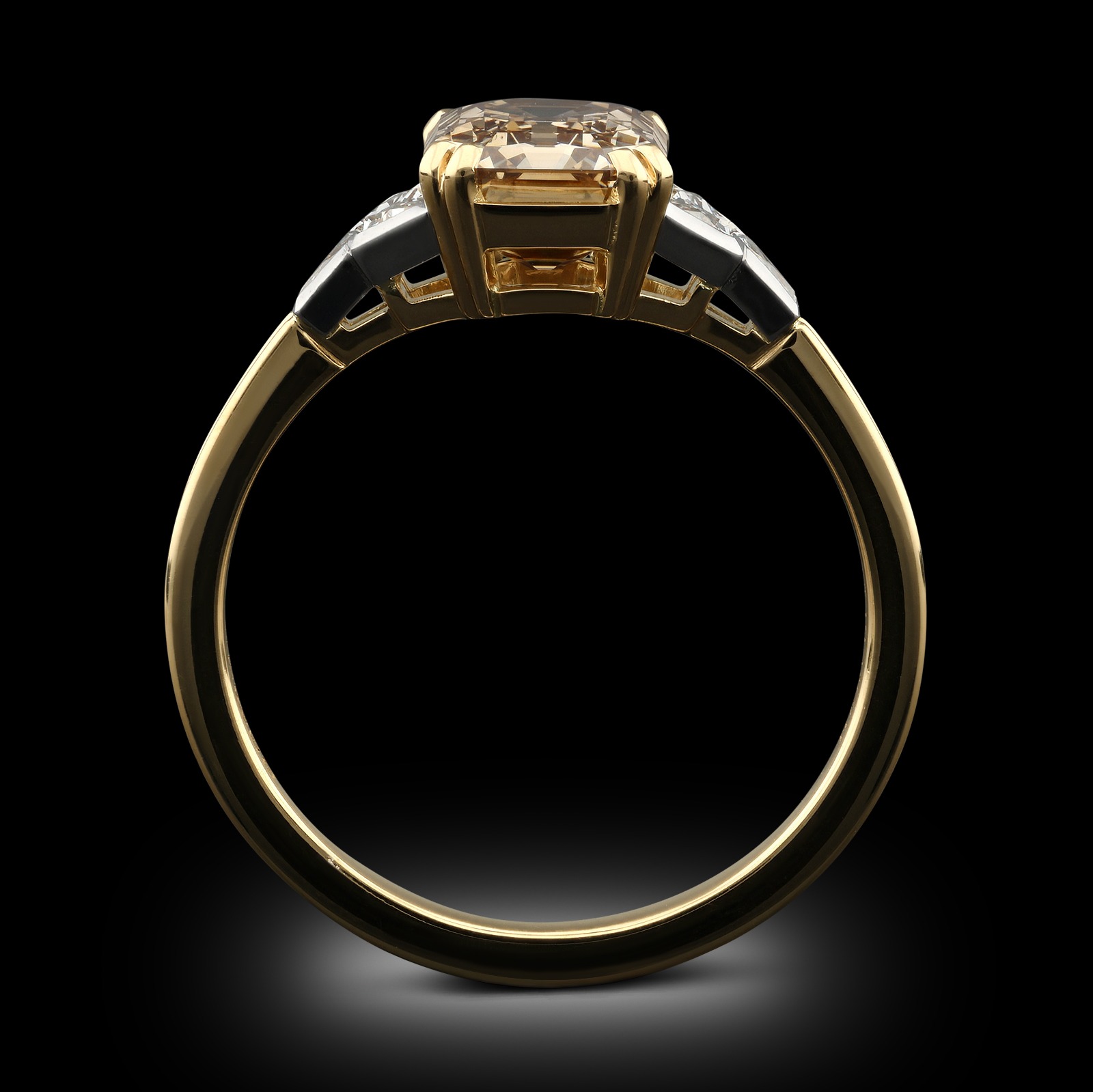
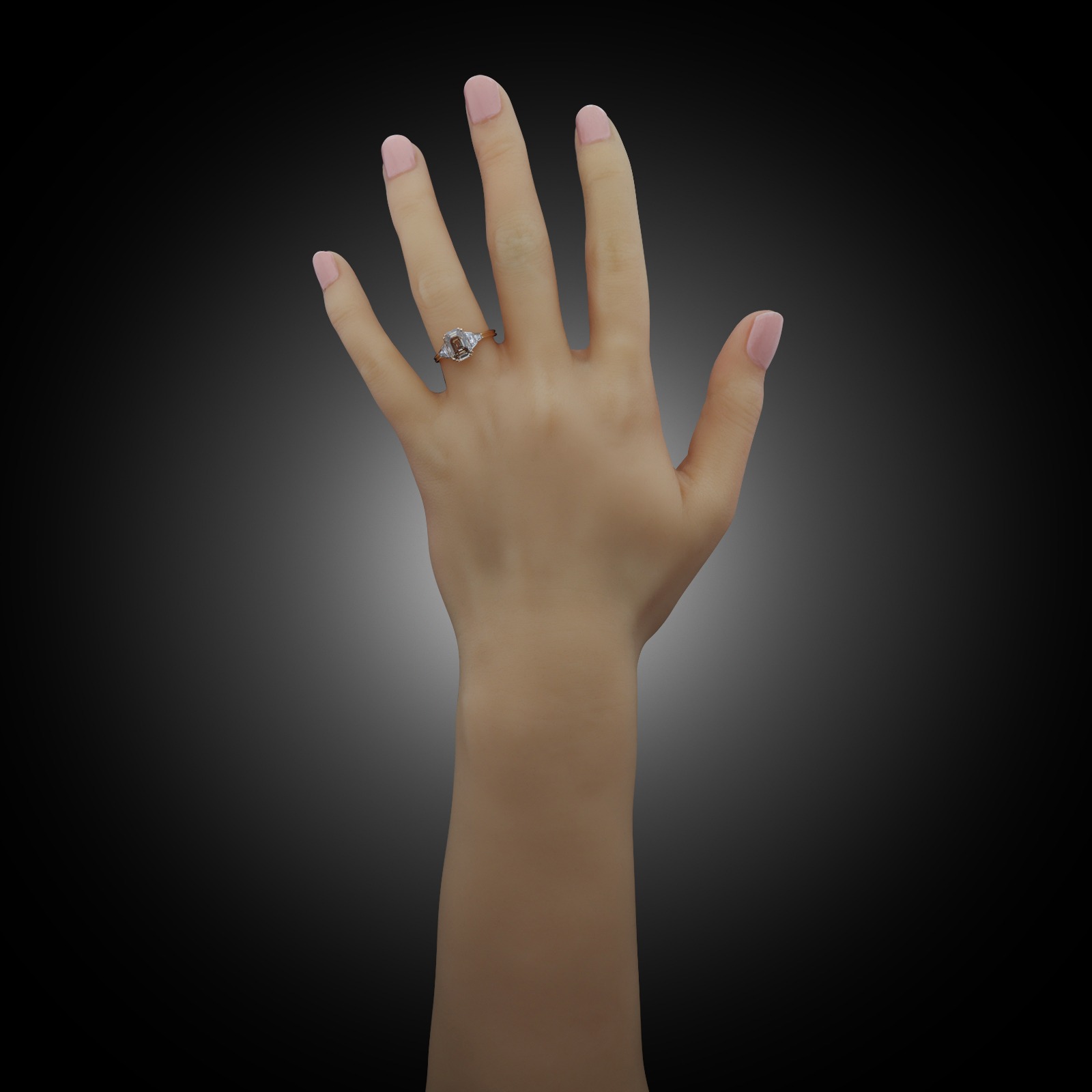
2.01ct Fancy Colour Elongated Asscher Cut Diamond Ring With French Cut Diamond Shoulders
A handcrafted old cut fancy colour diamond ring by Hancocks. The ring is centred on an antique 2.01ct fancy brown-yellow elongated Asscher cut diamond, claw set in 18ct yellow gold between shoulders of tapered French cut diamonds, bezel set in platinum, all to an 18ct yellow gold mount with a square profile band and reeded engraving.
£16,500.00

Information
Maker
Hancocks
Origin
London
Period
Contemporary
Gemstone
2.01ct Fancy Brown-Yellow VS2 elongated Asscher cut diamond - with GIA certificate
4 x French cut diamonds, total weight 0.34ct
Setting
18ct yellow gold and platinum
Dimensions
UK finger size L, US size 5.75 (can be adjusted to fit any size)
Head (inclusive of shoulders): 8.5mm x 13.0mm
Band width: 2mm
Weight Description
3.2 grams
REF
131457
Discover this Jewel
Diamonds
Golconda & Type IIa Diamonds

All diamonds can be classified into two main categories which are referred to as ‘types’, depending on the trace elements that are naturally present within the carbon crystal structure of the diamond.
Type I diamonds contain small amounts of nitrogen whereas Type II diamonds do not. Each of these types is then subdivided further and the term Type IIA is used to denote the very purest diamonds. This means there are no measurable impurities in the diamond of any kind which makes these stones exceptionally rare, they make up less than 2% of all gem quality diamonds found worldwide. Not only can these stones be perfectly colourless but they also possess an exceptional level of transparency which enhances their beauty and allows the brilliance and fire of the diamond to be appreciated to the fullest. Famous examples of Type IIA diamonds include the Koh-i-Noor and the Cullinan, which are part of the Crown Jewels, as well as the Krupp diamond which Richard Burton bought for Elizabeth Taylor and was later renamed the Elizabeth Taylor Diamond.
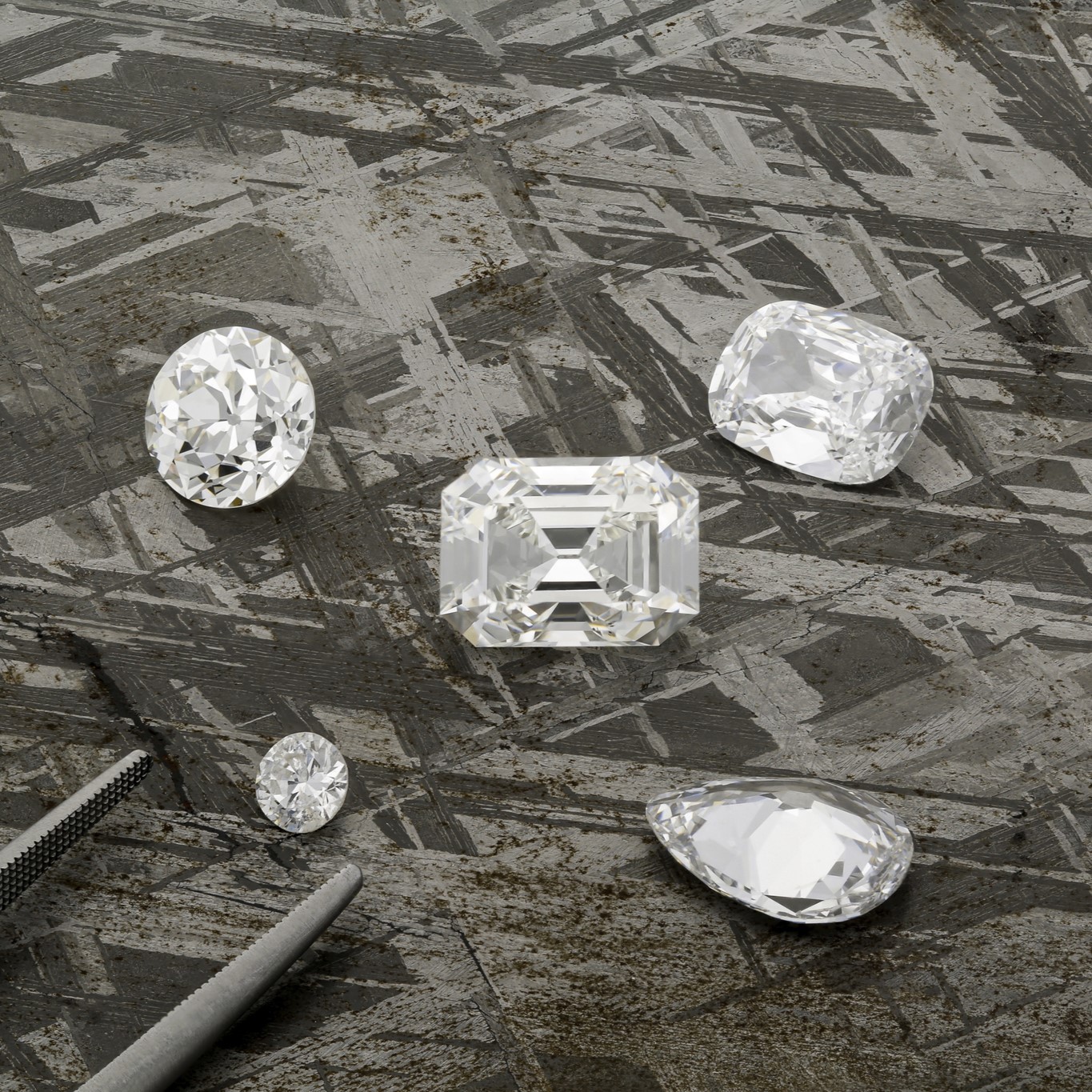
The design of the French cut had developed from the addition of extra facets to old table cut diamonds thereby altering them into much more lively stones.This style of cut has changed very little to this day and its evolution marks one of the earliest milestones in the development of the brilliant cut diamonds we know today.
Coloured Diamonds

Coloured diamonds or Fancy diamonds as they are also known, have become increasingly popular over recent years and are available in a beautiful range of colours from yellow and pink to blue and green.
Colour in diamonds can be caused either by a structural anomaly or by elements such as nitrogen or boron replacing carbon atoms within the crystal structure of the diamonds. In yellow diamonds it is nitrogen which is responsible and the strength of colour depends on how much of it there is, and also what form it has taken. When a coloured diamond is graded for certification by the GIA, the saturation of colour will be judged and one of the following grades will be assigned: Faint, Very Light, Light, Fancy Light, Fancy, Fancy Intense, Fancy Vivid, Fancy Dark and Fancy Deep.
White diamonds (graded from D colourless through to Z pale yellow, known as Cape diamonds) decrease in cost the more colour they display because they are valued for their lack of colour, i.e. their whiteness. However, the reverse is true for Fancy diamonds which will increase in cost the stronger and more vibrant the colour they display. We curate our coloured diamonds very carefully and always choose the most attractive of hues whether it is a Fancy diamond or Cape diamond.
Asscher Cut
The Asscher cut diamond was designed by and named after Joseph Asscher, co-founder of the Asscher Diamond Company in Amsterdam whose family had been dealing in diamonds since the mid 19th Century.


The cut was created in 1902, in an attempt to best utilise the natural shape of rough octahedral diamond crystals. The cut is often square in shape with deeply truncated corners creating an almost octagonal outline to the stone.
The facets are carefully arranged in three rows of straight, step-like faces to the top and bottom of the stone which has a wonderfully elegant and clean appearance with a more subtle sparkle than brilliant style cuts. A characteristic high crown and deep pavilion are further hallmarks of this cut and these help to create a wonderful brilliance in the stone. This was the first diamond cut to ever be officially patented and it became increasingly popular during the early 20th century. In particular, the straight lines and geometric form of the cut lent itself beautifully to the aesthetic of the Art Deco period. Just a few years after creating his eponymous diamond cut, Joseph Asscher would become internationally famous as the man who cut the Cullinan diamond, at that time, the largest diamond in the world. Popular rumour has it that after the first attempt to cleave the diamond in half, Asscher fainted but in fact his family state he simply collapsed with the effort it took to strike a blow hard enough to cleave a diamond that size.
Antique asschers particularly stand out from their modern counterparts with much bigger cut corners that enhance the play of light within the steeper facet pattern.

0.5CT
0.5 carat

1.0CT
1 carat

1.5CT
1.5 carat

2.0CT
2 carat

3.0CT
3 carat

4.0CT
4 carat

5.0CT
5 carat

6.0CT
6 carat
(Diagrams not to precise scale)
Today, this C is often the first thing someone asks about but it is worth remembering that not all diamonds that weigh the same will look the same size to the eye because it will depend on the cut of the stone and particularly its depth. With regards to the impact of weight on price then the price per carat will obviously rise as the carat weight increase. However, it must be noted that as larger diamonds are rarer than smaller ones the price does not rise evenly, for example a 2ct diamond is not simply double the price of a 1ct diamond.

D
Exceptional White +

E
Exceptional White

F
Rare White +
Colourless

G
Rare White

H
White

I
Slightly Tinted

J
Slightly Tinted White
Near Colourless
(Diagrams not to precise scale)
In terms of how this affects price, essentially, the whiter the diamond and higher the colour grade the greater the value of the diamond. However, it is important to remember that a lower colour grade does not equate to a lower quality, the grade is a measure of rarity, the whiter stones are simply rarer and therefore command higher prices.
The chart below shows the colour grading scale used by the GIA, the Gemmological Institute of America.

FL
Flawless
No inclusions or blemishes of any sort are visable to a skilled diamond grader using 10x magnification.

IF
Internally Flawless
No inclusions and only blemishes are visable to a skilled diamond grader using 10x magnification.

VVS
Very Very Slightly Included
Inclusions are difficult for a skilled diamond grader to see using 10x magnification.

VS
Very Slightly Included
Inclusions are noticeable to a skilled diamond grader to see using 10x magnification.

SI
Slightly Included
Slight inclusions are noticeable to a skilled grader using 10x magnification.
(Diagrams not to precise scale)
All these factors are taken into account and a judgement is made as to how detrimental they are to the overall appearance of the diamond. It is worth remembering that, unlike colour grading, clarity grading is done under 10x magnification with a microscope so any inclusion in a diamond will be far less noticeable to the naked eye than it is to the diamond grader. Ultimately the cleaner the diamond, the fewer the inclusions and less impact they have – the better the clarity grade will be. The table below shows the grading system used by the GIA.


(Diagrams not to precise scale)
1. Brilliance: This refers to the reflection of white light from both the surface and the inside of a diamond.
2. Fire: This is the term we give to the coloured flashes you see in a diamond resulting from the splitting up of white light into its spectral colours.
3. Scintillation: This is the sparkle a diamond displays, the pattern of light and dark flashes caused by reflections of light as a diamond is moved. Other considerations include symmetry and the quality of the polish which impacts how well the light reflects off the surface of the diamond.


Variations of this type of cut were used widely on coloured gems from around the 16th century onwards. The straight facets of an emerald cut are applied in a stepped pattern which means they have a different character to the brilliant cut styles of faceting thereby allowing the colour of the gem to be seen and enjoyed to the fullest without any distraction.
It was several centuries before this cut was used on diamonds but during the first half of the 20th century, emerald cut diamonds began to appear and grow in popularity. Their sleek geometric appearance suited the aesthetic of the Art Deco period and the elegant feel of the stones which offered a cleaner icier look than their brilliant-cut sisters were loved by women looking for something a little different. The emerald-cut diamond is however less forgiving than a brilliant cut one in terms of concealing inclusions and hints of colour. Because the style and shape of the facets does not create as much fire and brilliance to distract the viewer, the quality of these stones can be clearly seen and therefore needs to be as good as possible to ensure the most beautiful gem.
The earlier emerald cuts that we favour using in our jewellery are typically characterised by large wide-open tables which act as a window into the stone, large cut corners and higher tables and often flat open keels. These stones are supremely elegant and have a quiet understated look that is very appealing.

