




Hancocks
14.17ct Aquamarine, Ruby and Diamond Cocktail Ring
An aquamarine cocktail ring by Hancocks, centred with a beautiful emerald-cut aquamarine weighing 14.17cts corner-claw set in platinum, the scooped gallery embellished with round brilliant diamonds and each shoulder set with a tapered baguette ruby in bezel setting surrounded by a frame of round brilliant diamonds set flush to the tapering platinum band. The combination of cool blue aquamarine with rich red ruby is striking and unusual and is perfectly complimented by the bright sparkle of round brilliant diamonds, a show stopper of a ring.
£16,500.00

Information
Maker
Hancocks
Origin
London
Period
Contemporary
Gemstone
33.45ct octagonal-cut aquamarine with GCS certificate (79183-21). Round brilliant diamonds weighing 5.65cts
Setting
Platinum with maker's mark and signature and London assay marks
Dimensions
UK finger size L
Weight Description
26.39 grams
REF
124206
Discover this Jewel
Aquamarine
The beautiful watery blue aquamarine is a member of the Beryl family, the best-known member of which is emerald. It is found naturally in a range of shades varying from pale bluish-green through to a strong sky blue.
Aquamarine is often heated to intensify the colour and remove green tones, resulting in the strong blue coloured stones most often seen in jewellery. The colour is caused by tiny amounts of iron present in the crystals and large clean stones are not uncommon.
The name aquamarine means seawater in Latin and legend has it that it was the treasure of mermaids. Today it is the birthstone for March and rather fittingly the zodiac sign of Pisces. It is found in countries such as Mozambique, Madagascar and Zambia however the primary source is in Brazil. Here, the Minas Gerais area has produced some exceptional examples including the world’s largest aquamarine Dom Pedro, which, once cut and polished weighed an astonishing 10,363cts. The very finest aquamarines are known as ‘Santa Maria’ after the Santa Maria de Itabira mine in that area that was first known to produce the deeply saturated blue hue aquamarines.

Asscher Cut
The Asscher cut diamond was designed by and named after Joseph Asscher, co-founder of the Asscher Diamond Company in Amsterdam whose family had been dealing in diamonds since the mid 19th Century.


The cut was created in 1902, in an attempt to best utilise the natural shape of rough octahedral diamond crystals. The cut is often square in shape with deeply truncated corners creating an almost octagonal outline to the stone.
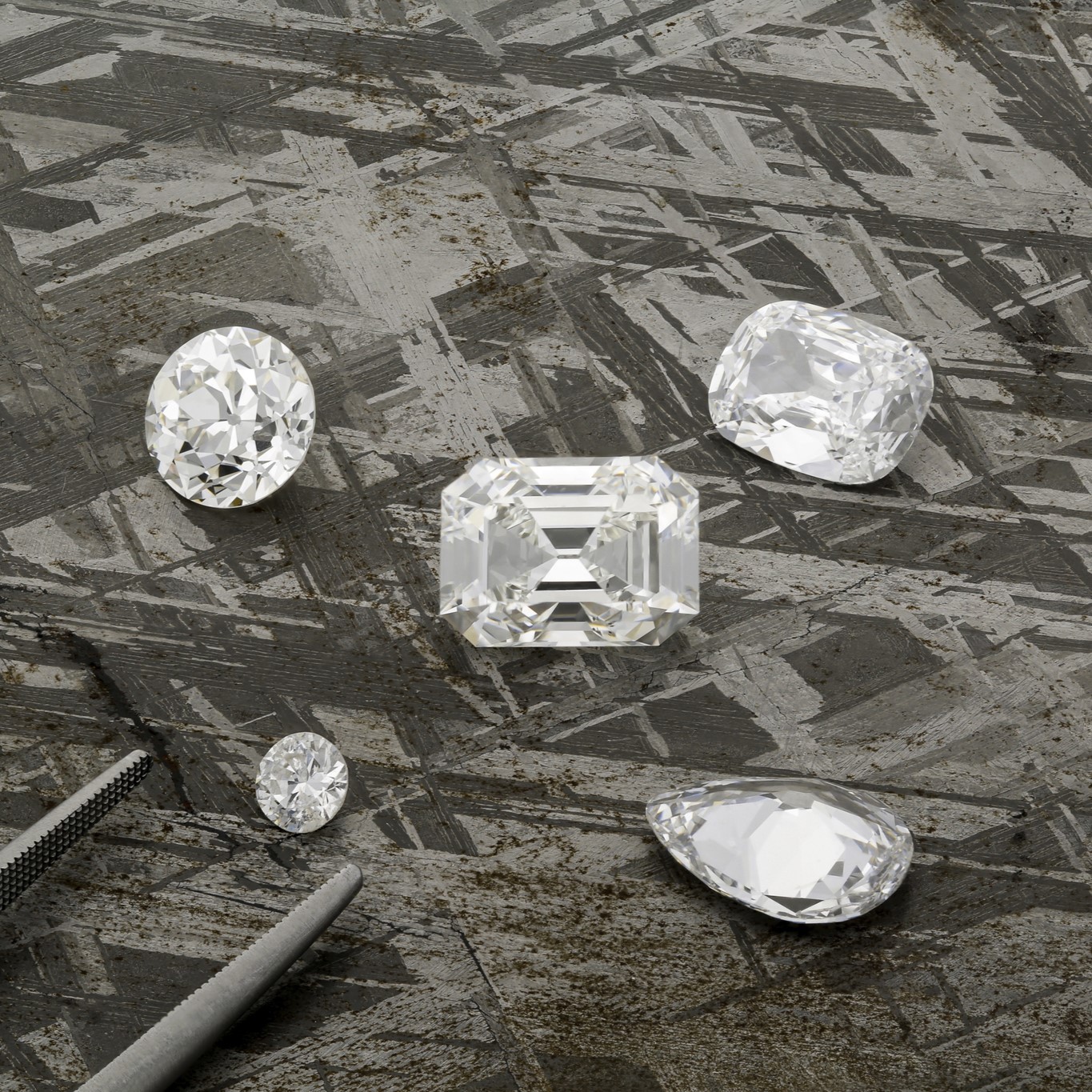
The facets are carefully arranged in three rows of straight, step-like faces to the top and bottom of the stone which has a wonderfully elegant and clean appearance with a more subtle sparkle than brilliant style cuts. A characteristic high crown and deep pavilion are further hallmarks of this cut and these help to create a wonderful brilliance in the stone. This was the first diamond cut to ever be officially patented and it became increasingly popular during the early 20th century. In particular, the straight lines and geometric form of the cut lent itself beautifully to the aesthetic of the Art Deco period. Just a few years after creating his eponymous diamond cut, Joseph Asscher would become internationally famous as the man who cut the Cullinan diamond, at that time, the largest diamond in the world. Popular rumour has it that after the first attempt to cleave the diamond in half, Asscher fainted but in fact his family state he simply collapsed with the effort it took to strike a blow hard enough to cleave a diamond that size.
Antique asschers particularly stand out from their modern counterparts with much bigger cut corners that enhance the play of light within the steeper facet pattern.


Variations of this type of cut were used widely on coloured gems from around the 16th century onwards. The straight facets of an emerald cut are applied in a stepped pattern which means they have a different character to the brilliant cut styles of faceting thereby allowing the colour of the gem to be seen and enjoyed to the fullest without any distraction.
It was several centuries before this cut was used on diamonds but during the first half of the 20th century, emerald cut diamonds began to appear and grow in popularity. Their sleek geometric appearance suited the aesthetic of the Art Deco period and the elegant feel of the stones which offered a cleaner icier look than their brilliant-cut sisters were loved by women looking for something a little different. The emerald-cut diamond is however less forgiving than a brilliant cut one in terms of concealing inclusions and hints of colour. Because the style and shape of the facets does not create as much fire and brilliance to distract the viewer, the quality of these stones can be clearly seen and therefore needs to be as good as possible to ensure the most beautiful gem.
The earlier emerald cuts that we favour using in our jewellery are typically characterised by large wide-open tables which act as a window into the stone, large cut corners and higher tables and often flat open keels. These stones are supremely elegant and have a quiet understated look that is very appealing.


