





Hancocks
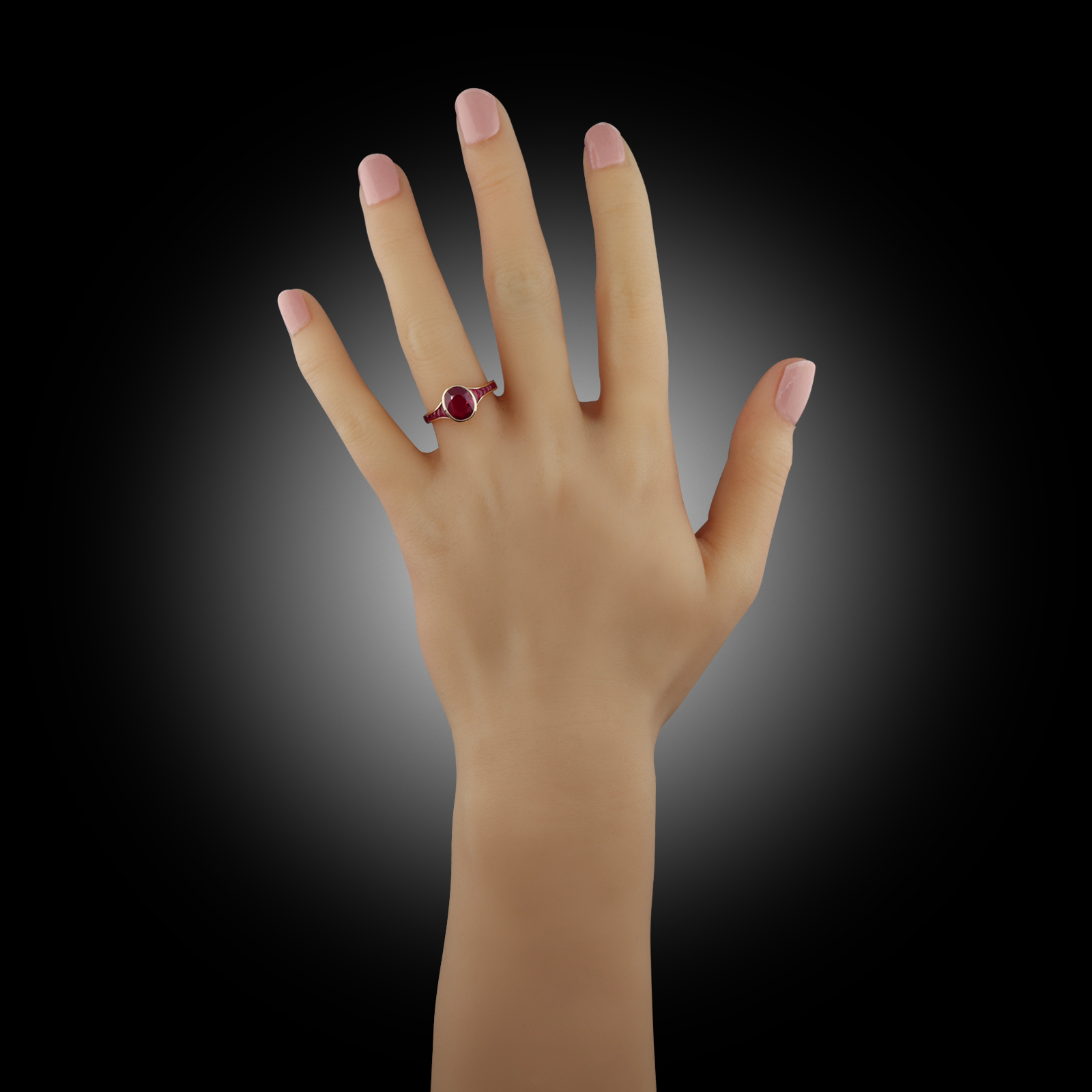
1.81ct Oval Burmese Ruby Ring In 18ct Yellow Gold
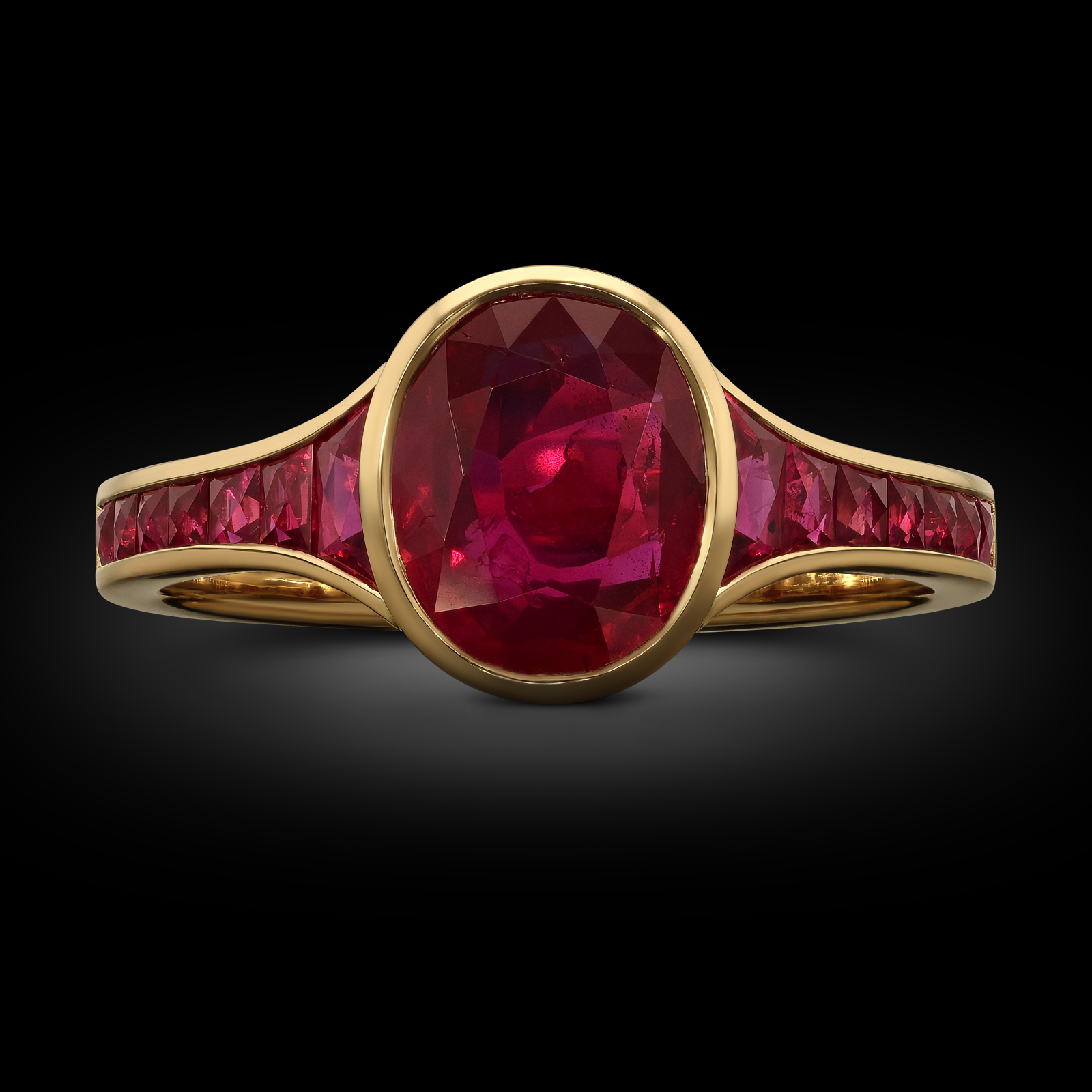
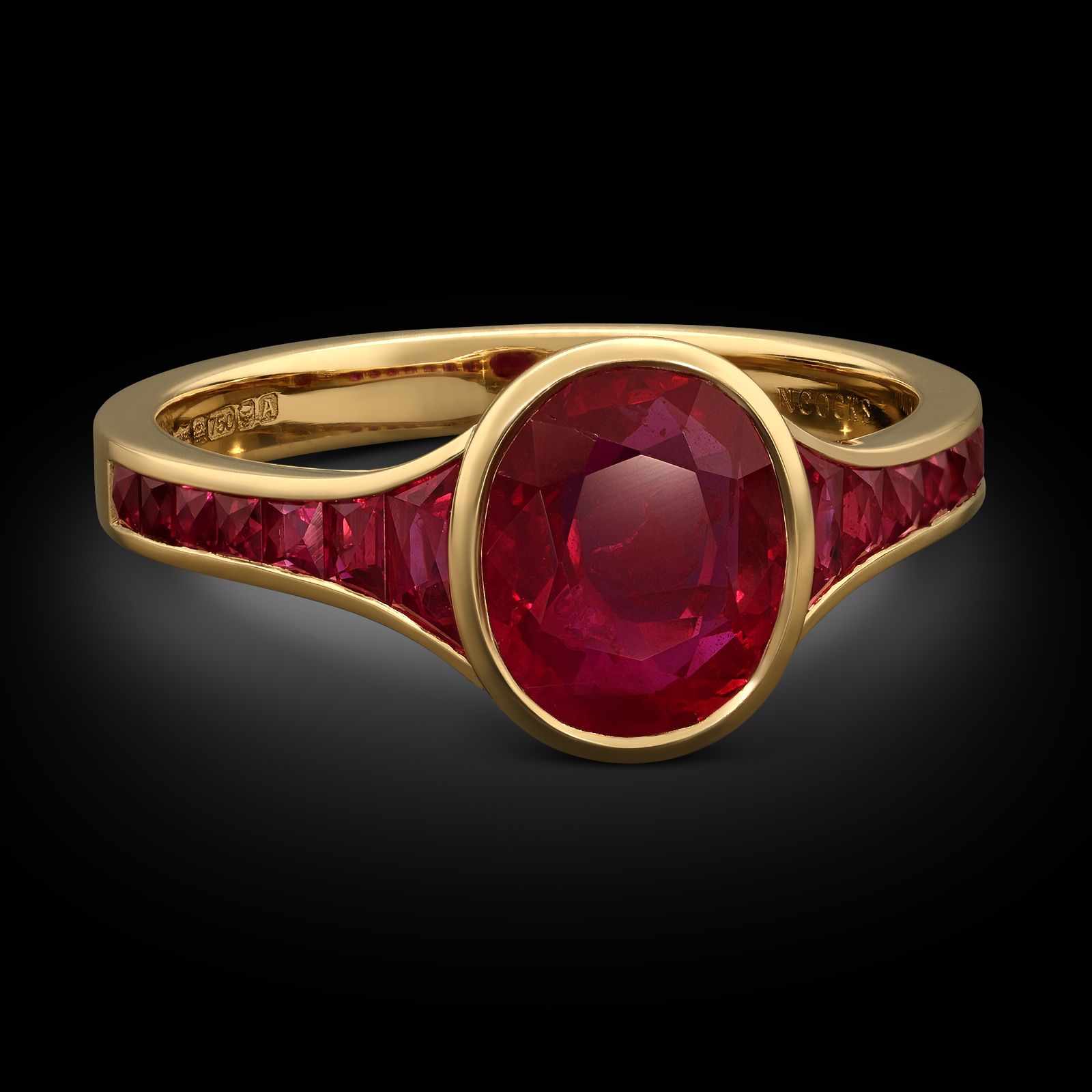
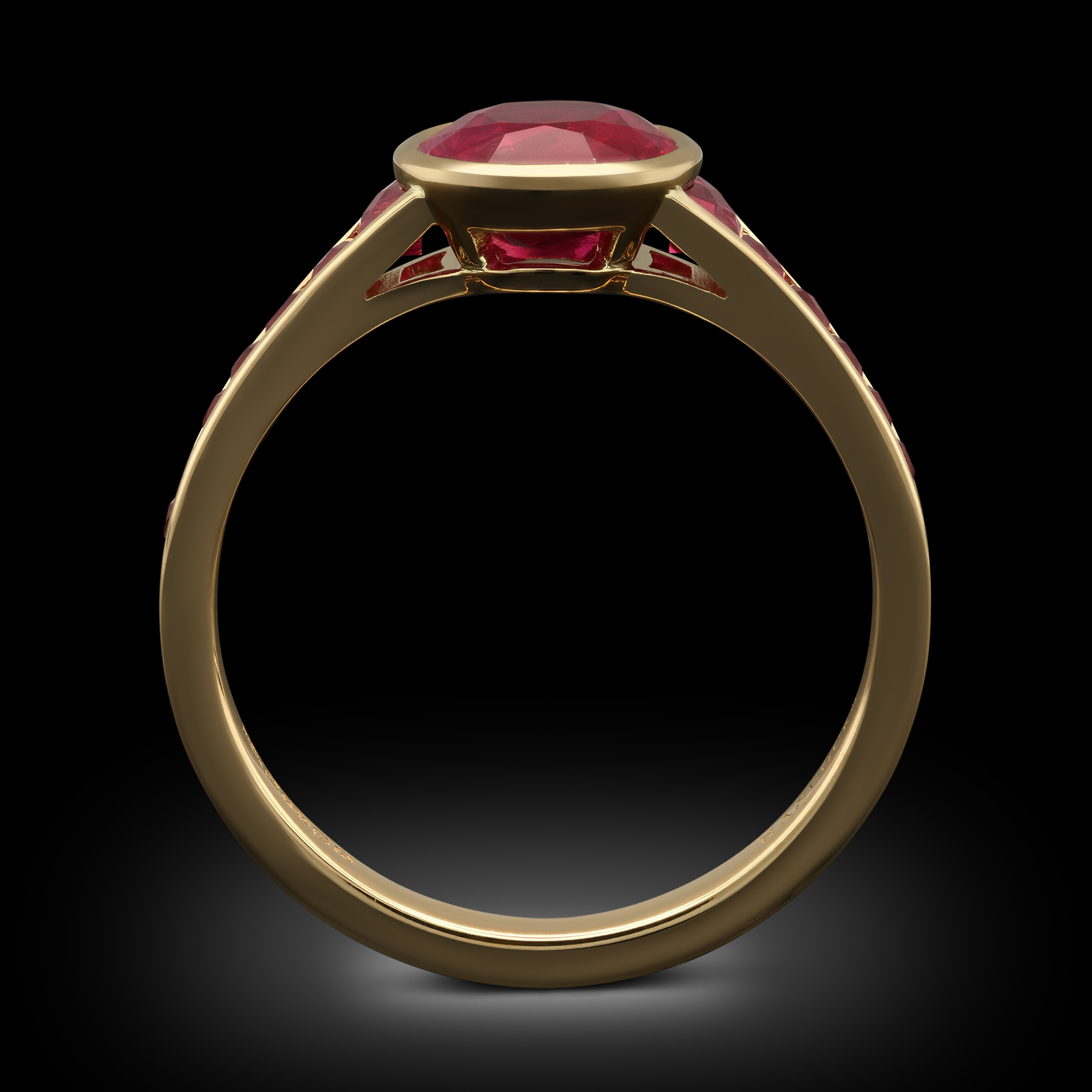
A Burmese ruby ring in 18ct yellow gold by Hancocks.The 1.81ct oval Burmese ruby is bezel set in 18ct yellow gold within an open gallery and between tapering shoulders channel set with calibré cut rubies, all to a handcrafted gold mount with square profile.
£37,500.00

Information
Maker
Hancocks
Origin
London
Period
Contemporary
Gemstone
1.81ct unheated oval Burmese ruby - with SSEF certificate
Setting
18ct yellow gold
Dimensions
UK finger size M, US size 6.25 (can be made to fit any size)
Centre front height: 9.5mm
Band width: 6mm, tapering to 2.5mm at centre back
Weight Description
4 grams
REF
129950
Discover this Jewel


The oval also has the advantage of a larger surface area than a round stone of equal weight meaning they can give the impression of being a higher carat weight than they really are. The shape is particularly flattering on the hand, drawing the eye along the finger and making it seem longer.
When looking at oval diamonds, symmetry and proportion are of particular importance. Whether you prefer a shorter wider stone or a longer thinner one is up to you but have a good look at the outline of the shape and make sure it is even and symmetrical. The most famous oval diamond is probably the Koh-i-Noor which weighs in at an impressive 105cts and is part of the British Crown Jewels. More recently, this lovely shape has been making its mark in the world of celebrity engagement rings and can be seen sparkling on the fingers of Blake Lively, Kourtney Kardashian and Hailey Bieber.
Rubies
Burma Ruby

Rubies mined in Burma have long been held as the absolute ideal in terms of colour for a ruby, they are an exceptionally beautiful rich deep red with neither too much brown nor pink in it.
The term ‘pigeon’s blood’ has historically been used in an attempt to define this colour that is found in the best examples produced by this region. The Mogok Valley in Upper Burma (now known as Myanmar) has been the world’s primary ruby source for centuries and the origins of the mines are swathed in mystery and legend. What is certain is that references to these gems have been found dating back to the Shan Dynasty in the 6th Century. The mines were taken over by the King of Burma in 1597 and all rubies over a certain size had to be given to him on discovery rather than sold. Today there are many different mines in the area both privately owned and government run. New deposits were found in the Mong Hsu area of the country in the 1990’s and more recently a new source has been discovered in the northern region of Namya.
The design of the French cut had developed from the addition of extra facets to old table cut diamonds thereby altering them into much more lively stones. This style of cut has changed very little to this day and its evolution marks one of the earliest milestones in the development of the brilliant cut diamonds we know today.
Pigeon’s Blood Rubies

Historically, the term ‘pigeon’s blood’ has been used to describe the most beautiful and coveted colour for rubies, allegedly due to its similarity in colour to the blood of a pigeon.
Opinions differ as to the exact origin of the term with some saying it came from the Burmese, others that it was first used by the Chinese who had previously owned the area where the Burmese ruby mines were discovered and yet others sighting it as having Hindustani origins where lapidaries compared the colour to the blood red of a pigeon’s eye. Whatever the truth, one thing everyone agreed on is that only rubies of the finest vivid red colour with deep saturation and which showed a soft red fluorescence in daylight were referred to this way. Today rubies from both Burma and Mozambique can show this coveted colour and be certified as such.
Mozambique Rubies

The first significant ruby deposit in Mozambique was discovered in 2009 in an area called Montepuez. Remarkably, in less than fifteen years this country has become the world’s most productive source of gem-quality rubies.
Importantly, the output is not only significant in quantity but also in quality. The rubiesoccur in a wide range of qualities and characteristics but the best of them are low in iron and high inchromium like those from Burma and exhibit a similar vibrant colour with a strong fluorescence. The bestof the best of these will be given with the coveted ‘pigeon’s blood’ colour grade. A percentage of thesecombine this highly desirable colour with a level of clarity that means the stones require no treatment toimprove them. This means that excellent quality, untreated stones are available and these are the oneswe select for our jewellery.

