



Hancocks
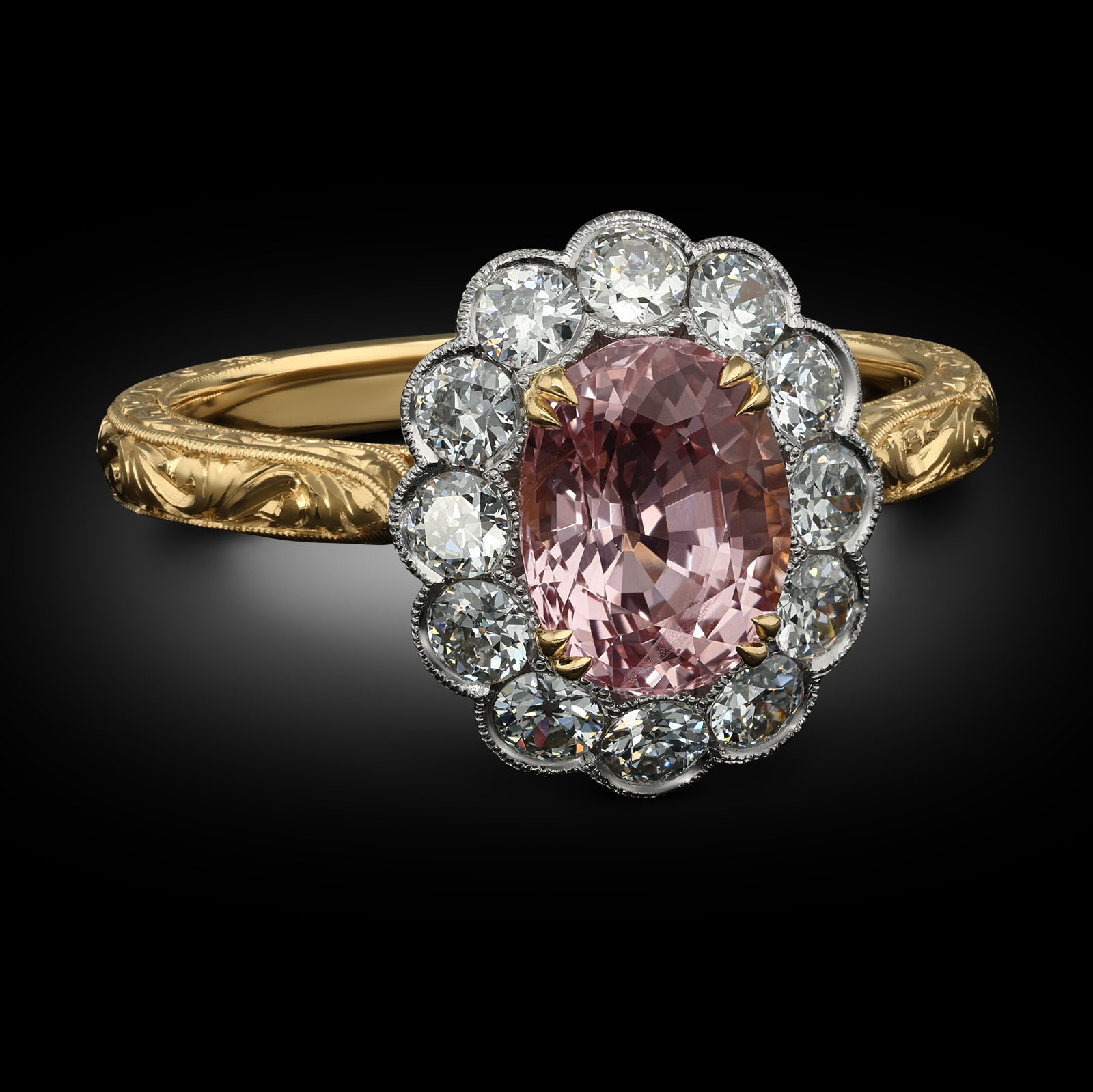
1.64ct Padparadscha Sapphire & Diamond Cluster Ring
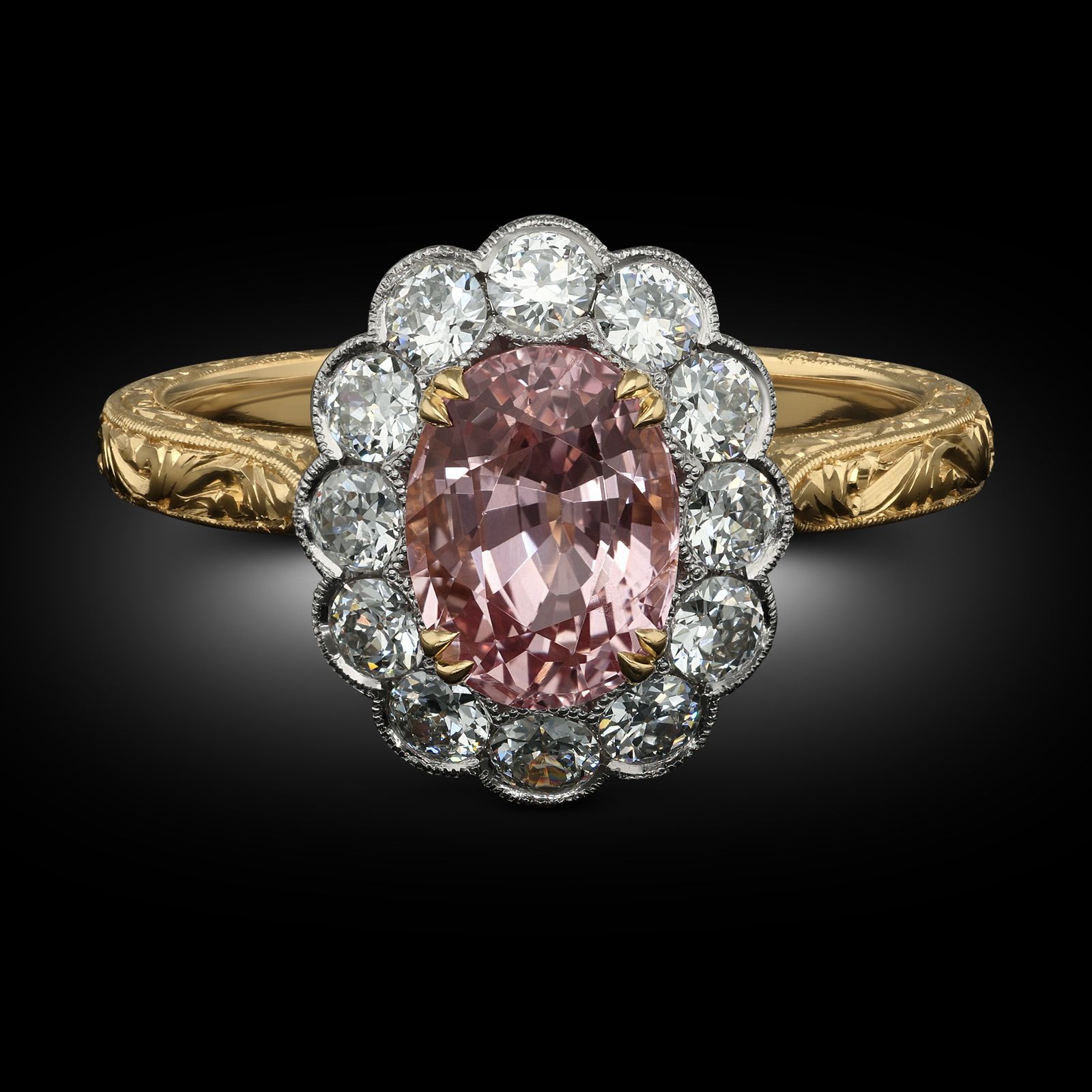
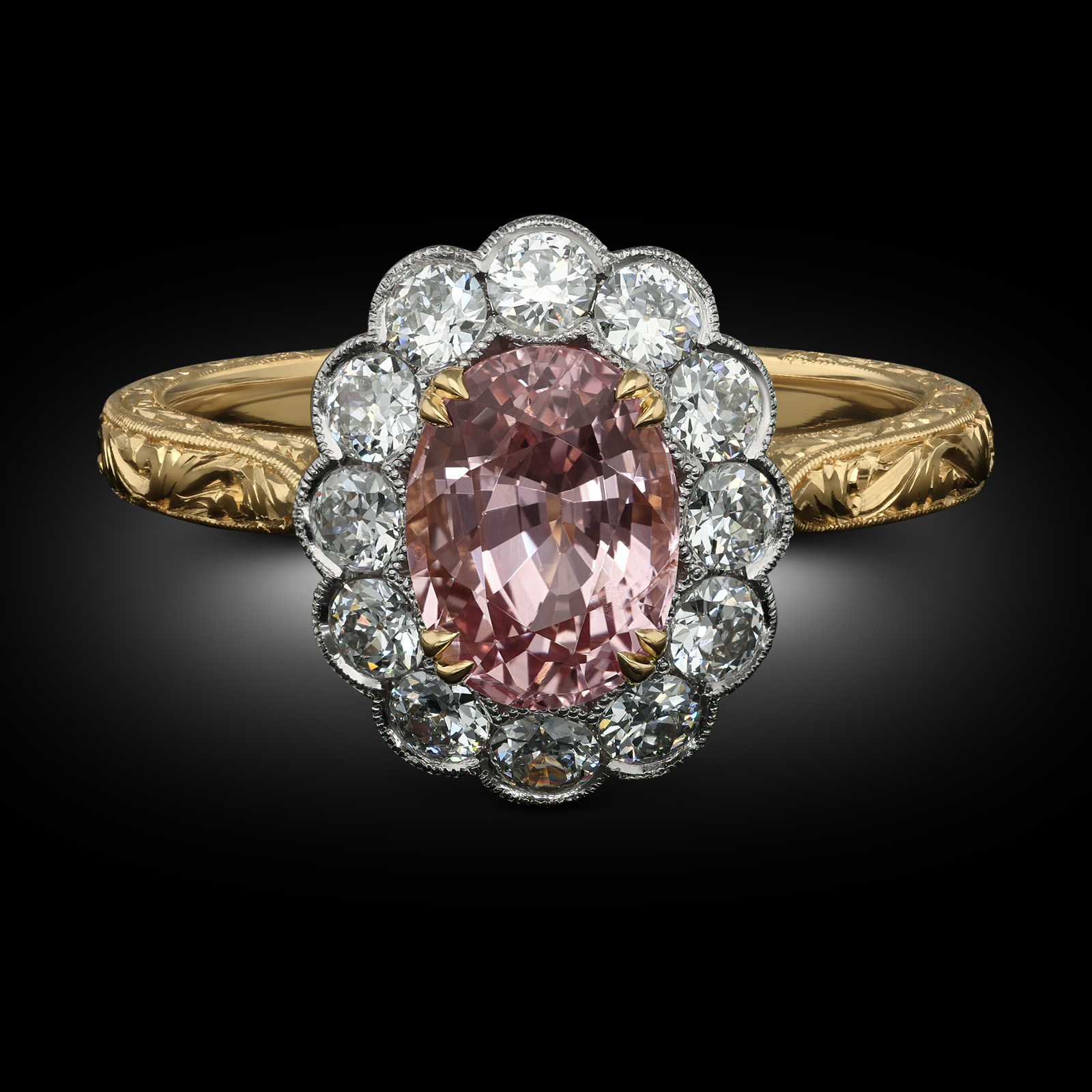
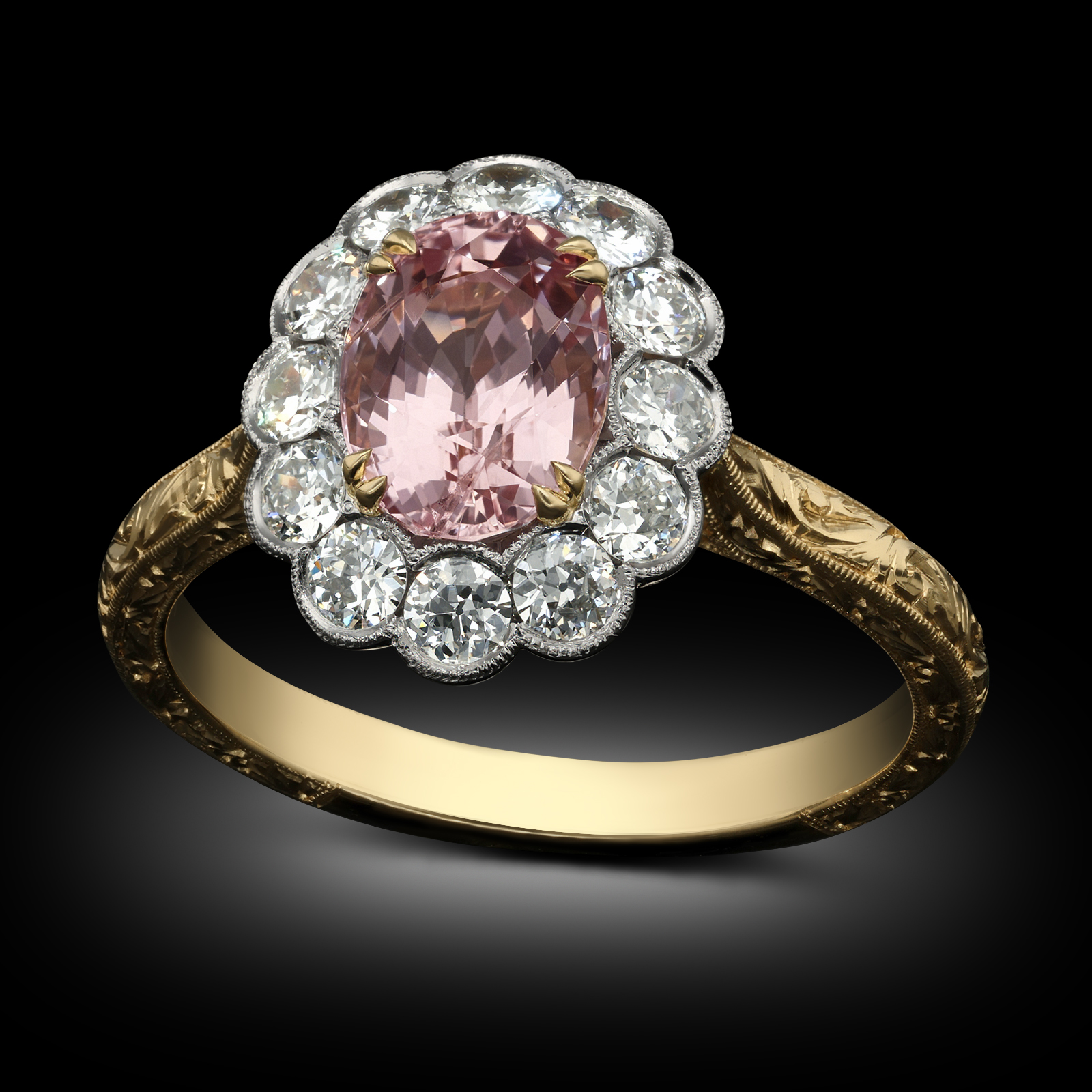
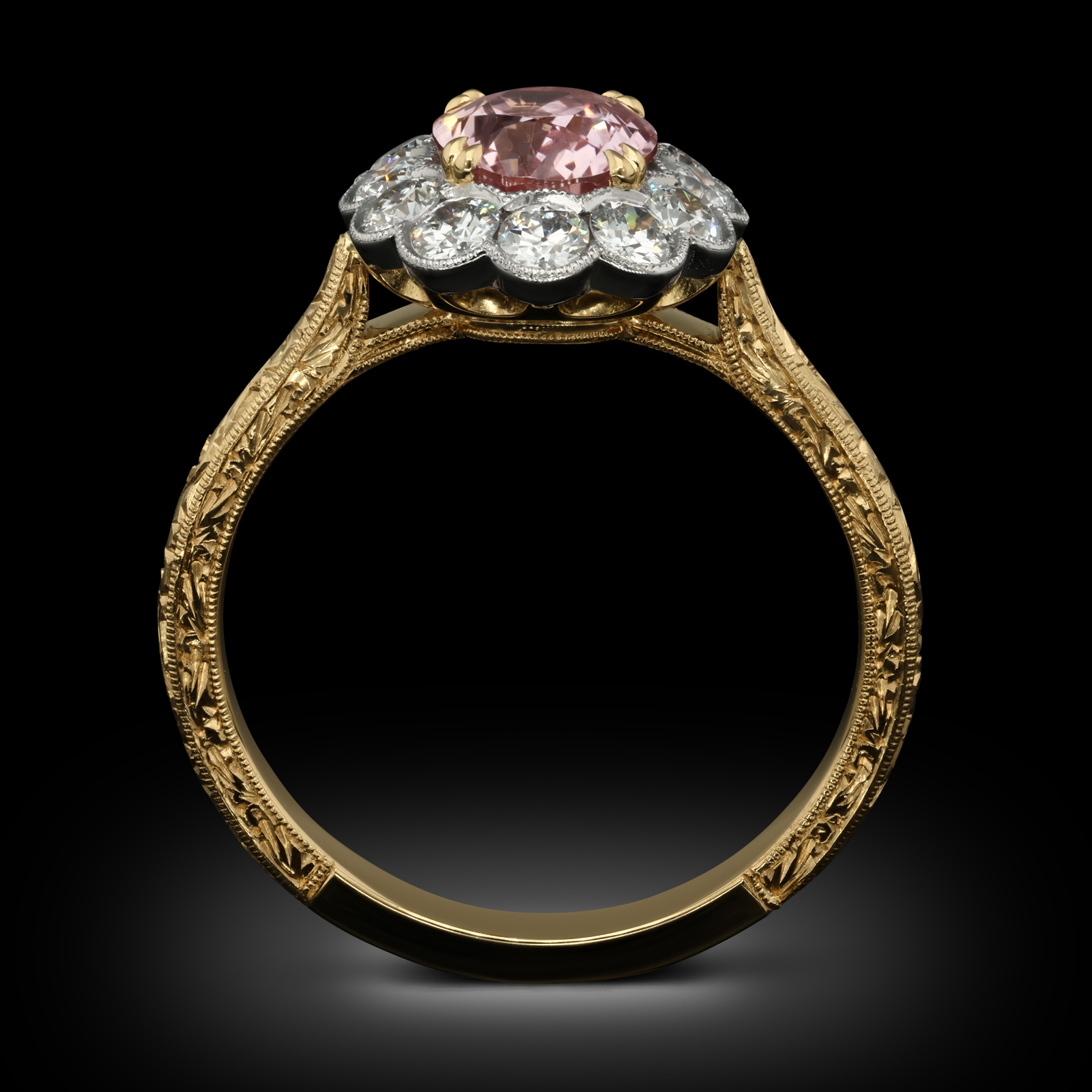
A handcrafted padparadscha sapphire and old cut diamond cluster ring by Hancocks. The ring is centred on an unheated pinkish-orange oval cut padparadscha sapphire weighing 1.64ct, double claw set in 18ct yellow gold, surrounded by a halo of twelve old European brilliant cut diamonds in a platinum scalloped millegrain setting. The 18ct yellow gold band has a square profile with signature hand engraved decorative detailing and millegraining.
£18,500.00

Information
Maker
Hancocks
Origin
London
Period
Contemporary
Gemstone
1.64ct unheated oval cut Madagascan padparaschda sapphire - with AGL cert
12 x old European cut diamonds, total weight 0.54ct
Setting
18ct French yellow gold and platinum
Dimensions
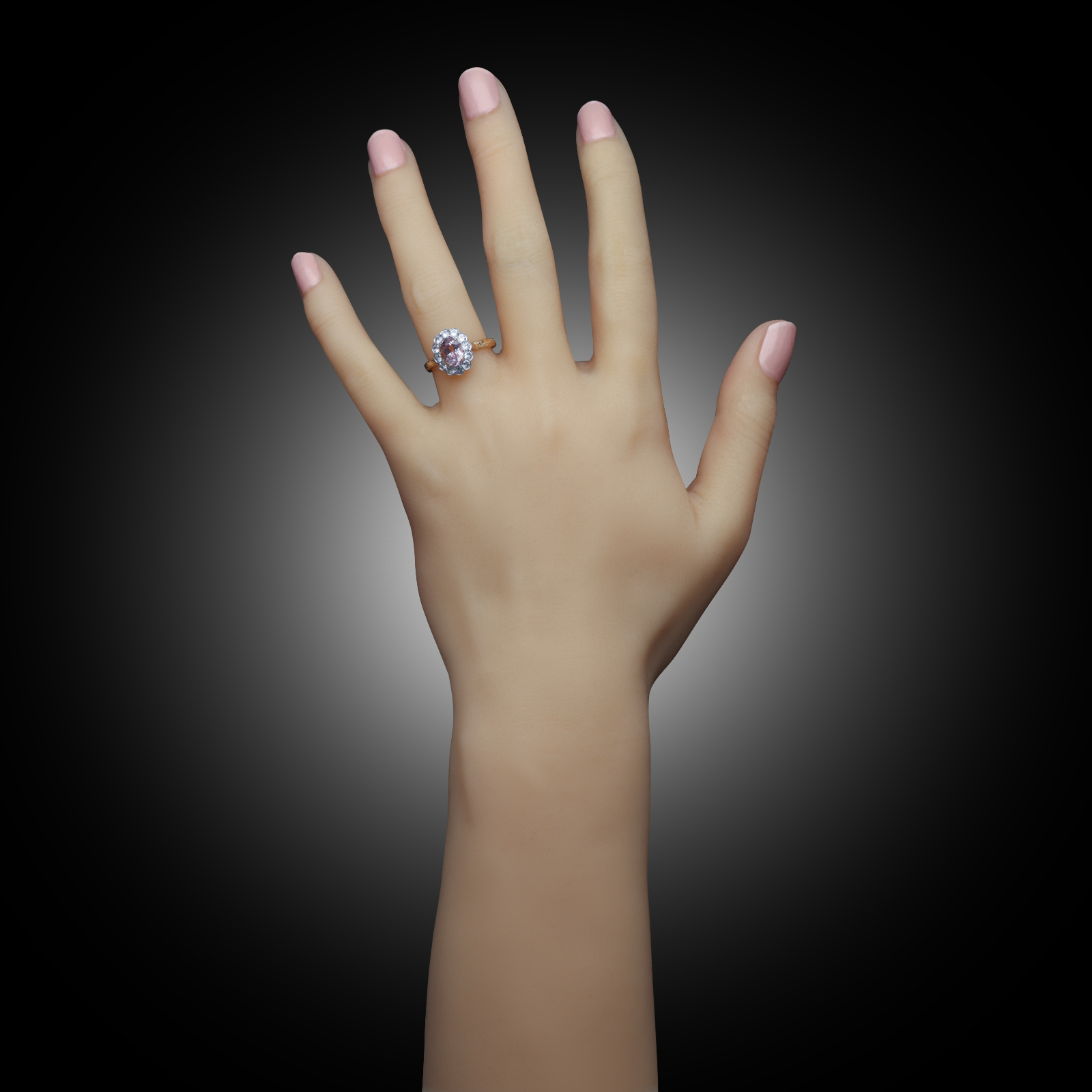
UK finger size L, US size 5.75 (can be adjusted to fit any size)
Head: 12.5mm x 10.5mm
Band width: 2mm
Weight Description
4.4 grams
REF
058572
Discover this Jewel
Sapphires
Ceylon Sapphires

The small tear drop shaped island of Ceylon (now known as Sri Lanka) lies off the tip off India in the Indian Ocean. Renowned for centuries as a source of beautiful gems, for a relatively small island, the wealth and variety of gemstones found here is nothing short of extraordinary.
Today it remains one of the most important gem localities in the world but it is probably best known for its range of sapphires which occur here in a rainbow of colours including the highly prized and rare Padparadscha sapphire. Ceylon blue sapphires are prized for their bright, mid to deep blue colour. The lighter stones are sometimes referred to as 'cornflower blue' with some having a little touch of violet to their hue whilst the deeper colours can look very similar to Burmese stones. Most Ceylon sapphires are found in alluvial deposits which are predominantly mined by primitive methods. The variation in colour as well as the tones and hues within those colours is unique to Ceylon.
Burma Sapphire

Whilst rubies from Burma are justifiably revered around the world, their sibling sapphires were, for many years, somewhat overlooked. The Victorian London jeweller Edwin Streeter described them as being overly dark and, despite this not being the case, his opinion was repeated by others and seemed to stick.
It took decades to reverse this but today Burmese sapphires are recognised for the wonderful gems they are, indeed many view them as surpassed only by sapphires from Kashmir. Burmese sapphires are found predominantly in alluvial deposits in the Mogok area in close proximity to rubies. Whilst rubies account for the majority of the gem output, sapphires forming only 10-20%, it is the sapphires that occur in larger sizes with rough weighing 40/50/60/cts not uncommon. Burma is also now known for producing excellent star sapphires, these rare gems appear to have a bright six rayed star floating just under the surface and are very beautiful. The best Burmese sapphires possess a rich, desirable intense blue with excellent saturation however they also occur in lighter shades as well as in purple, yellow and green.
Kashmir Sapphire

Kashmir sapphires have a truly exceptional colour, a rich, deep velvety blue that often seems to be lit from within. Importantly they also maintain this colour whatever lighting conditions they are viewed in, a fact which separates them from most other sapphires.
Their intense beauty, coupled with their rarity and the fact that only a handful of new stones appear on the market each year, means these wonderful gems are hugely desirable and command some of the highest prices for coloured gemstones in the world. They were discovered in 1881 after a landslide in the Himalayan Mountains of Kashmir revealed the beautiful crystals embedded in the soft, clay-rich earth. They were mined extensively over the next few years, under the control of the Maharaja, during which time many fine and large sapphires were discovered. However, by the end of 1888 operations had ceased and since then, despite various attempts, very little of importance has been recovered.
Padparadscha Sapphire

Padparadscha sapphires are a particularly special variety of sapphire, being the rarest of colours that sapphires are naturally found in. True padparadschas are a unique blend of pink and orange, exhibiting elements of both these colours in the same stone.
Historically found only in Ceylon, the name 'padparadscha' (pronounced pad-per-add-sha) is derived from the ancient Sanskrit word 'padmaraga' referring to the colour of a lotus flower. However, most lotus blossoms are actually more pink than orange so today it is often thought of as a mix of lotus pink and sunset orange. Due to their rarity these stones are amongst the most expensive in the world. As with all gemstones, those that are certified untreated will attract a premium and, like blue sapphires, many padparadschas are heated to improve their colour. Today orangey-pink sapphires are found in Vietnam, Tanzania and Madagascar. The spotlight was turned on these beautiful gems when Princess Eugenie became engaged with one in 2018. As with all sapphires, padparadschas are hard and durable which makes them ideal for setting in rings, particularly ones which will be worn every day such as an engagement ring.
Teal Sapphire

The first emeralds were found in Zambia as far back as the 1920s but they were not mined in any significant quantities until the 1970s. Today, Zambia is considered second only to Colombia as an important source of emeralds in terms of value.
Whilst we're all familiar with the blue variety of sapphires, some might not know that this family of gems comes in a rainbow of different colours including pink, purple, yellow and of course green. Green sapphires will range in hue from a yellowy-green through to a lovely deep slightly blueish green, a colour known as 'teal'. Named after the band of colour around the eye of the Eurasian Teal (a type of duck) it is a rich slightly mysterious colour that shifts its hue depending on the light, sometimes more green and other times more blue. For those who love the colour green and are thinking of a green stone for an engagement ring, a green sapphire can offer a more durable alternative to an emerald for those with a busy, active lifestyle. A fine quality green sapphire is typically more affordable than the same quality emerald would be too, size for size.


The oval also has the advantage of a larger surface area than a round stone of equal weight meaning they can give the impression of being a higher carat weight than they really are. The shape is particularly flattering on the hand, drawing the eye along the finger and making it seem longer.
When looking at oval diamonds, symmetry and proportion are of particular importance. Whether you prefer a shorter wider stone or a longer thinner one is up to you but have a good look at the outline of the shape and make sure it is even and symmetrical. The most famous oval diamond is probably the Koh-i-Noor which weighs in at an impressive 105cts and is part of the British Crown Jewels. More recently, this lovely shape has been making its mark in the world of celebrity engagement rings and can be seen sparkling on the fingers of Blake Lively, Kourtney Kardashian and Hailey Bieber.
Director’s Notes
Padparadscha sapphires are a particularly rare and special variety of sapphire, representing the rarest colour in which sapphires are naturally found. True padparadschas display a unique blend of pink and orange, with both hues present within the same stone. Historically sourced exclusively from Ceylon, the name padparadscha (pronounced pad-per-add-sha) is derived from the ancient Sanskrit word padmaraga, referencing the colour of a lotus flower. While most lotus blossoms are in fact more pink than orange, the term is now commonly understood to describe a harmonious balance of lotus pink and sunset orange. Due to their exceptional rarity, padparadscha sapphires are among the most valuable sapphires in the world. As with all gemstones, those certified as untreated command a significant premium, as many stones are routinely heated to enhance colour. Untreated examples, such as these, are therefore particularly scarce and highly desirable. Although once found only in Sri Lanka, padparadscha sapphires are now also sourced from Vietnam, Tanzania and Madagascar. These captivating gemstones entered the public spotlight when Princess Eugenie chose a padparadscha sapphire for her engagement ring in 2018. Like all sapphires, padparadschas are both hard and durable, making them ideally suited to rings intended for everyday wear, including engagement rings.


