A pair of antique old cut diamond drop earrings, circa 1830. Each earring is set at the top with an old European cut diamond in a Georgian cut down collet setting surrounded by a cluster of smaller old mine cut diamonds set in cut down collets with closed backs. A single diamond is set below in an articulated cut down mount and above another diamond cluster formed of a central old cut pear shaped diamond surrounded by a frame of smaller old mine cut diamonds. All diamonds are set in cut down collets in silver, with gold hook earring fittings.
POA
Thank you for your enquiry
Your message has been received by Hancocks and a member of our team will be in touch within 1–2 business days.
Total diamond weight estimated: 25.4cts
2 x Old cut pear shape diamonds, estimated total: 8.10cts
2 x Old European cut diamonds, estimated total: 4.40cts
48 x Old mine cut and old European cut diamonds, estimated total: 12.90cts
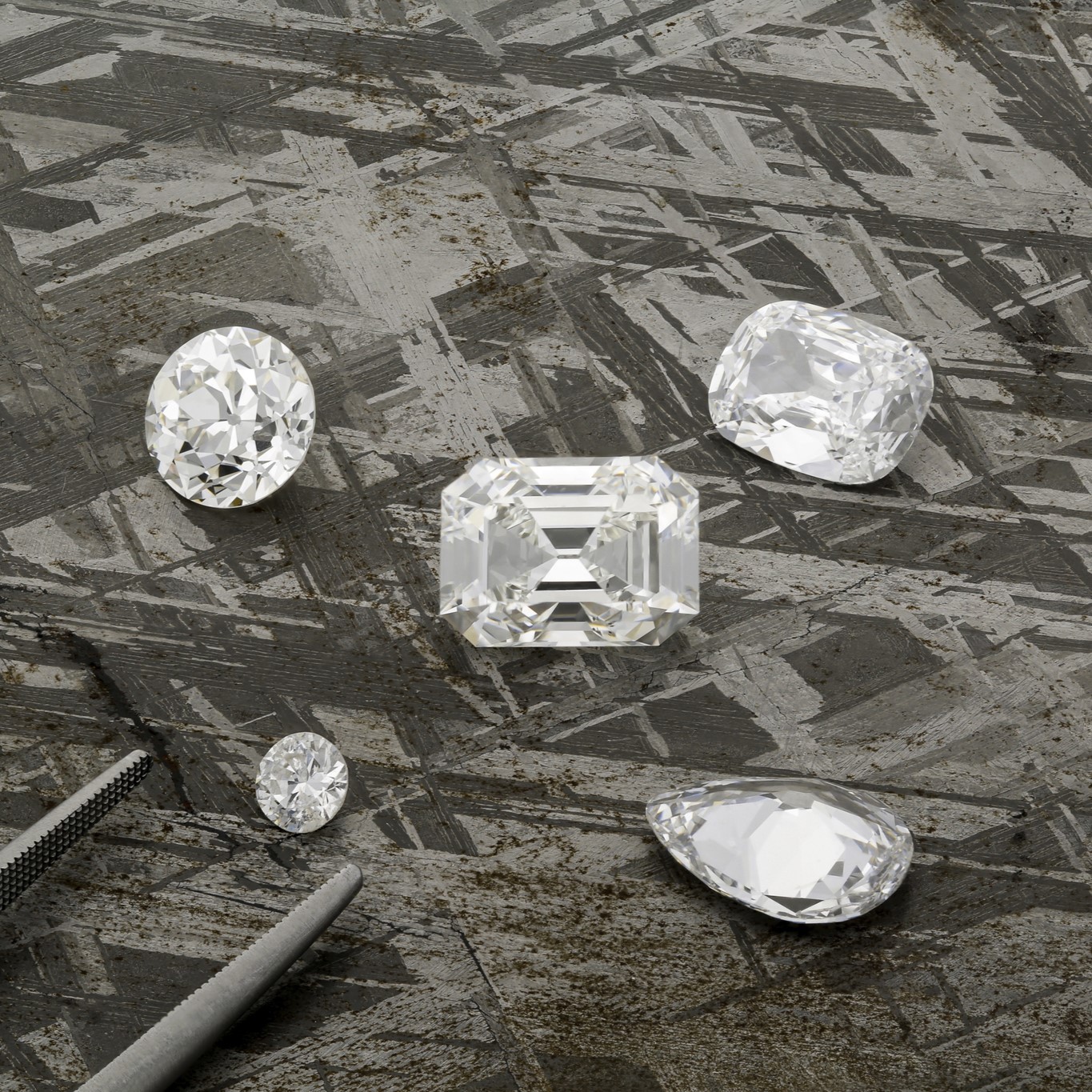
The old European brilliant cut is the forefather of today’s modern round brilliant cut diamond.
It was developed towards the end of the 19th Century when new machinery was invented, in particular the motor-driven saw, which allowed diamonds to be cut in attractive, symmetrical round shapes without wasting the excess rough crystal that was cut off.
This revolutionised the industry and gradually, through a process of trial and error, cutters discovered which proportions produced the finest balance of brilliance and fire within these new round stones.
Diamonds were now able to dazzle even in the dimly candle-lit rooms of the turn of the century.
Along with their characteristic polished culet facet, finely cut old European brilliants can be distinguished from their modern counterparts by their higher crowns and smaller table facets.
These features combine to create a greater amount of fire (the coloured flashes of light you see in a diamond) from inside the stone than we typically see in modern cut diamonds.
During the 1900s and 1910s the profile of these old European cut stones slowly starts to flatten out and later stones lose the depth of the older stones.
Antique Pear Shapes
The pear shaped diamond has long been loved for its elegant and flattering tear drop shape.
It is unusual for a diamond cut in that it is one of very few shapes that is not symmetrical but instead combines both the generous curved form of a round brilliant with the elongated tapering point of a marquise shape.
The origins of this diamond cut can be traced back to 15th century Belgium and a man named Lodewyk van Bercken who was renowned throughout Europe for inventing a piece of diamond cutting machinery called a scaif.
This rotating wheel impregnated with oil and diamond powder facilitated a quality of diamond cutting and polishing previously unknown.
As van Bercken’s reputation as a diamond cutter spread, he was able to experiment more freely and this resulted in the development of the pear shape amongst others.
Early pear shapes, like their rounded sisters, were gentler in form than today’s modern cuts.
Proportions can vary hugely with this shape from wide soft pears to long narrow ones but the antique cuts we favour are of the softer variety.
Typically on the fuller side with a softly curved end and a gently rounded tip they often have a flat open culet and faceting style that resembles old mine cut diamonds.
The smaller table facet and higher crown allow these old cuts to display a wonderful fire and liveliness which, coupled with their beautiful shape, makes them particularly alluring.
The most famous pear shape diamond is the historic Cullinan I, which is also the world’s largest colourless cut diamond weighing in at 530.2cts.
It is set in the top of the Sovereign’s Sceptre which is part of the British Crown Jewels and is used during coronation services.