



Hancocks
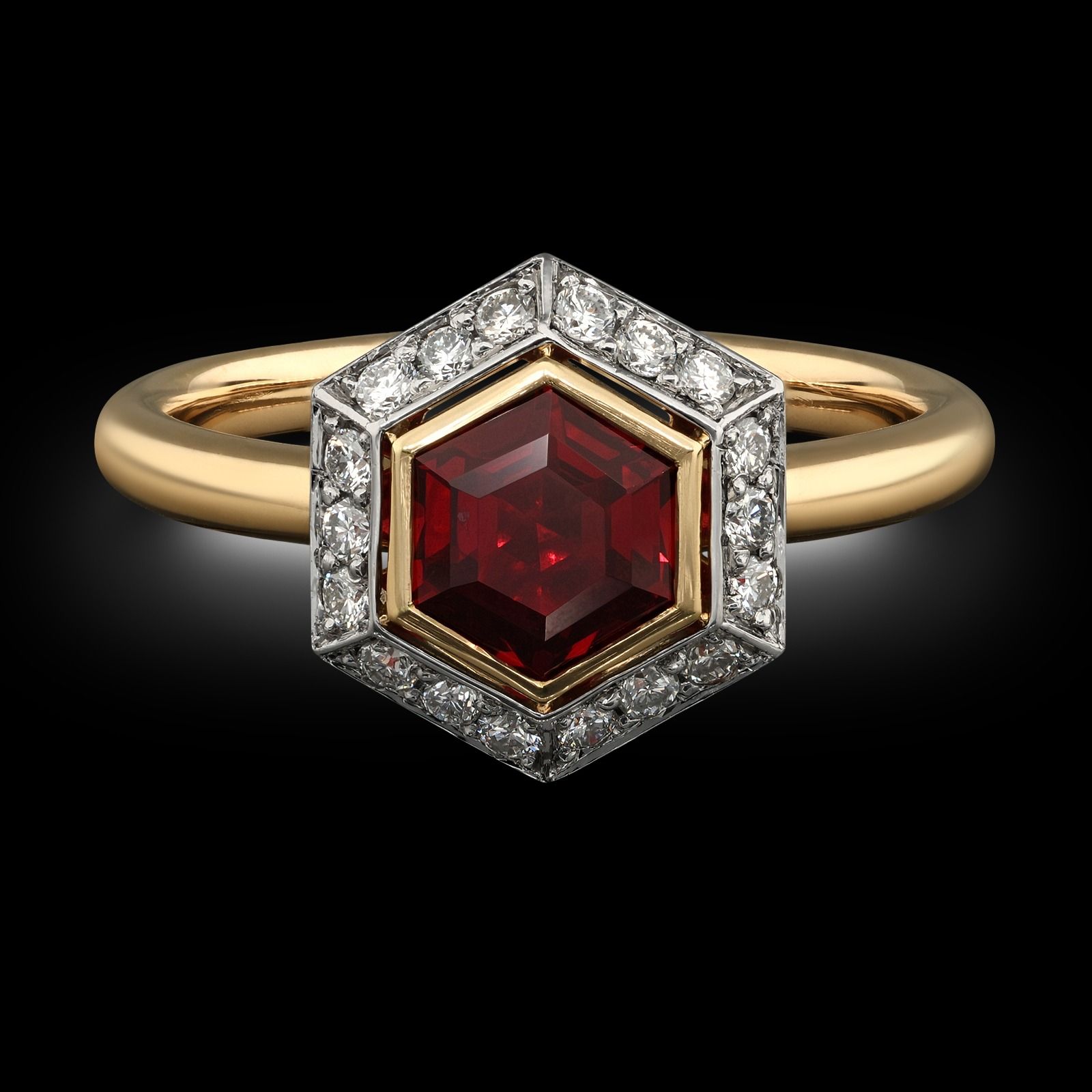
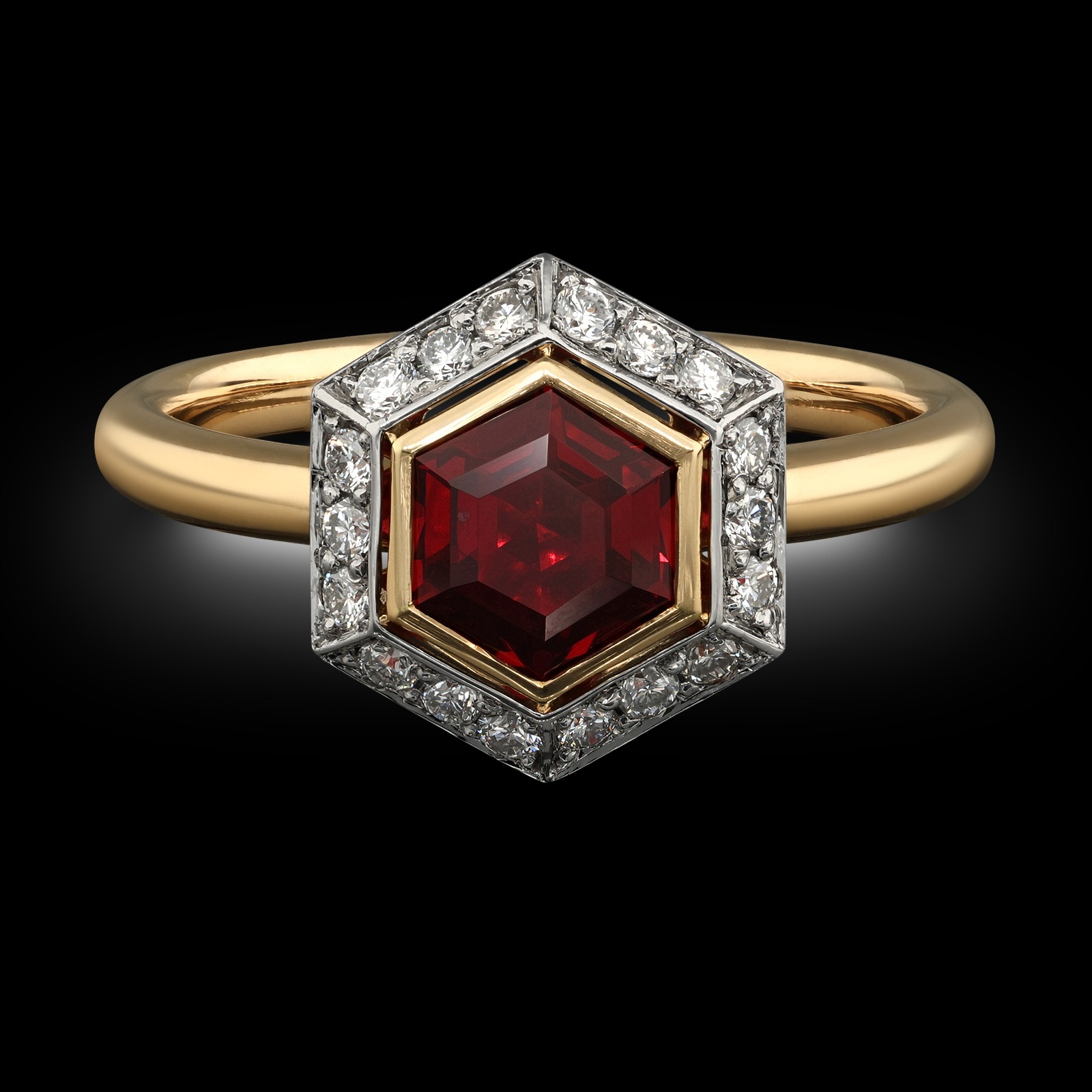
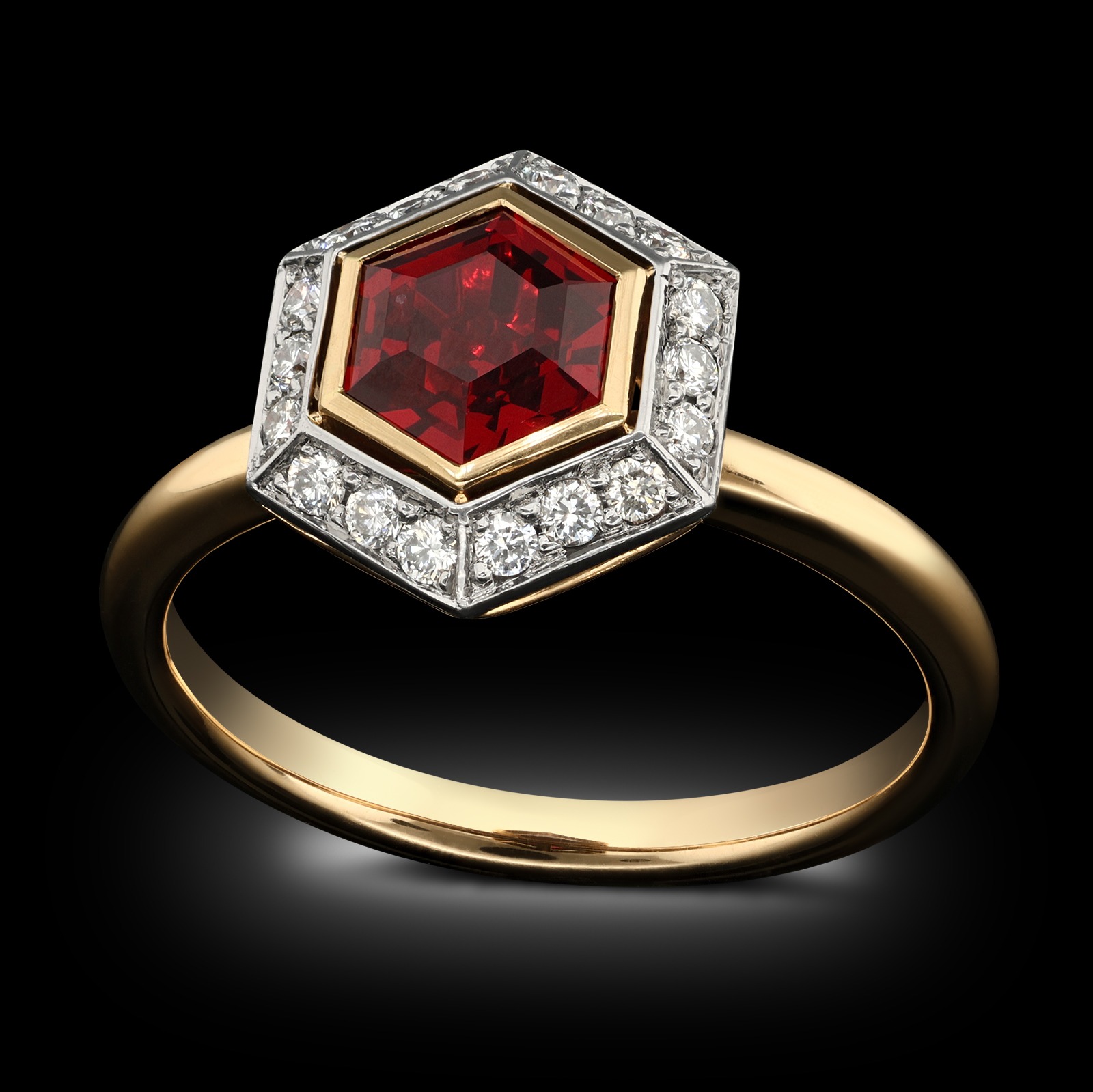
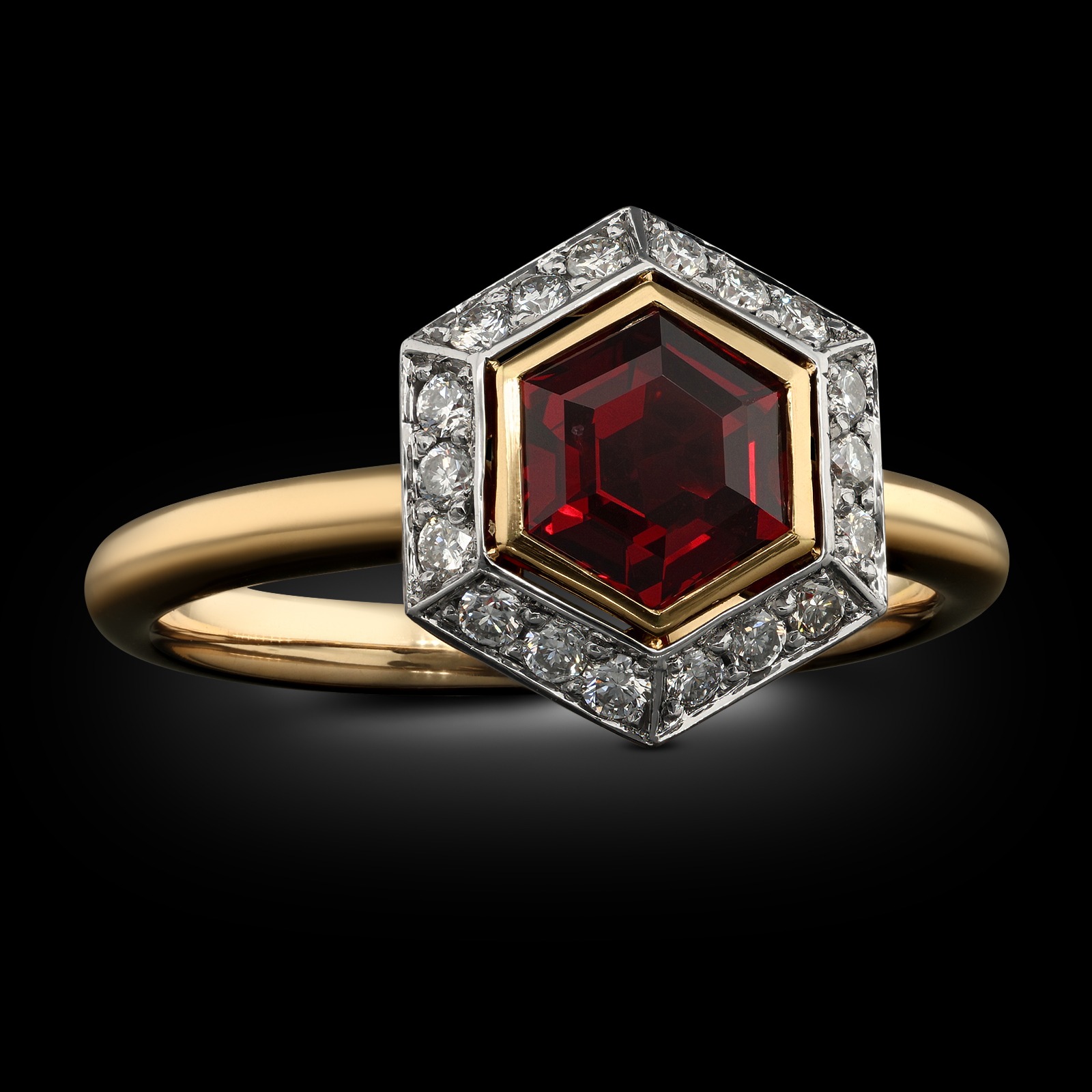
0.92ct Red Burmese Spinel & Diamond Halo Ring
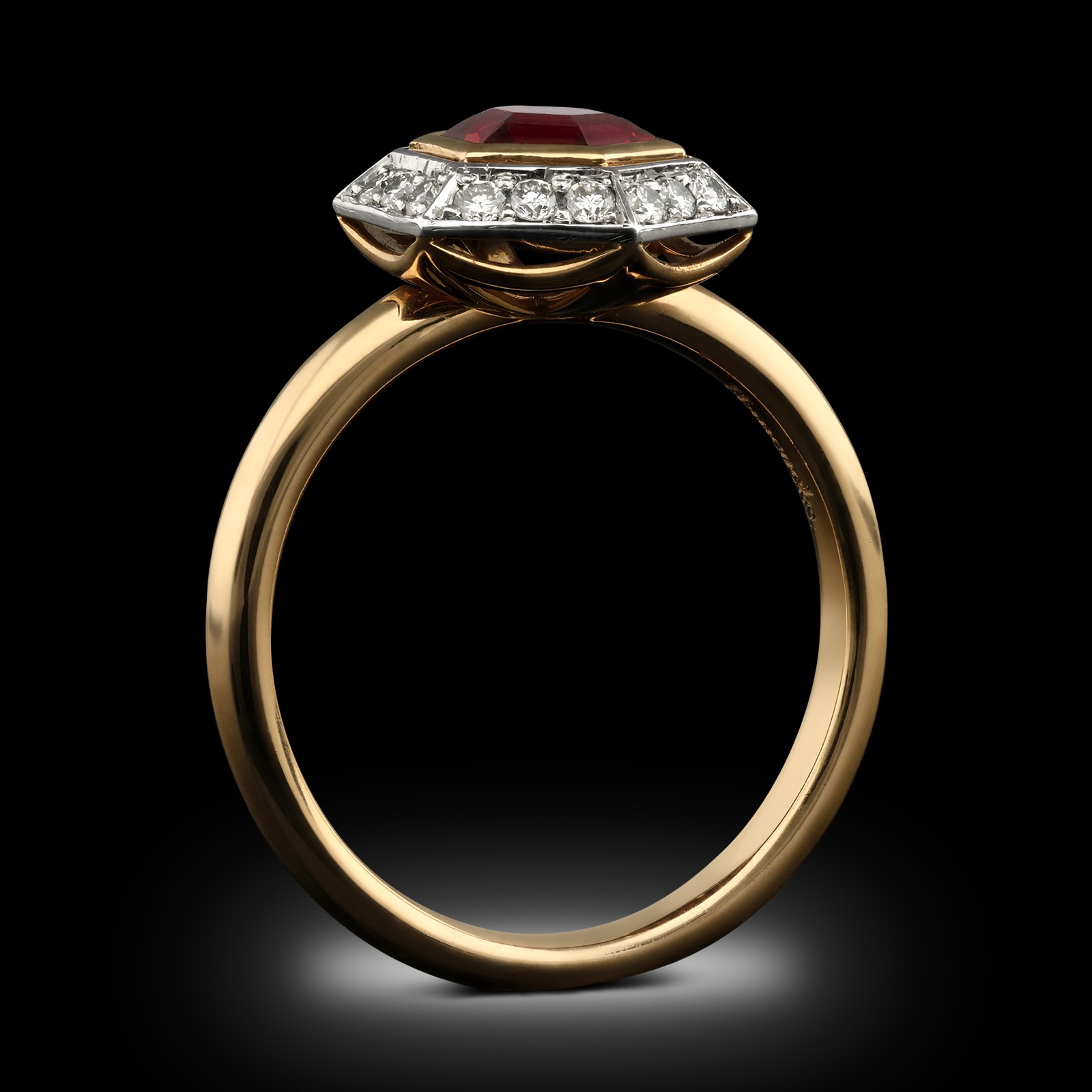
A Burmese spinel and diamond geometric halo ring by Hancocks. The handcrafted ring is centred on a 0.92ct hexagonal step-cut Burmese spinel in a 18ct rose gold bezel setting and surrounded by a detached geometric halo of round brilliant cut diamonds set in platinum, all to a 18ct rose gold mount with scalloped gallery and rounded D-shape band.
£7,750.00

Information
Maker
Hancocks
Origin
London
Period
Contemporary
Gemstone
0.92ct hexagonal Burmese unheated red spinel - with AIG certificate
18 x round brilliant cut diamonds, total weight 0.20cts
Setting
18ct rose gold and platinum
Dimensions
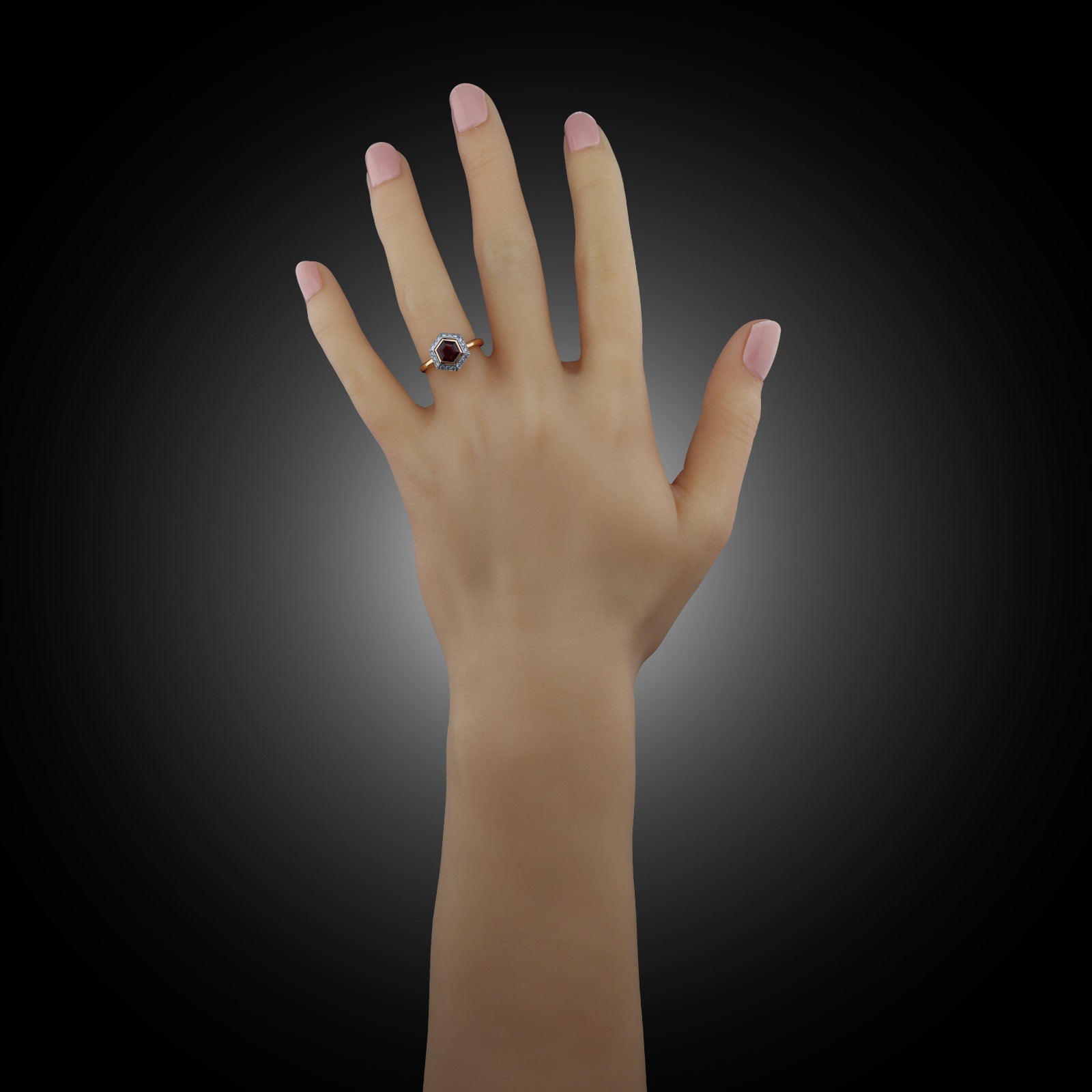
UK finger size L, US size 5.75
(Can be adjusted to fit any size)
Weight Description
4 grams
REF
125501
Discover this Jewel
Spinel
Despite being mined and worn since ancient times, it wasn’t until 1783 that spinels were identified as being distinct from rubies and sapphires, until then they’d been thought to belong to the same family of gems.
Historically they were often mined in the same areas of central and southeast Asia which could account for the confusion. These mines produced some exceptionally large and fine quality spinel crystals which were known as Balas rubies. They were treasured by kings and emperors, passed down generations, traded, stolen and used in payment for battles hard won.
A famous example of this can be seen in the Crown Jewels where the ‘Black Prince’s Ruby’ in the Imperial State Crown is in fact a spinel. It was acquired in 1367, by the Prince of Wales Edward of Woodstock (who came to be known as The Black Prince) as payment for a battle victory abroad.
Spinel occurs in a range of colours, from various shades of blue through purples and pinks to hot vivid reds. The colours can be ethereally pale or richly saturated, delicate or vibrant. They are known to exhibit an array of unusual optical effects, including asterism, chatoyancy as well as a colour change effect where some stones will appear different colours or varying shades of the same colour when viewed in differing light conditions. Far from being ruby’s poor cousin, the spinel is a wonderful gem in its own right and after so many years of being misunderstood it is finally beginning to enjoy its time in the sun.

Asscher Cut
The Asscher cut diamond was designed by and named after Joseph Asscher, co-founder of the Asscher Diamond Company in Amsterdam whose family had been dealing in diamonds since the mid 19th Century.


The cut was created in 1902, in an attempt to best utilise the natural shape of rough octahedral diamond crystals. The cut is often square in shape with deeply truncated corners creating an almost octagonal outline to the stone.
The facets are carefully arranged in three rows of straight, step-like faces to the top and bottom of the stone which has a wonderfully elegant and clean appearance with a more subtle sparkle than brilliant style cuts. A characteristic high crown and deep pavilion are further hallmarks of this cut and these help to create a wonderful brilliance in the stone. This was the first diamond cut to ever be officially patented and it became increasingly popular during the early 20th century. In particular, the straight lines and geometric form of the cut lent itself beautifully to the aesthetic of the Art Deco period. Just a few years after creating his eponymous diamond cut, Joseph Asscher would become internationally famous as the man who cut the Cullinan diamond, at that time, the largest diamond in the world. Popular rumour has it that after the first attempt to cleave the diamond in half, Asscher fainted but in fact his family state he simply collapsed with the effort it took to strike a blow hard enough to cleave a diamond that size.
Antique asschers particularly stand out from their modern counterparts with much bigger cut corners that enhance the play of light within the steeper facet pattern.


